Paintless Dent Repair vs Traditional Dent Repair

How Long Does Collision Repair Take in San Antonio
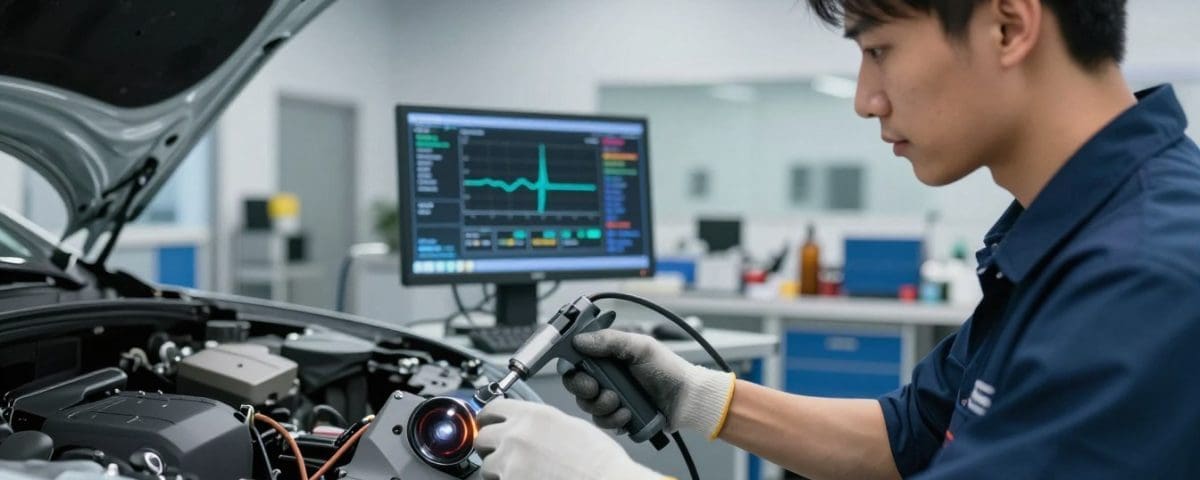
Your modern car is more than just metal and wheels. It’s a network of smart eyes and ears. Tiny cameras and sensors constantly scan the road to keep you safe.
Features like automatic braking and lane-keeping rely on this data. They need perfect alignment to function correctly. Even a small bump or a windshield replacement can throw them off.
When these systems are misaligned, they misinterpret their surroundings. This can lead to failed warnings or delayed reactions. Your vehicle’s entire safety net becomes compromised.
That’s why a professional reset is not just a suggestion—it’s essential. This process ensures every safety feature works as the manufacturer intended. For a deeper dive into this process, check out our guide on understanding ADAS calibration after a collision.
It’s the final, crucial step to guarantee your car is truly road-ready. It protects you, your passengers, and everyone else sharing the street.
Key Takeaways
- Modern vehicles depend on precise cameras and sensors for critical safety functions.
- Even minor collisions or windshield work can misalign these sensitive components.
- Recalibration restores the system to its original factory specifications for accuracy.
- Proper alignment ensures features like adaptive cruise control and lane departure warnings work reliably.
- Driving with uncalibrated systems creates dangerous blind spots in your vehicle’s safety net.
- This is a specialized task that requires professional equipment and expertise.
- Completing this step is non-negotiable for ensuring your repaired car is safe to drive.
Understanding Advanced Driver Assistance Systems (ADAS)
Today’s automobiles are equipped with a digital nervous system of sensors. This suite of advanced driver assistance features acts as a co-pilot. It includes tools like lane departure warning and adaptive cruise control.
The Role of Sensors and Cameras in Your Vehicle
These safety systems rely on tiny cameras and radar units. They are often placed near the rearview mirror or within the bumpers. Their positioning must be millimeter-perfect to read lane markings and spot other vehicles.
Even a minor shift can distort their view. This is why professional recalibration is so critical after any repair work.
How ADAS Enhances Driver and Passenger Safety
The primary goal is to reduce human error. These features provide warnings or even intervene automatically. They help maintain a safe following distance and keep you centered in your lane.
This network of sensors and cameras creates an extra layer of protection. It watches the road tirelessly to help avoid accidents. Ultimately, it safeguards everyone inside the vehicle.
When Calibration Becomes Essential
Several common repair scenarios can quietly compromise the electronic eyes that guard your vehicle. These sensitive systems require perfect alignment to interpret the road correctly.
Even work that seems unrelated can throw off their delicate balance. Knowing when a reset is needed keeps your protective features reliable.
After Collision Repair: Restoring Your Safety Systems
Any impact, big or small, can jolt the radar units and cameras in your car. Bumpers often house critical sensors that are easily displaced during a crash.
Restoring the bodywork is only half the job. The digital safety net must also be returned to its original state for full protection.
Following Windshield Replacement and Structural Repairs
A new windshield frequently shifts the mounting point for front-facing cameras. This small change can ruin the accuracy of lane-keeping and automatic braking.
Suspension or wheel alignment work alters your vehicle’s ride height. This, in turn, changes the sensor’s view of the road.
Failing to perform a professional recalibration after these jobs can cause false warnings. It might even disable your driver assistance systems completely.
ADAS Calibration San Antonio: Expert Service You Can Trust
In the heart of Texas, specialized auto shops offer the precision work your vehicle’s electronic safeguards demand. You need a team that understands both the technology and your local driving environment.
Local Expertise at Miracle Body and Paint
Our facility at 6217 Grissom Rd, San Antonio, TX 78238 is your dedicated resource. We provide expert care for your car’s complex safety systems.
For immediate assistance, Northside Collision is also available at (210) 496-7443. Choosing a local expert means your vehicle is handled by professionals who know our roads.
Benefits of Professional ADAS Recalibration
This specialized process ensures your car meets the original factory specifications. That level of accuracy is critical for every advanced driver assistance feature to perform correctly.
Our certified technicians use advanced, manufacturer-specific equipment. They align every sensor and camera with pinpoint accuracy.
This professional service protects you from the risks of uncalibrated systems during your daily commute. It restores the full reliability of your vehicle’s protective network.
The Detailed ADAS Windshield Calibration Process
Restoring your vehicle’s protective systems after a windshield replacement involves more than just physical installation. It requires a meticulous, step-by-step procedure to ensure every electronic component sees the world with perfect clarity.
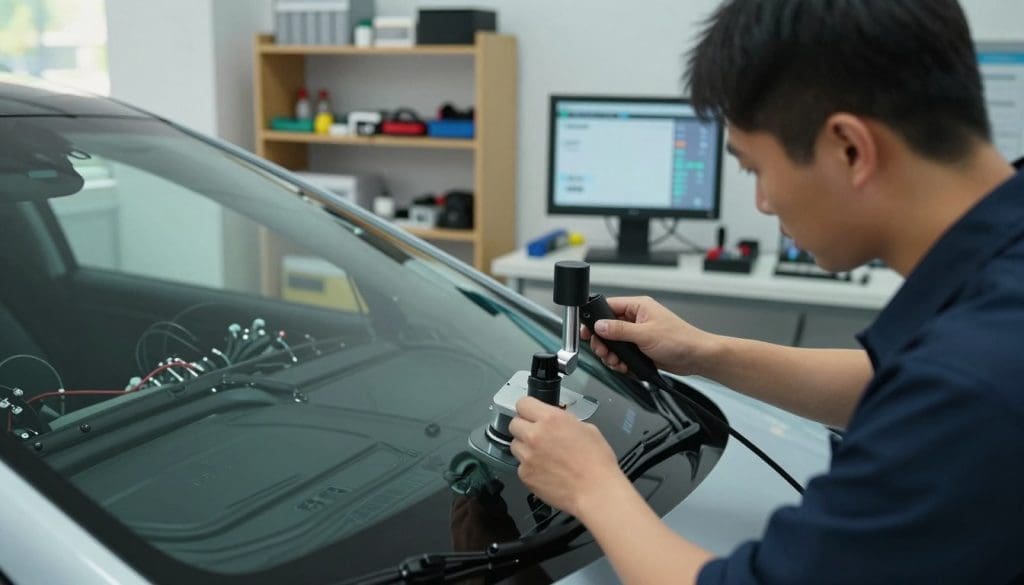
Pre-Scan Diagnostics and Vehicle Preparation
The process begins with a comprehensive electronic check-up. Technicians perform a pre-scan to identify any software faults or error codes before any physical work starts.
Your car is also prepared. This includes checking tire pressure and fuel levels. These steps create the correct conditions for an accurate reset.
Static Versus Dynamic Calibration Methods
There are two primary techniques used to align your safety features. Static calibration happens inside the shop.
Technicians use specialized targets and laser-guided equipment. This aligns the sensors and cameras to the manufacturer’s exact blueprints.
Dynamic calibration requires a controlled drive. The vehicle is taken on well-marked roads to sync the system’s data with real-world conditions.
The entire procedure typically takes between one to three hours. The time depends on your car’s complexity and the specific systems installed.
Final Testing to Confirm Sensor Accuracy
After alignment, a final verification is crucial. This testing phase confirms every component recognizes its surroundings correctly.
Your lane-keeping aid, automatic braking, and other critical features must respond as designed. This last check guarantees the accuracy you depend on for safety is fully restored.
Factors Impacting Calibration Accuracy
Achieving perfect alignment for your vehicle’s safety features depends on a combination of strict protocols and advanced technology. Several key elements must be correct for the reset to be successful.
Importance of Manufacturer-Specific Guidelines
Every car brand has its own unique blueprint for its electronic systems. Certified technicians must follow these exact OEM procedures.
This ensures the safety of your vehicle and the reliability of its entire suite of driver assistance features. Ignoring these guidelines can lead to incorrect sensor angles.
Role of Advanced Tools and Certified Technicians
Specialized equipment, like the Autel Laser Measuring System, provides sub-millimeter precision. This level of accuracy is non-negotiable for aligning sensors and cameras.
Even a tiny deviation can cause the system to misread lane markers. Trained professionals also check tire pressure and ride height before starting. This prepares your car for a flawless recalibration process.
| Factor | Impact on Accuracy | Professional Solution |
|---|---|---|
| Vehicle Levelness | Alters sensor view of the road | Check and adjust tire pressure & ride height |
| Tool Precision | Ensures millimeter-perfect alignment | Use laser-guided systems like Autel |
| Technician Certification | Guarantees correct OEM procedure is followed | Employ factory-trained experts |
| Pre-Scan Diagnostics | Identifies hidden error codes | Perform full electronic system scan |
When all these factors are managed correctly, your car’s protective systems are restored to their full, intended capability. This gives you confidence on every drive.
Ensuring Ongoing Vehicle Safety After Calibration
Your vehicle’s electronic guardians need regular care to stay sharp and reliable. Safety is an ongoing commitment, not a one-time event. After a professional reset, simple habits keep your protective features working perfectly.

Regular Maintenance and System Checks
Dashboard warning lights are a clear sign your system needs a professional look. Do not ignore them. They indicate something may be off with your advanced driver assistance tools.
Regular upkeep includes checking for dirt or debris on sensors and cameras. A clean lens ensures an unobstructed view of the road. This is a quick task you can do yourself.
Monitor how your safety tools behave during daily drives. Erratic actions from automatic braking or lane keep assist mean it’s time for a check. If your adaptive cruise control acts strangely, schedule a follow-up.
- Pay attention to dashboard alerts and have them inspected promptly.
- Keep sensors and cameras clean from mud, snow, or bugs.
- Note any unusual behavior in automatic braking or steering aids.
- Schedule a professional inspection if any safety feature seems off.
- Ask your service team about software updates during routine visits.
This proactive approach maintains the accuracy of your vehicle’s safety net. For a deeper understanding of why this process is essential, explore our detailed resource. Consistent care ensures you and your passengers stay protected on every journey.
Conclusion
Think of your car’s safety tech as a silent partner that never blinks, constantly watching the road to protect you. This network of systems is the invisible guardian of every modern drive.
For it to work, every sensor and camera needs perfect alignment. A windshield service or body repair can easily disrupt this delicate balance. That makes professional recalibration a non-negotiable part of the job.
Always watch for dashboard warnings or odd behavior from your vehicle’s aids. If you are unsure, consult a certified expert. They can verify your safety net is fully operational.
Staying proactive with this maintenance keeps your ADAS features strong and reliable. It ensures your vehicle delivers the peace of mind you expect on every journey.