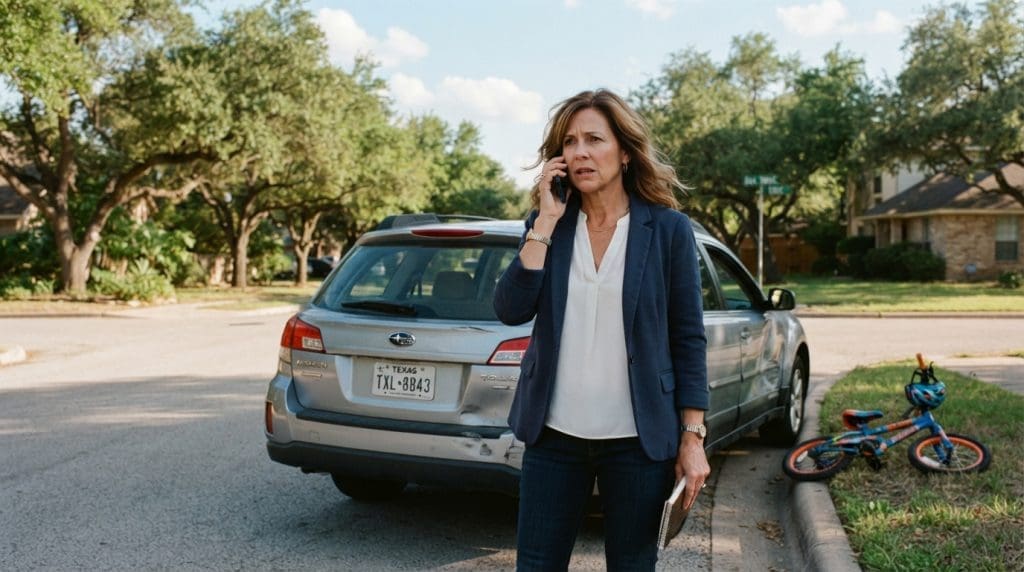
How to File an Auto Insurance Claim After an Accident in Texas

No. You can generally choose your own body shop in Texas, but your policy controls what the insurance company pays for covered repairs. After an accident, that choice can shape where your car goes and how repairs are handled. You do not have to delay reporting a claim while you decide.
Think of shop choice as a practical decision: consider the work your vehicle needs and how the shop will coordinate with the insurer. This article explains your choice, what the policy still controls, and how to move the claim forward. Your next step is to understand the Texas rule that protects your choice.
Key Takeaways
- You can generally select a repair facility in Texas.
- Your policy, deductible, and covered repair costs affect payment.
- A preferred-shop list is a referral option, not a requirement.
- Compare repair skills, procedures, estimates, and warranty terms.
- Ask the shop and adjuster to review cost differences before extra work.
Can You Choose Your Own Body Shop Texas After a Crash?
Texas law protects your choice of repair facility, but shop choice does not decide what a specific policy will pay. You may select a shop, while your coverage and policy terms still apply.
The difference matters after a collision. You can name a shop you trust, but the insurance company may assess which repairs and costs fall under your coverage.
What Texas law prohibits
Texas Insurance Code Section 1952.302 bars an insurance company from saying or suggesting, in writing or aloud, that you must use a specific repair facility. An insurer may recommend a shop, but it cannot say or suggest that coverage depends on your choice.
The law also bars referral fees or gifts for sending a customer to a repair facility. It prohibits unreasonable travel demands for repairs, so a shop choice should not require an unreasonable trip.
That protection applies to the choice of facility, not every part of a repair bill. A driver can ask questions if a representative’s words make the choice sound tied to coverage.
What your policy still controls
Your policy sets the terms for covered damage, including limits and your deductible. The insurance company may assess the reasonable cost of covered work, and a difference with the shop may need review.
For example, the shop may find damage that was not clear during the first review. That does not mean the insurer must pay every requested charge, or that you automatically owe every difference.
Review the estimate, policy terms, and any added repair work before you authorize it. Preferred-shop networks can help with coordination, but they are arrangements, not legal requirements.
What Does an Insurance Company’s Preferred-Shop Network Mean?
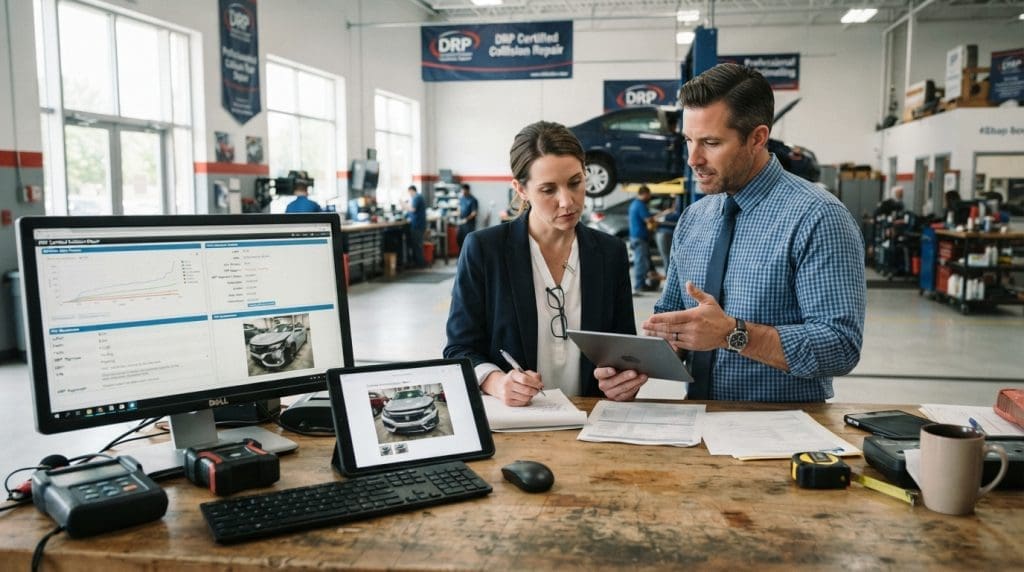
A preferred-shop list connects an insurance company with repair facilities, but does not require you to use one. A Direct Repair Program (DRP) is an arrangement in which an insurance company refers claimants to repair shops that have agreed to work under the insurer’s program terms.
DRP participation alone does not prove the quality of any particular repair. The shop’s work, staff, equipment, and repair practices still matter.
How a Direct Repair Program works
Under a DRP, participating shops may use insurer-established pricing and repair processes. They may also send estimates electronically and coordinate directly with adjusters.
These terms can make claim communication more direct. Many DRP shops do excellent work, and an independent shop is not automatically better or harder to work with.
A network relationship tells you how a shop may work with the insurer. It does not answer whether that shop has the right skills for your vehicle’s damage.
What to compare between network and independent shops
Compare the actual shop and its repair plan, not just its label. These broad differences can help you ask focused questions.
| Feature | DRP shop | Independent shop |
|---|---|---|
| Insurer agreement | Has an agreement | No DRP agreement required |
| Referral arrangement | May receive insurer referrals | No DRP referral required |
| Estimate and adjuster coordination | May send estimates electronically and coordinate directly | Can coordinate with the insurer, with its own process |
| Repair standards | Must meet applicable repair needs; DRP status alone proves no quality level | Must meet applicable repair needs; independent status proves no quality level |
Either type of shop may suit your claim. The useful next step is to assess the specific shop’s qualifications and repair plan.
How Do You Compare and Vet Repair Shops?
A vehicle with collision damage near a windshield camera may need camera calibration after body work. That capability can matter as much as the visible repair, since modern cars may use cameras, radar, airbags, and structural steel or aluminum.
Ask whether the shop can follow the maker’s repair steps and complete any needed calibration. A shop’s network status alone does not answer those questions.
Check training, repair procedures, and equipment
Ask about technician training for your vehicle and the repair procedures the shop will follow. Find out whether it has the equipment to handle required ADAS calibration, or whether it uses a qualified provider.
ADAS means advanced driver-assistance systems, such as features that use cameras or radar. A repair plan should account for those systems when the damage or repair affects them.
Ask how the shop will share repair updates and explain changes to the work. Get the workmanship warranty terms in writing, including what work the warranty covers.
Compare reviews, estimates, and warranty terms
Look for detailed reviews for choosing your own body shop in Texas. Comments about communication, repair updates, and completed work tell you more than ratings alone.
Prices for choosing your own body shop in Texas vary with the vehicle damage, parts, and work required. Compare itemized estimates so you can see which operations each shop included.
Free estimates when choosing your own body shop in Texas are not guaranteed here. Ask whether an estimate has a fee and what it includes before you authorize work.
- Do you follow manufacturer repair procedures?
- Can you handle the required ADAS calibration?
- Will you coordinate with my insurance company?
- How will you update me during repairs?
- What does your workmanship warranty cover?
Choose a shop whose answers fit your vehicle’s needs. Once you select one, direct the tow and claim information to that facility.
How Do You Direct the Claim to Your Chosen Shop?

When a tow is being arranged, tell the operator where you want the vehicle taken. Your chosen shop can be the destination, or you can drive there if the vehicle is safe to move.
Give the insurance company the shop’s details and keep track of each claim discussion. Added repairs may need insurer review and agreement, so choosing a shop does not guarantee approval of every supplement.
Set the tow destination and report the crash
Use these steps to get the vehicle and claim information to the right place:
- Choose the tow destination, or drive the vehicle to your shop if it is safe.
- Report the accident to your insurance company and give the shop’s contact details.
- Get the assigned adjuster’s name and phone number, then ask how inspection will be arranged.
- Review the estimate with the shop, and ask it to submit added damage or cost details for review.
- Record a representative’s name, the date, and the statement if you feel pressured. Contact TDI if pressure continues.
Review the estimate and document pressure
After you report the claim, ask how the insurer will inspect the vehicle. The adjuster may need to review the damage before the shop starts added work.
If repairs cost more than the insurer’s estimate, the shop can submit a new estimate for review. Keep copies of estimates, messages, and notes from calls, including the date and representative’s name.
If pressure to use a particular shop continues, you can contact the Texas Department of Insurance (TDI). TDI accepts complaints online at tdi.texas.gov and by phone at 1-800-252-3439.
The insurer’s estimate may differ from the shop’s repair estimate. That raises the key payment question: who pays the difference?
Who Pays If the Shop’s Estimate Exceeds the Insurer’s?
The insurer’s estimate may come in below the shop’s repair estimate after a closer inspection. The difference depends on the policy, deductible, covered damage, approved repair work, and the insurer’s assessment of costs.
Do not assume every difference is automatically yours, or that every charge will be approved. Ask the shop and adjuster to compare itemized repair operations before you authorize added work.
There is no single cost of choosing your own body shop in Texas. The amount you pay can depend on what the policy covers and whether the insurer agrees that added work relates to covered damage.
A shop can send a new estimate when repairs cost more than the insurer’s estimate. Ask both parties to explain differences in parts, labor, or repair operations, and wait to authorize extra work until payment responsibility is clear.
| Claim situation | Who you contact | What payment depends on |
|---|---|---|
| Your collision coverage | Your insurance company | Policy coverage, deductible, and covered repair costs |
| Other driver’s insurer, when you believe that driver was at fault | Other driver’s insurance company | Its assessment of covered damage and claim responsibility |
| Uninsured or underinsured driver, when your policy includes that coverage | Your insurance company | Policy terms, applicable coverage, and covered repair costs |
You may report an at-fault crash to the other driver’s insurer. Your own collision coverage may apply to your claim, while uninsured or underinsured motorist coverage may apply when your policy includes it.
If you search “choose your own body shop in Texas near me,” compare local shops by their repair plan and ability to discuss your claim. A phone call can confirm whether a San Antonio shop can discuss the claim and its estimate.
For the phone number for choosing your own body shop in Texas, contact the shop you are considering directly. Ask what information it needs before discussing the estimate; a call does not mean free work or a guaranteed price.
Conclusion
You can choose the repair facility, while your policy controls payment for covered work. Before authorizing added repairs, ask the shop and insurance company to review any cost differences.
For collision damage in San Antonio, contact Miracle Body and Paint Collision Center to discuss your vehicle and claim. Call or visit either location:
North West San Antonio, Leon Valley: (210) 680-1987, 6217 Grissom Rd., San Antonio, TX 78238.
North East San Antonio: (210) 858-3630, 4650 Walzem Rd., San Antonio, TX 78218.
Contact Miracle Body and Paint Collision Center to hire a team to fix the collision damage on your vehicle.