Paint Correction vs Full Repaint: Which Does Your Car Need?

Do I Need a Police Report for a Minor Accident?

After a car accident, acting quickly helps protect your rights and your vehicle. You should gather clear information about the incident, the other driver, and any visible damage. Short notes and photos make a big difference when you notify your insurer.
Expect the insurance company to review your policy and the damage. Your policy details will show what coverages apply and whether liability or property payments apply. If you are at fault, remember your deductible still applies before repairs start.
Keep records of every call and document, and choose a reputable repair shop that restores your vehicle to its pre-accident condition. The company has a duty to respond within a reasonable time, so stay on top of the process and follow up when needed.
Key Takeaways
- Gather clear evidence at the scene: photos, names, and notes.
- Know your policy limits, coverage types, and deductible amounts.
- Report the incident promptly to your insurer and keep records.
- Choose a trusted repair shop for quality vehicle restoration.
- Follow up with the company if responses take too long.
Immediate Steps to Take After a Car Accident
After an accident, your immediate priority is making sure everyone is safe and out of further danger. Take a moment to assess injuries and move off the road if it is safe.
Safety and Documentation
Call the police if anyone is hurt or damage is significant. Get the incident number and a copy of the police report when possible.
Document the scene with clear photos of vehicle damage, skid marks, and surrounding signs. Note time, location, and witness contacts.
Exchanging Information
Exchange names, insurance information, license plate numbers, and phone numbers with the other driver. Keep your driver’s license and registration ready for the police.
If you believe fault is involved, notify your insurer promptly. You can reach GEICO for reporting at (800) 841-3000 or use the mobile app for updates and basic questions.
| Action | Who | What to collect |
|---|---|---|
| Call police | You | Report number, officer name |
| Take photos | You | Damage, scene, plates |
| Swap details | Both drivers | Name, phone, insurance info |
| Notify insurer | You | Policy number, incident notes |
How to File a Collision Insurance Claim

Report the accident promptly using the provider’s online form, mobile app, or a direct call to their claims line. When you contact your carrier, have the date, time, and exact location ready.
Give clear information: share the other driver’s license number and the license plate, short notes about damage, and any witness names. Accurate details help the company start an investigation quickly.
- You may submit documents online, through an app, or by phone. Major carriers like State Farm also let you report by calling (800) 732-5246.
- If you are not at fault, consider reporting with the other party’s carrier to avoid paying your deductible.
- Illinois law 215 ILCS 5/143.23a requires insurers to provide claim forms within 15 working days—keep that deadline in mind.
If you have questions about coverage or the deductible, contact your agent right away. Prompt submission of paperwork speeds up estimates, inspections, and repairs at a trusted shop.
Understanding Your Insurance Coverage and Deductibles
Begin with a clear read of your policy; this tells you what the company will pay and what you owe.
Know your limits. Illinois law requires at least 25/50/20 liability coverage. That helps pay for property and bodily injury after a car accident.
Determining Fault and Liability
The insurer will review the police report and other information to assess fault. This process affects how much each company pays and whether your deductible applies.
- Deductible: the amount you pay out of pocket for vehicle repair.
- Coverages: collision, liability, and property protections vary by policy.
- Questions: ask your agent for your exact deductible and any limits shown on your card.
| Item | Why it matters | Where to find it |
|---|---|---|
| Policy limits | Sets maximum payout | Declarations page |
| Deductible | Out-of-pocket cost for repairs | Policy card |
| Liability | Determines fault payments | Policy language / state law |
A reputable repair shop can work with the insurance company so property damage matches your policy terms. Determining liability may take time, but staying organized speeds resolution.
Navigating the Vehicle Inspection and Repair Process

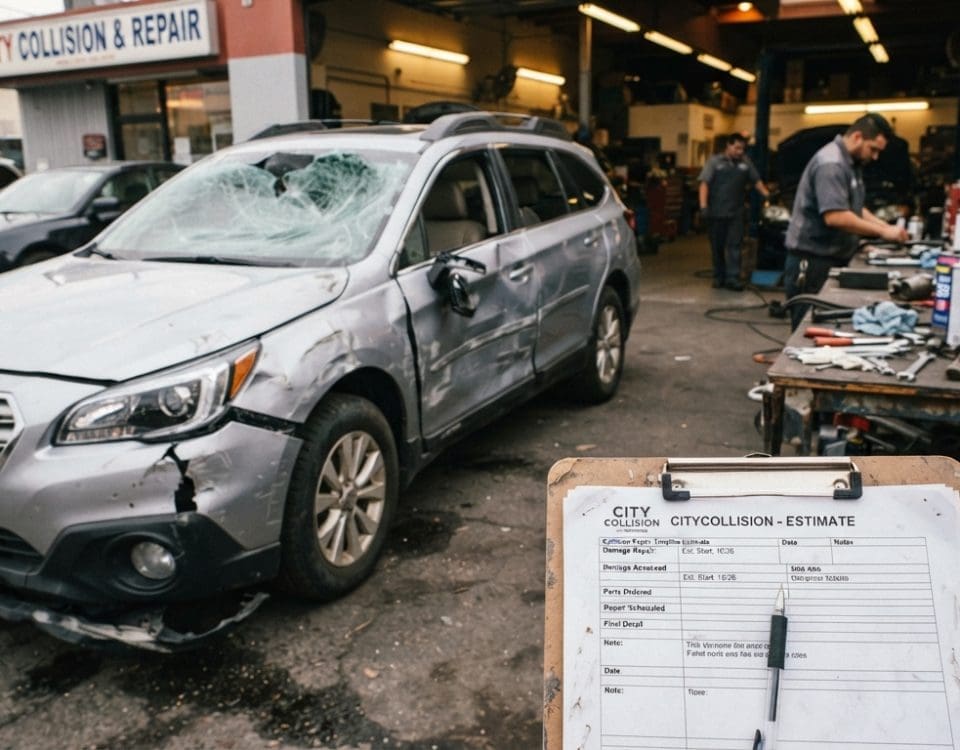
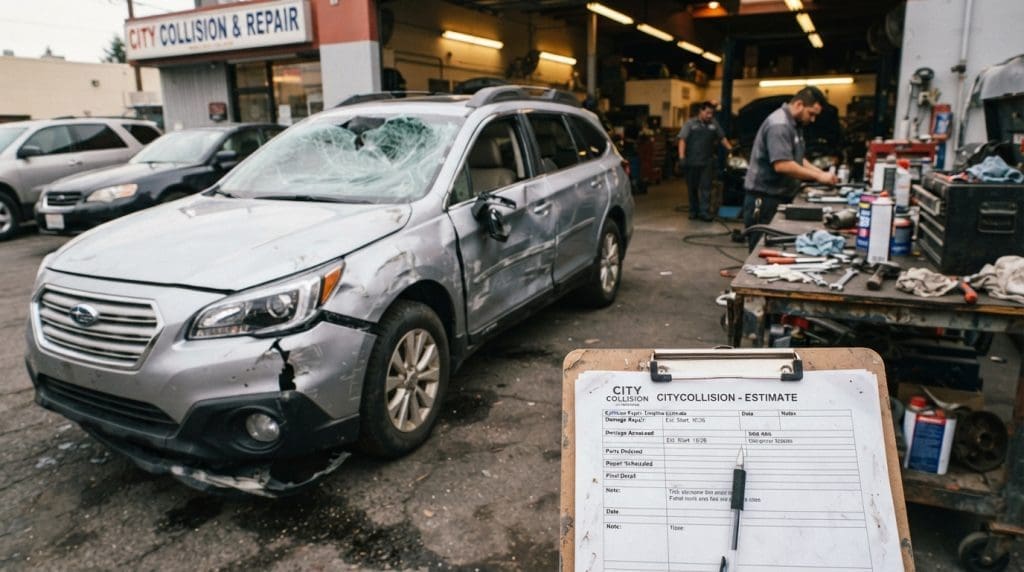
Scheduling a prompt inspection helps speed repair approvals and reduces time without your car. Set up an estimate at a trusted repair shop as soon as your insurer has your incident information.
Scheduling Damage Estimates
Many companies offer a mobile app that lets you submit photos for a virtual estimate. This can cut wait time and start approvals faster.
If the car cannot be driven, ask about pick-up options and rental coverage before work begins. Keep the claim number and representative name handy for status checks.
Selecting Replacement Parts
The repair shop will coordinate parts approval with your insurer. OEM parts may be available, but approved aftermarket parts can speed delivery and lower costs.
Rental Car Reimbursement
If you are not at fault, the other driver’s company often covers a rental while your vehicle is in the shop. Otherwise, check your policy for rental limits and time caps.
- Document all vehicle damage with dated photos and receipts.
- Ask the shop for a projected completion date and any warranties.
- Keep every phone number and note about conversations for follow-up.
Choosing the Right Collision Repair Center
Choosing the right repair center affects your car’s safety and resale value.
You have the final choice of shop even if your insurance company suggests one.
Pick a facility that offers a written warranty and restores property to factory standards.
Ask about experience with your car make and specific damage. A shop with proper equipment handles structural work and paint matching.
- Confirm the shop will coordinate with the company handling your claim.
- Request a clear timeline for repairs and pickup dates.
- Get written confirmation of parts type and warranty length.
| Feature | Why it matters | What to ask | Who handles |
|---|---|---|---|
| Warranty | Protects workmanship | Length and coverage | Repair shop |
| Make/model experience | Ensures proper procedures | Completed jobs for your car | Shop estimator |
| Parts policy | OEM vs aftermarket | Which parts will be used | Repair advisor |
| Insurance coordination | Smoother payment and claims process | Will shop work with your insurer | Claims representative |
For more information on coverage differences, read repair coverage differences.
Conclusion
When an accident ends your drive early, clear steps help you get repairs and answers fast. Keep photos, notes, and all policy information handy. This keeps conversations with the company focused and productive.
Document vehicle damage and ask questions about coverage, deductible, and liability. Use the app or call for updates so time does not slow progress.
Proper repair matters for safety and value. Choose a shop that guarantees work and uses quality parts.
Hire Miracle Body and Paint Collision Center for repair work at one of two San Antonio locations. North West (Leon Valley): 6217 Grissom Rd., (210) 680-1987. North East: 4650 Walzem Rd., (210) 858-3630.