
What Happens During a Collision Repair From Start to Finish
Why Professional Auto Paint Repair Matters More Than You Think
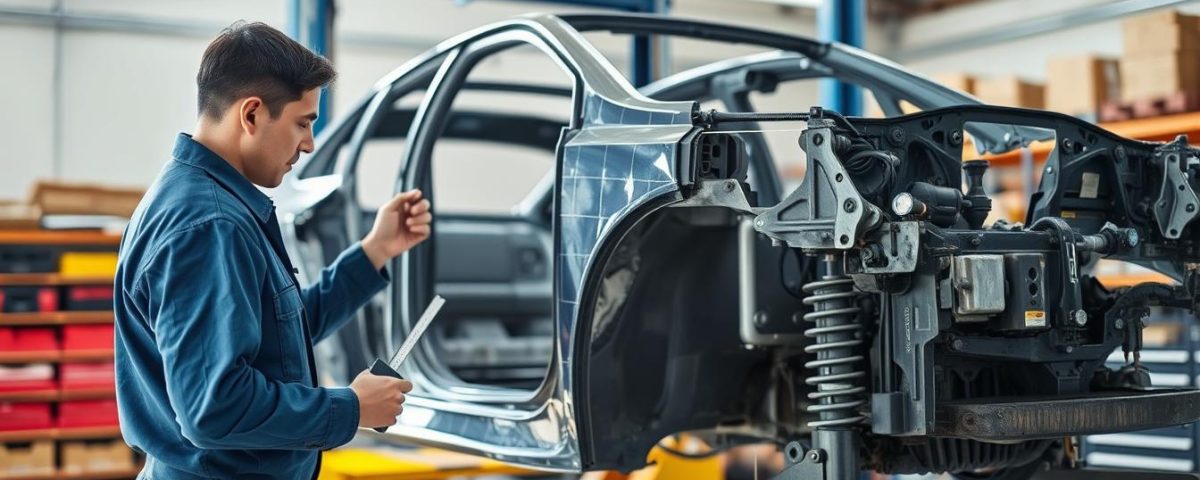
After a collision, some structural problems are obvious and others hide beneath the skin. We explain common warning signs so you can spot trouble early and choose a safe path forward.
Visible bending, poor alignment, odd noises, doors that stick, and wheels that pull are classic clues that your vehicle may have sustained frame damage. These symptoms can appear immediately or develop later.
Professional frame repair focuses on restoring original strength and factory fit. Our goal is to restore vehicle performance and protect long-term value, not just fix the exterior.
We recommend a measurement-based inspection rather than guessing. If you notice any signs covered here, contact Miracle Body and Paint Collision Center for an expert evaluation and a clear plan to restore safety.
Key Takeaways
- Look for bending, alignment issues, odd noises, and doors or trunk that won’t close smoothly.
- Hidden structural damage can cause drivability and safety problems over time.
- Measurement-based collision repair restores strength and factory fit.
- Contact a trusted local shop for a professional inspection.
- Call Miracle Body and Paint Collision Center today to schedule an evaluation.
Why Frame Damage Matters for Safety and Vehicle Performance
Even slight structural misalignment can change how a vehicle handles and how forces flow during an impact. We focus on how these subtleties affect everyday safety and long‑term performance.
How small misalignments create unsafe driving conditions
Minor geometry shifts alter braking and steering response. That makes the vehicle feel unpredictable during sudden maneuvers.
Handling problems and increased accident risk on san antonio roads
Compromised geometry can cause wandering and instability at highway speeds. On roads like 410, reduced predictability cuts the margin for error and raises the chance of a second accident.
Premature tire wear and suspension stress from structural misalignment
Uneven tracking speeds tire wear and strains suspension parts. What feels like a ride issue is often a symptom of underlying damage.
- We stress that timely frame repair protects occupants and prevents repeated bills.
- We recommend measurement-based inspections to find root causes, not just treat symptoms.
What “Frame” Means Today: Full Frame vs Unibody Construction
Modern vehicle structures blend load-bearing panels and welded joints, so damage rarely shows as a single, obvious bend.
Full frame designs use a separate chassis that supports the body. Unibody or integrated designs combine body and support into one system. That difference changes how technicians diagnose and fix damage.
Unibody construction can hide distortion because impact energy spreads into rails, aprons, towers, and seams. A vehicle may look fine outside while critical tolerances sit outside factory specifications.
Why restoring factory specifications matters
Our goal is not just to make panels align. We aim to return structural geometry to factory specifications so safety systems and drivability work as designed.
- We use measurement-based methods and anchoring to locate and correct distortions in both full frame and auto frame vehicles.
- Correct structural paths ensure crash energy flows where engineers intended, protecting occupants and reducing repeat problems.
Common Accidents That Cause Frame Damage in San Antonio
Many common collisions create hidden distortions when impact forces travel into a vehicle’s load paths. We map the typical crash scenarios that lead to structural problems and explain where damage often appears.
Front-end impacts and crumple zone transfer
Front collisions can push energy past crumple zones into rails and mounts. This often affects steering and suspension attachment points and may require more than an alignment to correct.
Side impacts that shift openings and pillars
Strikes to the side can distort pillar geometry and door openings. Misaligned gaps or doors that bind are common signs that underlying parts moved out of spec.
Rear-end collisions and trunk rail distortion
Rear impacts can bend rear rails and trunk floors. That leads to poor sealing, latch problems, and reduced crash energy management in future incidents.
Curbs, potholes, and undercarriage hits
Non-collision events like hitting curbs or deep potholes can twist structural members or damage suspension mounts. These events create drivability issues that are easy to miss without measurement-based inspection.
- Freeway and intersection impacts often transfer force into key support members.
- We recommend measurement-based verification before assuming an alignment alone will fix symptoms.
Visible Bending, Twisting, or Wrinkling in the Vehicle Frame
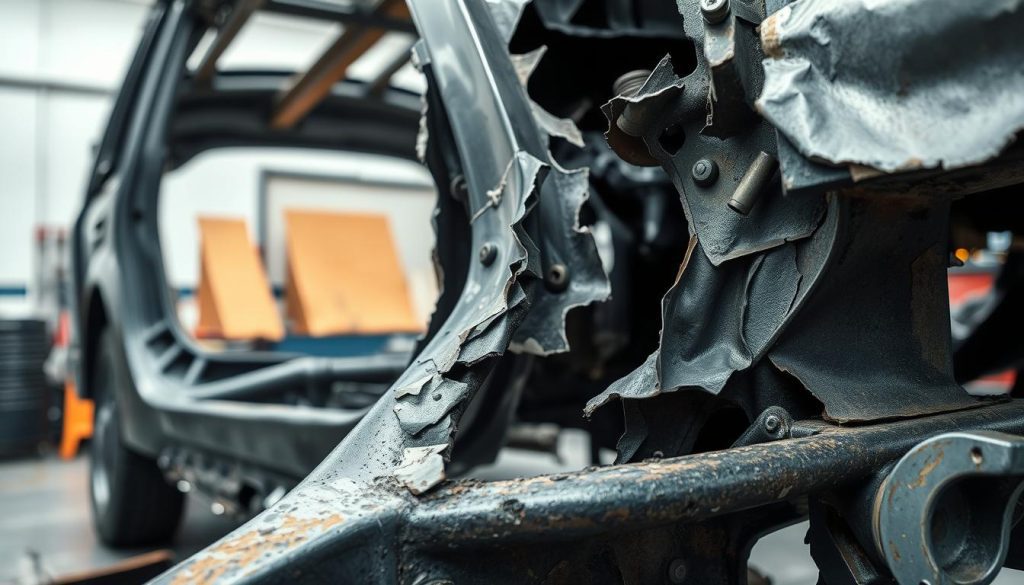
Visible bends, wrinkles, or ripples in structural areas usually mean the vehicle’s underlying strength has changed. These signs often show around rails, support towers, and along body lines. Spotting them early helps us decide the safest path forward.
What you might notice around rails, supports, and body lines
You may see rippling metal, wrinkling near rails, or gaps and uneven panels that were not there before.
These are quick visual checkpoints owners can safely observe without disassembly.
Visibility does not equal full understanding. Even when damage looks minor, metal that has yielded can hide secondary twists in mounts or rails.
When severe damage may require replacement vs straightening
We evaluate severity, repairability, and final safety outcome when recommending straightening or replacement of an auto frame.
Severe bending that breaks engineered load paths sometimes needs full replacement to restore original condition.
- We describe what structural deformation looks like, including ripples and irregular body lines.
- We explain why wrinkles matter: yielded metal often means the vehicle no longer holds factory geometry.
- We set expectations that our repairs prioritize restoring structural integrity, not just appearance.
Any visible twisting or bending should trigger an expert inspection. We use measurement-based methods to confirm the scope of frame damage and plan safe, lasting repairs.
Poor Alignment and Steering That Feels “Off” After the Accident
If your vehicle drifts or the steering wheel sits crooked, the issue can go deeper than a simple wheel alignment.
Pulling, a crooked wheel, or a slow return-to-center are common signs drivers report after a crash. These symptoms often mean mounting points or rails moved and suspension angles no longer match factory specifications.
Pulling to one side and why an alignment alone may not solve it
An alignment adjusts angles at the wheels. It cannot fix distorted structural mounting points. If the underlying geometry is off, the alignment won’t hold and symptoms return.
Uneven tire wear as a red flag for deeper structural damage
Uneven tread wear often tracks with shifted geometry. Ignoring it raises cost and risk over time because related suspension parts wear out faster.
How straightening equipment returns the vehicle to factory specs
We use measurement systems and professional frame straightening machines to restore correct mounting locations. This approach addresses root causes rather than repeatedly masking issues.
- What we do: measure, align, and straightening to factory specifications.
- Why it matters: handling, braking stability, and long-term component life improve.
- Time: proper structural correction takes the right equipment and process—not guesswork.
Unusual Noises: Creaks, Groans, and New Rattles While Driving
Strange creaks or new rattles can be the first sign that structural parts are shifting when the vehicle moves.
Why damaged structures can shift and make noise under load
Structural deformation lets components move against each other. Parts that were meant to stay rigid can flex and rub. That creates creaks, groans, or clunks during acceleration, braking, or turning.
How noise can signal compromised support and integrity
Drivers often hear new sounds over speed bumps, driveway transitions, or rough pavement. Quick lane changes can also reveal shifting mounts or seams.
- Rattles after a crash are not always trim issues; they can mean the frame is shifting under load.
- Noise matters as an early warning because compromised support can lead to secondary failures in mounts and seams.
- We recommend a prompt inspection to determine whether the sound is cosmetic, suspension-related, or tied to structural damage that needs repair.
Doors, Windows, or Trunk That Don’t Close or Seal Correctly
Misaligned openings—doors, trunks, or window seals that no longer mate—often point to deeper structural shifts. These fit issues are more than an annoyance. They can indicate that supporting members moved and tolerances left factory specifications.
We explain how a bent assembly changes opening geometry. Distortion alters gaps, prevents latches from engaging, and squeezes or separates weather seals. That reduces protection from wind and water and can affect crash energy paths.
Signs you can spot without tools
- Uneven panel gaps or a door that needs extra force to latch.
- New wind noise at highway speed or water intrusion after rain.
- Windows that bind or a trunk that sits high or low compared to the body.
Why it matters: Poor sealing invites corrosion, electrical faults, and reduced occupant protection in a future impact. What looks like a trim issue often traces to larger structural damage.
Our recommendation: schedule a professional structural measurement to confirm whether the problem is a simple hardware adjustment or an auto frame alignment that needs repair.
Wheels That Look Misaligned or a Vehicle That Won’t Track Straight
If a wheel looks tucked into the well or the stance seems uneven, the underlying structure may have shifted.
How frame damage can affect suspension and steering geometry
Suspension mounts and steering pivots rely on precise locations. When rails or mounting points move, toe, camber, and caster fall outside factory tolerances.
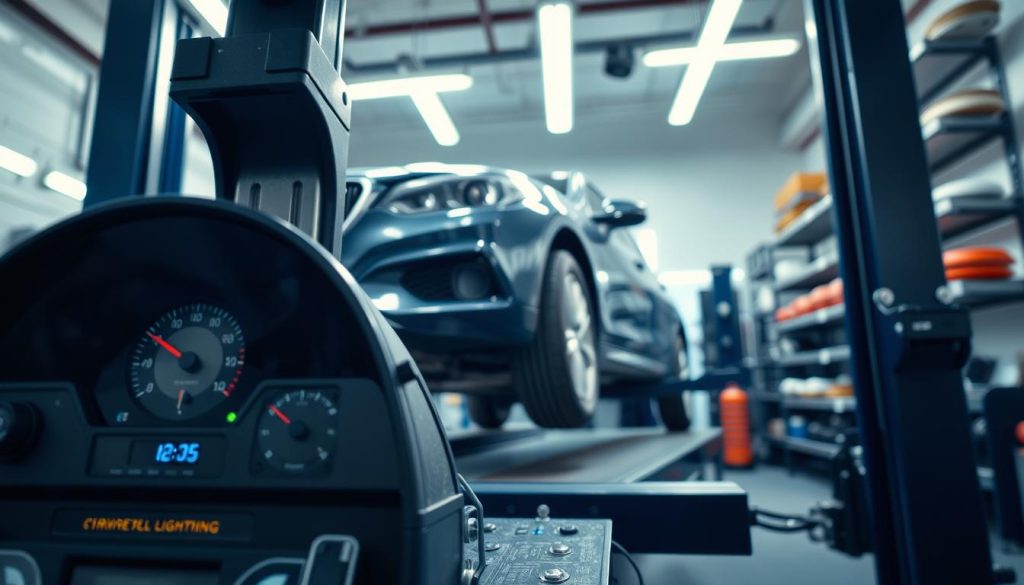
Why visible wheel position issues should trigger a professional inspection
Visible changes can include a wheel sitting farther back in the well, uneven ride height side-to-side, or a crooked stance. These signs often mean the problem is structural, not just a worn part.
- What drivers may see: one wheel set back, uneven gaps, or a lower corner.
- Why it matters: steering and braking stability can be compromised when geometry is wrong.
- How we diagnose: we separate bent suspension components from shifted mounting points with measurement tools and test rigs.
- Our approach: correct the root cause so the auto tracks straight again — not just swap parts and hope the symptom vanishes.
Act quickly. Prompt inspection reduces further wear and keeps the vehicle safe to drive.
Hidden Frame Damage You Can’t See Without Diagnostics
Hidden structural shifts often show no visible signs on the outer panels, but they change how components line up and perform. What looks cosmetic can mask measurement points that sit outside factory tolerance.
When exterior panels look fine but the structure is out of tolerance
Panels can rebound or be replaced while underlying datum points stay wrong. That creates a false sense of security because gaps and paint may appear normal.
Why post-collision diagnostic scans help uncover related damage
We use measurement systems and post-collision diagnostic scans to confirm the vehicle’s condition. These tools check mounting locations, alignment geometry, and electronic system calibrations.
The risk of delaying repairs when problems aren’t obvious
Small symptoms often grow into larger issues. Uneven tire wear, fatigue in mounts, and drifting alignment can reduce safety and raise future costs.
- Hidden damage: panels may hide moved rails or mounts.
- Diagnostics: laser measuring and scans verify whether specs are met.
- Timing: prompt frame straightening and verification protect safety and long‑term condition.
We recommend a measurement-based inspection after any collision. On busy san antonio roads and highways, predictable tracking and reliable safety systems make timely action essential.
Car Frame Repair San Antonio: What to Expect From Our Repair Approach
Our approach begins with measurement-grade diagnostics so we know exactly what the structure needs. We combine laser alignment, diagnostic scans, and hands-on inspection to map deviations from factory specifications.
Advanced diagnostics and laser alignment for accurate measurements
We use precision lasers and scan tools to verify mounting points and suspension datum. This technology helps us spot hidden damage and plan effective work.
Expert craftsmanship focused on lasting results and safety
Our skilled technicians focus on safety, not quick cosmetic fixes. We explain the repair process, expected timeline, and provide a clear estimate so you can make informed decisions.
Full straightening, welding, suspension correction, and verification
We perform full unibody and full frame straightening to restore the vehicle frame to factory specifications. When reinforcement is needed, we apply structural welding and alignment. Suspension and steering corrections address the root cause of handling issues.
Post-repair test and customer support
After work is complete, we re-check measurements and complete a test drive to confirm performance. Our team coordinates with insurance and explains repair services in plain language so customers leave confident in the outcome.
Our Frame Repair Process From Inspection to Quality Control
Before any work begins, we map the damage and create a documented plan tied to objective measurements. This ensures the vehicle’s condition guides each decision and the timeline stays clear.
Frame damage assessment and documenting the vehicle’s condition
We perform laser measuring and digital photos to record datum points and visible issues. All findings go into a written report for you and your insurance carrier.
Structural repairs and frame replacement when necessary
Our technicians choose straightening or replacement based on safety and long‑term condition. We use controlled straightening, welding, and certified parts when required.
Corrosion prevention to protect long-term structural integrity
After metal work, we apply coatings and seam sealing to stop rust and protect repaired areas. That step preserves value and strength over time.
Reassembly and quality control checks before delivery
We reassemble with attention to parts fitment and fasteners. Final checks include measurement verification, system tests, and a road test so the vehicle returns performing as designed.
- Clear documentation at every stage
- Coordination with insurance and updates on time
- Verification before you drive away
Working With Insurance and Getting a Clear Repair Estimate
Navigating insurance paperwork can feel daunting after a collision, but a clear estimate turns confusion into a plan.
How we help streamline the collision repair process
We coordinate with major insurance carriers to speed approvals and reduce back-and-forth. Our technicians document measurements, photos, and teardown findings so every item on the estimate is verifiable.
Transparent pricing and plain-language explanations
We provide an itemized estimate that explains what we will fix, why it matters, and the expected timeline. If additional damage appears during teardown, we update you with clear options and revised costs before proceeding.
Helping you decide between a claim and paying out of pocket
Choosing to file an insurance claim depends on severity, deductible, and future premiums. We outline pros and cons and show the estimate side-by-side so you can make an informed decision.
- We support documentation and insurer coordination to keep the repair process moving.
- Our estimate covers parts, labor, and verification steps so there are no surprises.
- We act as your local shop advocate focused on safe, correct services and clear communication.
Why Choose Miracle Body and Paint Collision Center for Frame Repair
Choosing the right shop matters as much as the work itself when structural integrity is at stake. We combine proven procedures, clear communication, and a customer-first approach so you leave confident in the outcome.
Skilled, certified technicians with years of experience
Our certified technicians bring years experience to every job. We follow factory protocols and document measurements so each repair meets objective standards.
Technology and equipment designed to meet factory specifications
We use laser measuring systems and straightening rigs that return critical datum points to spec. This technology supports precise corrections, including frame straightening and auto frame work.
A team focused on craftsmanship, safety, and peace of mind
We prioritize structural correctness over quick fixes. Our team works to restore handling, reduce uneven tire wear, and secure lasting fitment so your vehicle performs as intended.
- Certified technicians and documented processes
- Advanced technology for measurement and alignment
- Transparent communication and thorough post‑work checks
We serve drivers looking for honest, expert repair services from a local body shop focused on safety and long‑term value in san antonio.
Conclusion
If you notice odd noises, misaligned openings, or handling changes after an impact, act quickly to verify structure. A professional structural inspection is the safest next step for your vehicle and your peace of mind.
Correct structural work protects safety, restores handling, and prevents uneven wear on tires and suspension parts. We help with full diagnostics, transparent estimates, and coordination with insurance so you know the path forward.
Choose Miracle Body and Paint Collision Center for clear answers, quality workmanship, and a trusted local auto body shop experience. Contact our team today to schedule an inspection and start the process to restore vehicle performance.
Hire Miracle Body and Paint Collision Center — 2 Locations to Serve You
North West — Leon Valley: (210) 680-1987, 6217 Grissom Rd., San Antonio, TX 78238
North East: (210) 858-3630, 4650 Walzem Rd, San Antonio, TX 78218