How to Navigate Insurance Claims After a Car Accident in Texas

What to Do Immediately After a Car Accident in San Antonio
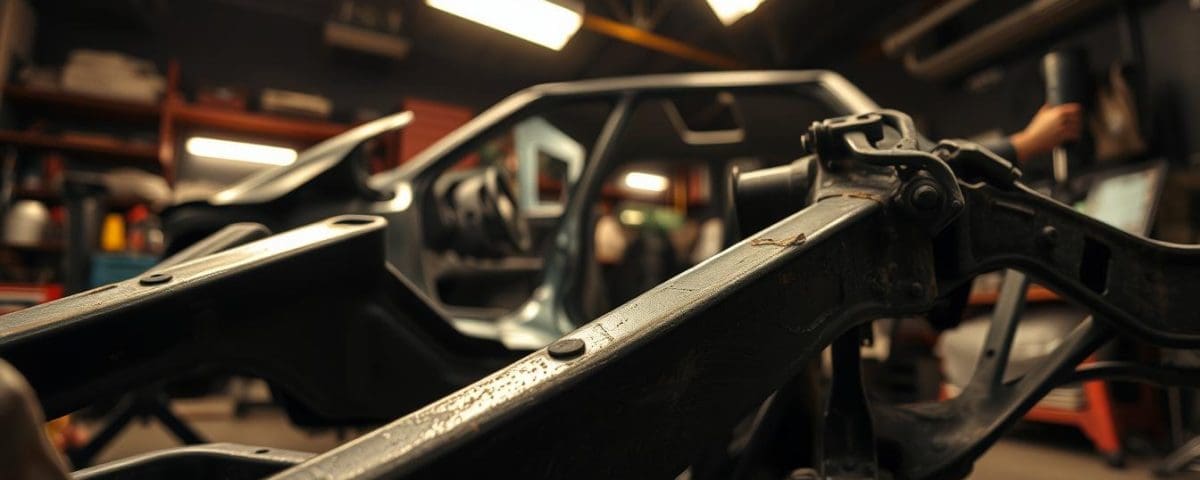
We ask this because a vehicle’s chassis acts like a backbone, managing crash forces and keeping occupants safer. When that structure is bent, a car can pull, steer oddly, or fail to protect us in a later impact.
We’ll explain practical signs to watch for and what we can safely check at the scene. Some issues are visible, while others are hidden and affect alignment, handling, and long‑term safety.
We set expectations for when it might be okay to move the vehicle a short distance and when towing is the smarter, safer call. Professional measurement and alignment checks are the only reliable way to confirm whether the chassis is bent or shifted.
If we’re in San Antonio, Miracle Body and Paint Collision Center is our local option for inspection and trusted collision repair planning. When safety matters most, we recommend getting a prompt professional assessment and hiring them to restore our car correctly.
Key Takeaways
- Structural issues can be hidden and affect handling and safety.
- We should only make simple, safe checks at the scene.
- Professional measurement and alignment confirm true condition.
- Towing is often safer than driving a compromised vehicle.
- Miracle Body and Paint Collision Center can inspect and guide repairs in San Antonio.
What a Car Frame Does for Safety and Structural Integrity
We depend on the car frame to hold everything in the right place. The chassis or structure supports the body, engine, suspension, and major components so the vehicle’s geometry stays correct under load.
In a crash, that structure routes and absorbs forces to protect the cabin. Unibody designs use integrated panels to crumple in controlled ways. Ladder rails and crossmembers do similar work on truck-style builds.
Many systems bolt to the car frame — engine mounts, steering gear, suspension, and electrical components. One shift in alignment can cascade and affect handling, tire wear, and panel gaps.
- Load-bearing chassis keeps geometry correct so components work as designed.
- It absorbs and distributes energy during an impact to improve passenger safety.
- Misalignment shows up as pulling, uneven gaps, or doors that won’t close smoothly.
Even if it still drives, we should not assume safety. Spotting early warning signs helps us decide whether to stop driving and schedule a professional inspection right away.
How to Spot Signs of Car Frame Damage Before You Keep Driving
We should do a quick, focused walkaround before deciding to drive on. Use this short checklist to find the most common signs that mean we need a professional inspection.
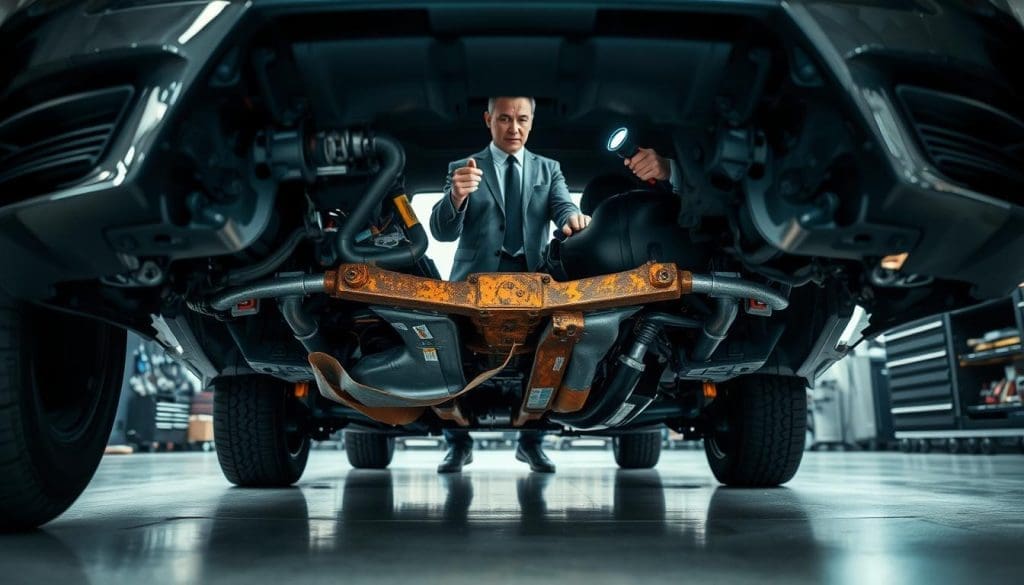
Quick visual check (underneath and around wheels)
- Look for visible bends, dents, buckling, cracks or wrinkled metal near rails and wheel wells.
- Check suspension mounts and nearby components for misalignment or looseness.
- Scan for fluids or displaced parts that weren’t present before the incident.
Doors, hood, trunk and panels
Open and close doors, the hood, and trunk. Doors that stick, sit proud, or sink can mean the car frame shifted.
Uneven panel gaps or panels that don’t line up symmetrically are another clear sign to stop and inspect.
Driving cues to watch for
- Pulling to one side, wandering, or a steering wheel that sits off-center while driving straight.
- New vibrations, rattles, squeaks, or poor ride quality at speed.
- Rapid or uneven tire wear — more wear on one side signals misalignment or a bent car frame.
If we spot two or more signs, we prioritize a professional inspection before we keep driving. Continuing to drive can worsen problems and hide true issues that only a shop can measure and correct.
Can You Drive With frame damage after accident?
A compromised structural member changes how the vehicle reacts in normal driving and in another collision.
Safety risks to occupants when structural integrity is compromised
We must assume lowered protection. A weakened chassis can’t route crash forces the same way, which raises the risk of injury in later collisions.
Performance problems from misalignment, suspension stress, and reduced stability
We may notice the car pulling to one side, inconsistent steering feel, or reduced stability at highway speeds.
Misalignment increases suspension stress and uneven tire wear. That wears parts faster and hurts fuel economy.
Legal and insurance complications of driving a vehicle with known issues
Driving a vehicle with known frame damage can lead to coverage disputes or legal exposure if the car is unsafe.
Practical guideline: if steering feels unsafe, the vehicle won’t track straight, panels bind, or new noises appear, stop driving and arrange towing. Treat suspected structural faults as a stop‑and‑check, not a drive‑and‑see experiment.
- Unpredictable behavior in a second collision increases occupant risk.
- Ongoing problems reduce performance and raise repair costs.
- Professional inspection protects safety and insurance interests.
What to Do Immediately After a Collision If You Suspect Frame Damage
We should act calmly and use a short checklist to decide if the vehicle is safe to move. A quick walkaround often reveals obvious problems that affect safety and handling.
Quick checks we can do at home without tools
Simple visual and functional checks
Look for fresh leaks, scrapes on the underbody, and visible bends near the wheel wells and front or rear rails. Compare left vs. right panel gaps and see whether the body sits level.
Open and close all doors, the hood, and trunk to spot binding or latches that won’t catch. Check tires for rubbing or unusual contact with parts.
When to stop driving and arrange towing
Stop driving if the steering feels off, the vehicle pulls hard, brakes act inconsistent, new vibrations appear, or a door won’t latch. Driving can add stress to suspension parts and worsen problems.
Why a professional inspection matters even after a minor impact
A qualified inspection uses measurements we can’t do at the roadside. Document what we see with photos of panels, tires, and gaps to support insurance and repair planning. For San Antonio drivers, scheduling a prompt evaluation protects safety and prevents escalating repair costs.
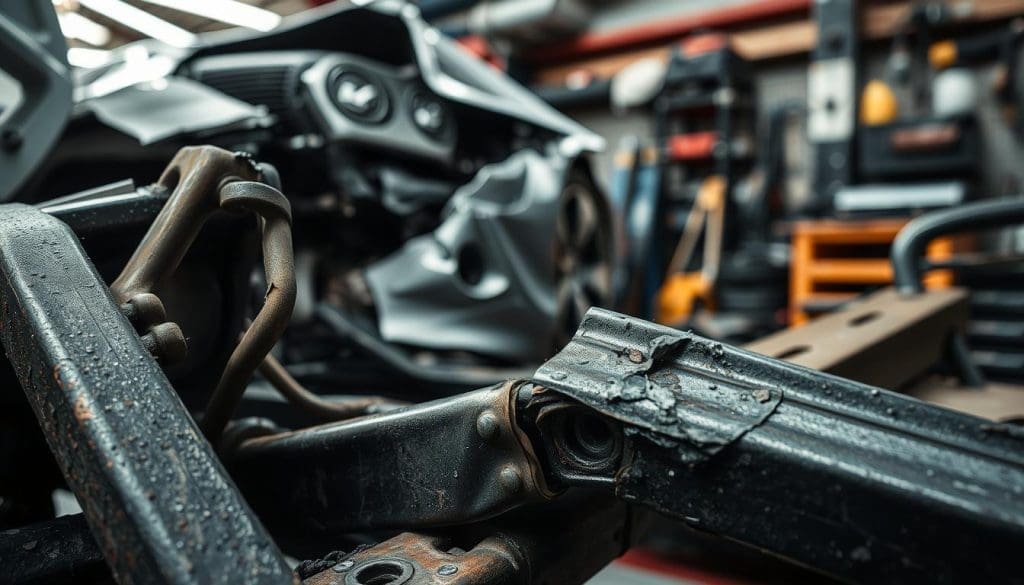
How Professionals Repair Frame Damage and Restore Vehicle Integrity
Proper collision repair begins with precise measurements that reveal misalignment invisible to the naked eye.
Unibody and ladder rails need different strategies. Unibody cars rely on integrated panels and need measured correction to restore the original load paths. Ladder‑rail vehicles often allow section replacement or targeted pulls.
Measurement systems and bench work
Shops use computerized measurement systems with lasers and sensors to map the vehicle. Frame machines and anchored benches let technicians apply controlled pulls and verify results in real time.
Straightening, replacement, and follow‑up
Frame straightening is done in small, measured steps rather than rough pulling. When cracks or severe buckling exist, replacing sections or components is safer than forcing the structure back.
- Correct structural repairs restore alignment and protect suspension and performance.
- Improper repairs leave hidden weaknesses and recurring steering or tire wear issues.
- A reputable auto body shop documents measurements, shows a clear repair plan, and uses quality parts.
For reliable repairs in San Antonio, Miracle Body and Paint Collision Center follows these tools, systems, and verification steps to return vehicles to safe operation.
Conclusion
When a vehicle’s structure looks compromised, we should treat movement as a calculated risk, not a convenience.
If the car or body shows signs of shift, the vehicle can lose predictable handling and protective behavior even while it still drives.
Do not guess. Stop driving if symptoms appear, document what we see with photos, and arrange a professional inspection with measured verification.
Correct repairs and verified measurements restore vehicle structural integrity, reduce repeat alignment drift, and limit abnormal wear.
Hire Miracle Body and Paint Collision Center — 2 Locations to Serve You
North San Antonio: 210-555-0123 • 1234 N Main St, San Antonio, TX 78212
South San Antonio: 210-555-0456 • 5678 S Loop 1604, San Antonio, TX 78254