What Impacts the Cost of Auto Body Repair in San Antonio
How Modern Paint Matching Restores Your Car’s Original Finish

We know the difference between fixing dents and restoring protection. When a collision touches your vehicle, visible damage is only part of the story. Modern systems — structure, airbags, and driver-assist tech — work together to protect people on the road.
More than 6 million police-reported crashes occurred in 2023, and many drivers face multiple incidents in a lifetime. That scale shows why a calm, repeatable process matters.
In this guide, we define what “car safety after accident” truly means. We explain how a single impact can affect sensors and frames even when the vehicle still drives.
We will walk you through what to document at the scene, how to work with insurance, and how to insist on diagnostics and calibration so systems work as designed.
At Miracle Body and Paint Collision Center in San Antonio, we treat repair as a safety decision, not a cosmetic one. Trust us to restore protection and invite you to contact our team when you need thorough, safety-focused collision repair.
Key Takeaways
- Repair restores more than looks — it restores protective systems.
- Document the scene and collect sensor data when possible.
- Insist on diagnostics and calibration to ensure proper performance.
- Over 6 million police-reported crashes in 2023 highlight the need for process.
- We focus on safety-first repairs and welcome your call to begin the work.
Post-Crash Safety Steps | Miracle Body and Paint Collsion Center
Immediate, calm actions make a big difference for people and for the claim that follows. We recommend a short, clear checklist to protect health, reduce risks on the road, and preserve facts for repair and insurance.
Stay calm and check for injuries
First, we check ourselves, passengers, and others for visible injuries. Even minor pain can signal a serious issue, so we seek medical care when in doubt.
Note: Older adults often have higher risk and slower recovery; document any treatment and keep receipts.
Make the scene visible and reduce traffic risk
Turn on hazard lights to warn other drivers and lower the chance of a secondary traffic crash. If vehicles can be moved safely, pull to the shoulder to clear lanes.
Call the right responders and get a police report
Dial 911 for injuries, fire, or spilled fluids. For minor incidents, contact the nonemergency line so a record is created.
Request the police report number at the scene. That report helps with claims and establishes the official record.
Speak plainly and stick to facts
Avoid arguing fault. We answer questions calmly and state only what we saw. Clear, factual notes from the scene help repairs and claims proceed smoothly.
- Quick steps: check injuries, warn traffic, move vehicles if safe, call police, and document facts.
- Why it matters: these steps protect people and keep evidence intact for proper repair.
Document the scene and gather information your insurance company will need
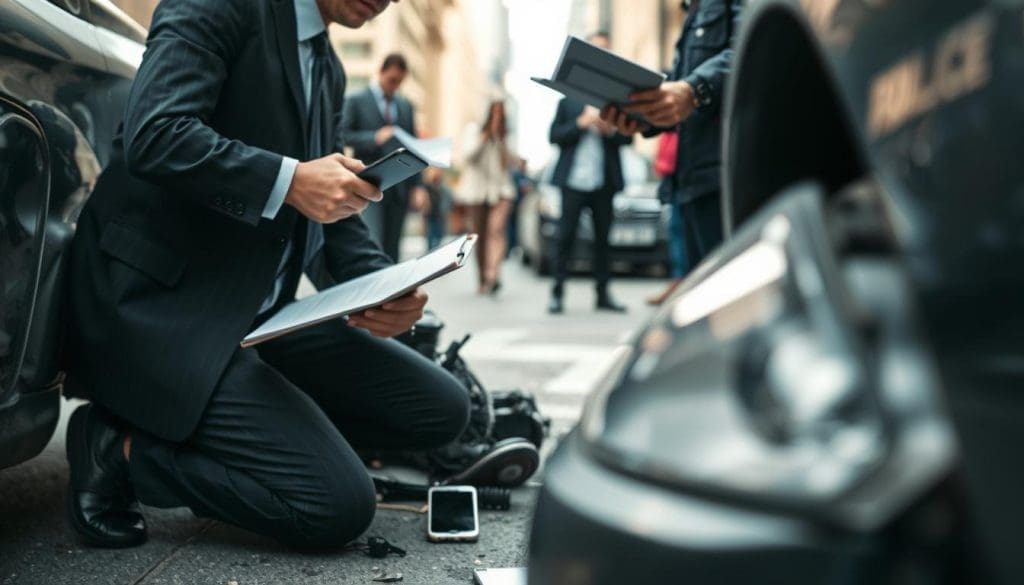
Gathering the right details on site prevents confusion later with your insurer and repair shop. Good documentation protects you twice: it helps your insurance company evaluate the claim and it guides repairs so hidden problems are not missed.
Exchange driver and vehicle details
Collect essentials from each driver: full name, phone, contact information, insurance provider and policy number, vehicle make and model, license plate, and driver license details where appropriate.
Keep the exchange professional and brief. Give only what supports later questions and avoids confrontation.
Take photos and videos
Shoot wide-angle scene photos, close-ups of damage, vehicle positions, skid marks, debris, and road conditions that may affect fault. Document any visible injuries with care and respect, but seek medical help first.
Collect witness statements and organize your packet
Get witness names and a phone number and, if allowed, a short written or recorded note. After the scene, create one folder with photos, a timeline note, receipts, and copies of any exchanged insurance forms.
Bring this organized packet to your insurance company and to Miracle Body and Paint Collision Center to support a repair plan that addresses all safety-related needs and strengthens your case.
Start the claims process without compromising safety-critical repairs
Opening a claim early helps preserve evidence and keeps options open for thorough repairs. We recommend notifying your insurance company as soon as practical, even when fault is unclear.
Notify your insurer and open a claim
At first notice of loss, provide time and place, involved vehicles, a brief factual description, and any immediate safety concerns. This starts the claims process timeline and lets your provider advise on towing, rental, and next steps.
Use the police report number, photos, and receipts
Give your insurer the police report number, clear photos, and receipts. Good documentation reduces disputes when hidden damage appears and helps the company evaluate coverage quickly.
Choose the collision center that repairs your vehicle
You generally may select the repair center you trust. Ask your insurer direct questions about estimates and parts so the chosen center can follow OEM procedures and document work.
Avoid quick cosmetic fixes
Do not accept fast, surface-only repairs. Superficial work can miss structural, airbag, or electronics damage and lead to further issues down the road.
Next: We will explain how impacts can damage modern systems beneath visible panels and why a full inspection matters.
How a crash can disable your vehicle’s safety systems beyond visible damage
What looks like light harm on the outside can hide serious failures in structural and electronic systems. We should always assume unseen issues until a professional inspection proves otherwise.
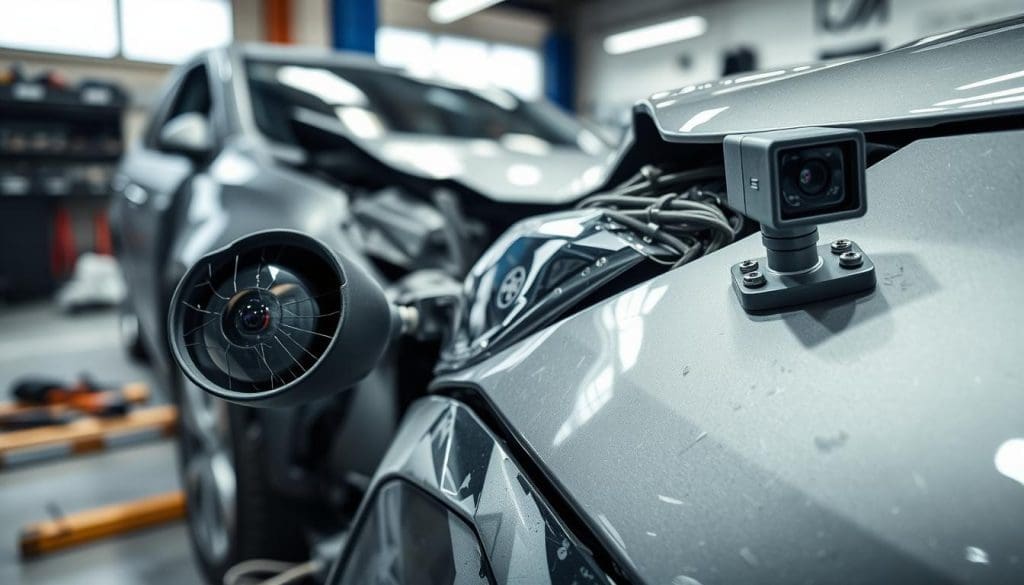
Structural damage that changes how crash energy is managed
Bent rails, crushed zones, or shifted mounting points change how a vehicle handles impact energy. Even small misalignments make future impacts more dangerous.
Structural integrity is model-specific. Repairs must follow manufacturer procedures so energy paths work as designed.
Airbags and SRS components that may need replacement, not reset
Airbags, seatbelt pretensioners, and SRS modules often store crash data and fault codes. Clearing a warning light is not the same as fixing the underlying fault.
We recommend replacement of triggered components and diagnostic testing to confirm the restraint system will deploy correctly next time.
ADAS cameras, radar, and sensors that can misread the road
Cameras, radar, and proximity sensors are easy to knock out of alignment. Misaligned ADAS can misjudge lane markings, distance, or obstacles.
Calibration, measuring, and electronic checks at a certified collision center restore function and protect occupants on the road.
- Hidden structural damage can compromise crash performance.
- SRS components may need parts replacement, not simple resets.
- ADAS must be calibrated to ensure reliable operation.
Next, we explain how proper collision repair restores these systems with OEM planning, precision work, and verification.
How proper collision repair restores safety features and verifies they work
A thorough repair ties OEM-guided planning, diagnostics, and measured work into a single, documented process. We treat every step as part of restoring protection, not just covering visible marks.
OEM-aligned repair planning and parts decisions
We build a repair plan based on the vehicle model and manufacturer procedures. That plan guides parts choices and repair sequences so systems behave as intended.
Precision frame and structural repairs
Measurements and controlled methods return rails, mounts, and crush zones to spec. Proper alignment ensures energy paths work in future impacts.
Electronics diagnostics for stored codes and faults
We scan modules to find stored crash codes and communication faults. Addressing those faults prevents unexpected warning lights and restores restraint and sensor function.
ADAS calibration for real-world performance
Camera, radar, and lidar systems need calibration after many repairs. Accurate calibration helps driver-assist features read lanes and distances correctly on every drive.
Post-repair quality checks and documentation
We perform test drives, verify warning lights, and create a clear documentation packet for your claim and records. Keep copies to answer insurer questions and protect your case.
At Miracle Body and Paint Collision Center, we follow OEM steps, document each action, and verify outcomes so you can trust the repair process and drive with confidence.
Conclusion
Handling post-incident steps methodically helps protect people, evidence, and future performance. With more than 6 million police-reported crashes in 2023, we recommend clear priorities: protect people first, reduce roadway risk, and stick to factual notes for the police and your insurer.
Gathering and organizing information at the scene — photos, the police report number, witness names, and receipts — speeds insurance reviews and supports fair claims. Stay calm; fault can be unclear and the investigation will sort responsibility.
Remember: hidden damage to structure, airbags/SRS components, and ADAS is common and is not solved by surface fixes. Peace of mind comes from diagnostics, calibration, and final checks that verify repairs.
Call Miracle Body and Paint Collision Center: North West San Antonio – Leon Valley (210) 680-1987, 6217 Grissom Rd., San Antonio, TX 78238; North East San Antonio (210) 858-3630, 4650 Walzem Rd, San Antonio, TX 78218. Call the location nearest you to schedule an estimate, ask questions, and begin documented, verified repairs.