


Why Detailing Matters After Collision Repair

What Causes Auto Paint to Peel or Fade

After a car crash, technicians are key in checking how much damage there is. They figure out what repairs are needed. It’s important to do this right to make sure cars are fixed safely and well.
At Miracle Body and Paint Collision Center, skilled technicians do a deep check of the car. They look at the car’s body, structure, and mechanical parts. This helps find any damage that’s not easy to see.
Getting the damage right is very important. It affects how good and safe the repairs will be. By letting experts work on your car, you know it will be fixed right.
Key Takeaways
- Technicians play a vital role in assessing vehicle damage after a crash.
- Accurate damage evaluation is key for safe and efficient repairs.
- Miracle Body and Paint Collision Center offers expert accident damage assessment services.
- A thorough assessment looks at the car’s structure, body, and mechanical parts.
- Precise damage evaluation directly impacts the quality and safety of repairs.
Overview of Accident Damage Assessment
Knowing the full damage to a vehicle after an accident is key for good repair planning. This means checking the vehicle carefully to find all repairs needed.
Getting the damage right is important for many reasons. It makes sure repairs cover everything damaged. This makes the vehicle safer and stops problems from unfixed damage.
Importance of Accurate Damage Assessment
An accurate damage check is the start of a good repair. It helps in:
- Finding all damaged parts and components
- Seeing how bad the damage is
- Creating a detailed repair plan
- Figuring out the total repair cost
This way, the vehicle gets fixed to look and work like before. It also makes talking to insurance companies easier, helping with claims.
Key Components of Damage Evaluation
The damage check process includes several important parts, such as:
- Visual Inspection: A close look to spot obvious damage.
- Structural Assessment: Checking the vehicle’s structure for hidden damage.
- Mechanical Checks: Looking at mechanical parts to make sure they work right.
By using these steps, techs get a full picture of the vehicle’s state. This lets them make a solid repair plan. This careful method makes sure all repairs are done right, making the vehicle safer and better.
Initial Inspection Process
Checking vehicle damage starts with a detailed first look. This important step helps find all damage, both seen and hidden. It ensures the accident damage assessment is correct.
First, the vehicle’s outside and inside are carefully checked. Technicians search for damage like dents, scratches, and misalignments. They also look for signs of airbag use or other safety features.
Visual Assessments
Looking closely is key in the first check. Technicians examine the vehicle for cosmetic damage, like paint scratches or broken lights. They also check for any unevenness or misalignments in the body panels.
A detailed look helps find issues that might not be obvious at first. This includes checking the vehicle’s frame and other important parts for damage.
Structural Integrity Checks
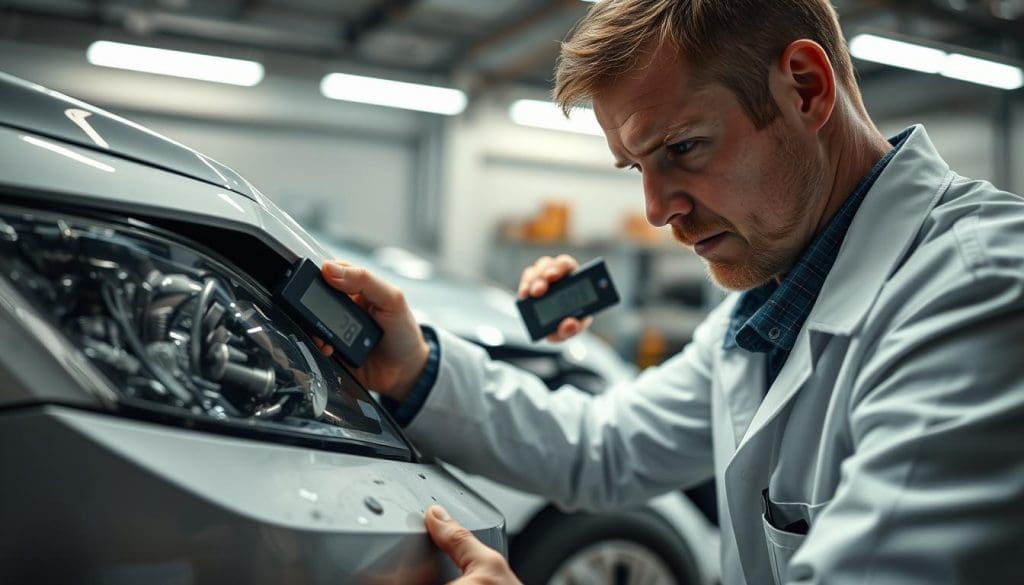
Checking the vehicle’s structure is next. Technicians use special tools to see if there’s any damage to the frame or other key parts.
These checks are vital to make sure the vehicle is safe to fix. They also help find any risks and fix them. Technicians check the engine, transmission, and suspension for damage or problems.
Types of Damage Technicians Identify
Understanding the full extent of repairs needed after a car accident is key. Technicians check many parts of the vehicle to see how much damage there is.
Cosmetic Damage
Cosmetic damage affects how the car looks but doesn’t always hurt its working parts. It includes dents, scratches, and paint damage. Even though it doesn’t affect safety, it can lower the car’s value and appeal.
Frame and Structural Damage
Frame and structural damage is serious and can make the car unsafe. It happens when the car hits something hard. Technicians look for signs like frame deformation, misalignment, or structural weaknesses that could make the car unsafe.
Mechanical Components
Damage to mechanical parts can really hurt how the car works. Technicians check the engine, transmission, brakes, and suspension. Finding damage here is key to making sure the car is safe and works right.
Technicians can give a full report on the damage by knowing what types there are. This helps fix the car back to how it was before the accident.
Tools and Technologies Used
Modern tools and software have changed how we check vehicle damage after an accident. Technicians now use advanced technologies to assess damage better and plan repairs more efficiently.
Diagnostic Equipment
Diagnostic equipment is key in finding out how much damage a vehicle has. It includes advanced scanning technologies that spot even small damage not seen by the eye. These tools help find problems with the vehicle’s frame, body, and mechanical parts.

Some of the diagnostic tools used include:
- 3D scanning devices
- Electronic measurement systems
- Specialized software for analyzing damage
Repair Estimation Software
Repair estimation software is also very important. It helps create detailed repair plans and estimates. It considers the cost of parts, labor, and more. This software makes the repair planning process better and cheaper.
Using this software makes sure all needed repairs are found and included in the estimate. This reduces the chance of missing damage.
Understanding Insurance Implications
Knowing how accident damage assessment affects insurance claims is key for car owners. When a car gets into an accident, the damage check is more than just seeing how bad it is. It’s also a big part of the insurance claim process.
The damage check is the base of insurance claims. It gives the needed proof and details to back up the claim. A good check finds all the damage, which is key for a claim to succeed.
Role of Damage Assessment in Claims
The damage check is closely tied to the insurance claim process. It gives a detailed report of the damage. This report helps insurance adjusters figure out if the claim is valid and how big it is.
A detailed damage check makes sure all damage is found. This lowers the chance of missing damage that could mess up the claim.
Communicating with Insurance Adjusters
Talking well between techs and insurance adjusters is key for a smooth claim process. Techs need to give clear and accurate damage reports to adjusters. Adjusters then use this info to handle the claim.
Clear and simple talk helps avoid mix-ups. It makes sure the claim process goes smoothly.
By getting the insurance side of accident damage checks, car owners can handle claims better. They can make sure their car gets fixed right.
Repair vs. Replace Decisions
Technicians must decide whether to fix or replace damaged parts. This choice is key for the vehicle’s safety and how well it works. It also affects the vehicle’s value and reliability over time.
Evaluating Cost-Effectiveness
Cost is a big factor in deciding to repair or replace a part. Technicians look at the repair cost versus the cost of a new part. They consider the part’s age, condition, and how badly it’s damaged.
- Cost of Repair: The total cost of labor and materials needed to fix the damage.
- Cost of Replacement: The cost of a new or refurbished part, including installation.
- Part’s Life Expectancy: How much longer the fixed part is expected to last compared to a new one.
Long-term Vehicle Value Considerations
The choice to repair or replace affects the vehicle’s long-term value. A well-repaired vehicle keeps its value better than one with quick fixes or low-quality parts.
Key Considerations:
- The quality of the repair or replacement part.
- The impact on the vehicle’s overall performance and safety.
- How the repair or replacement affects the vehicle’s aesthetic appeal.
Common Signs of Accident Damage
Accident damage can be hard to spot, making it key to know the signs. Car owners should watch for signs that their vehicle has been damaged.
Visible External Damage
Visible damage is often the first sign of an accident. This includes:
- Dents and Dings: Small dents and dings might look minor, but they can hide bigger problems.
- Scratches and Paint Damage: Deep scratches can lead to rust, and paint damage shows how bad the impact was.
- Broken or Misaligned Body Panels: Panels that are broken or not straight can mean serious damage to the car’s structure.
Internal Mechanical Issues
Internal mechanical problems can be tricky to find but are very important. Look out for:
- Unusual Noises: Sounds like grinding or clunking can mean something’s wrong with the car’s parts.
- Vibrations: Feeling the car shake while driving could point to engine or transmission issues.
- Performance Issues: If the car doesn’t run as well as it used to, it might have internal damage.
Spotting these signs early can help car owners fix problems before they get worse. This makes the damage evaluation process more effective.
The Importance of Expert Opinions
Assessing vehicle damage needs a sharp eye and technical skills. Experts are key. After an accident, damage can range from minor to severe, affecting many parts. Experts spot issues that owners might miss.
Benefits of Professional Assessment
A pro assessment gives a full look at the damage, both seen and unseen. Technicians use special tools and methods for accurate diagnosis. This detailed check is vital for figuring out repairs and costs.
Key benefits of professional assessments include:
- Accurate diagnosis of damage
- Detailed repair estimates
- Identification of hidden safety issues
- Advice on the best and most affordable repairs
When to Seek a Technician’s Expertise
Get a technician’s help right after an accident. Even small damage can hide bigger problems. Experts can tell if parts need fixing or replacing.
| Assessment Criteria | Description | Importance Level |
|---|---|---|
| Visual Inspection | First look at visible damage | High |
| Diagnostic Tests | Special equipment for hidden issues | High |
| Repair Estimates | Costs for needed repairs | High |
| Safety Checks | Make sure the car is safe to drive | Critical |
Getting expert opinions ensures your car is checked and fixed right. This keeps it safe and valuable.
Post-Assessment Recommendations
Technicians play a key role in the repair planning process. They assess the damage and outline the steps needed for repair. This helps vehicle owners understand what’s coming next.
Then, they explain the repair options available. Technicians discuss the good and bad of each choice. They consider the cost, time, and damage extent.
Repair Options Explained
Technicians might suggest several repair options, including:
- Replacing damaged parts with original equipment manufacturer (OEM) components
- Using aftermarket parts as a cost-effective alternative
- Refinishing or repainting damaged body panels
- Repairing or replacing mechanical components
Each option has its own pros and cons. OEM parts ensure a perfect fit and quality but cost more. Aftermarket parts save money but might not be as good.
Importance of Following Manufacturer Guidelines
It’s vital to follow the manufacturer’s guidelines for repairs. This means sticking to specific procedures and using approved parts and materials.
The benefits of doing this include:
- Maintaining the vehicle’s warranty
- Ensuring the vehicle’s safety and performance
- Preserving the vehicle’s value
By sticking to these guidelines, technicians ensure repairs are done right. This way, the vehicle is fixed to its pre-accident state.
Customer Involvement in Assessments
Getting customers involved is vital for a good damage check. It helps technicians understand the situation better. Vehicle owners play a big role in making the assessment accurate and effective.
What Vehicle Owners Should Provide
To help with a detailed damage check, owners should share all they know about the accident. This includes what happened, when, and where. They should also talk about any problems they’ve seen with the car after the accident.
- Details of the accident, such as the date, time, and location
- A list of any visible or suspected damage
- Any repair or maintenance history relevant to the current damage
- Observations about the vehicle’s performance or handling post-accident
Sharing this info helps technicians see the full extent of the damage. They can also spot problems that might not be obvious at first.
Understanding Assessment Reports
After the check, technicians will give a detailed report. This report will have the findings and what repairs are needed. It’s key for owners to understand this report to make smart choices about their car.
The report usually has:
| Report Section | Description |
|---|---|
| Damage Summary | A detailed list of the damage found during the check |
| Recommended Repairs | A list of repairs needed to get the car back to its pre-accident state |
| Cost Estimate | A breakdown of the estimated costs for the suggested repairs |
Knowing these parts helps owners understand the work needed and the costs. This lets them plan better.
The Role of Miracle Body and Paint Collision Center
Miracle Body and Paint Collision Center has a team of skilled technicians. They focus on detailed accident damage assessment. With lots of experience in fixing cars after accidents, they know how to check damage carefully.
Expert Technicians and Their Approach
The team at Miracle Body and Paint uses a careful method for accident damage assessment. They use the latest tools to check cars fully. They find both obvious and hidden damage.
They are good at checking different parts of the car. This includes the body, mechanical parts, and electrical systems. They make sure they find and fix all needed repairs.
| Assessment Area | Technician Expertise |
|---|---|
| Bodywork Damage | Expertise in repairing dents, scratches, and frame damage |
| Mechanical Components | Skilled in assessing and repairing engine, transmission, and other mechanical parts |
| Electrical Systems | Proficient in diagnosing and fixing issues with vehicle electrical systems |
Location Convenience for San Antonio Residents
For people living in San Antonio, Miracle Body and Paint Collision Center is close by. They can fix many types of cars.
Choosing Miracle Body and Paint means quick service and fair prices. Plus, you know you’re in good hands with certified technicians.
Why Choose Miracle Body and Paint Collision Center
When it comes to fixing cars after accidents, checking for damage is key. At Miracle Body and Paint Collision Center, skilled technicians use the latest tools and methods. They carefully check and fix any damage to your vehicle.
Quality Assurance in Collision Repair
Miracle Body and Paint Collision Center is known for its focus on quality. Their team pays close attention to every detail, from the first check to the final fix. This ensures your car is safe and reliable to drive. For more on why post-accident checks are important, check out their article.
With two locations in San Antonio, Miracle Body and Paint is a top choice for car repairs. Their team and modern facilities work together to make your car like new again. Contact them to book a repair and see the quality for yourself.

