What Certifications Matter in Collision Repair

How Collision Repair Works in San Antonio From Start to Finish
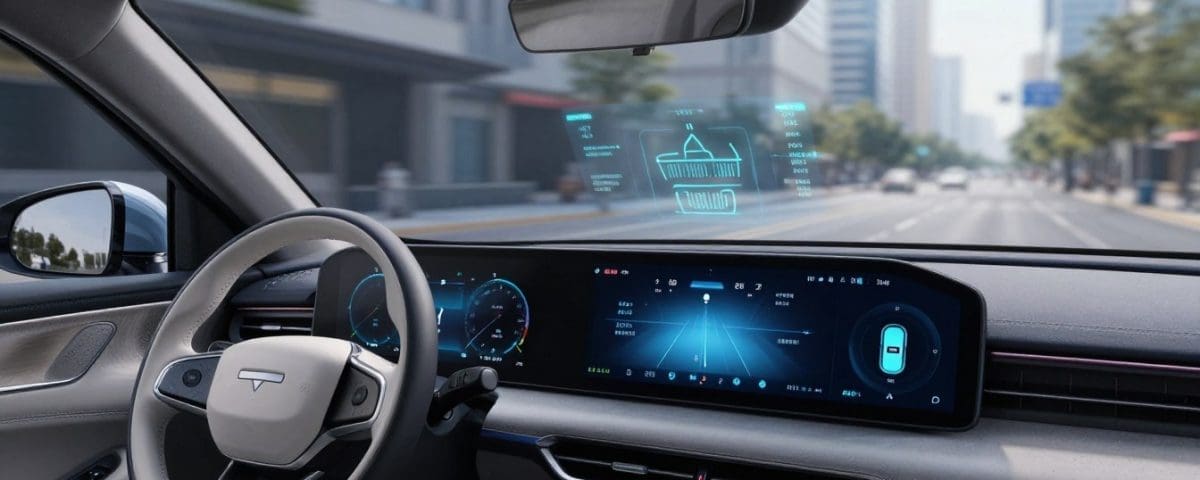
Imagine having an extra set of eyes on the road that never blinks. Modern cars are now equipped with smart technologies designed to help you drive. These advanced driver-assistance features work through a seamless human-machine interface.
They use automated technology like sensors and cameras. This setup constantly scans your surroundings. It can spot potential hazards or mistakes you might miss. The goal is to respond quickly and support your actions behind the wheel.
You gain an essential layer of protection on every trip. Your vehicle monitors the road in real time. This helps you maintain better awareness in complex traffic. By automating specific tasks, it significantly cuts down on human error during your daily commute.
As this automotive innovation evolves, it has become standard in many new models. It offers you greater peace of mind, making every journey smoother and more secure.
Key Takeaways
- Advanced driver-assistance features provide real-time monitoring and support for the person behind the wheel.
- They utilize sensors and cameras to detect obstacles and potential errors faster than a human can.
- This technology helps you maintain better awareness of your surroundings in challenging traffic.
- Automating specific driving tasks reduces the risk of mistakes during your daily commute.
- These innovations are becoming standard, offering an added layer of protection for peace of mind.
- The systems are designed to work with you, creating a safer and more confident driving experience.
Introduction to ADAS and Driving Safety
Driving today is supported by an intelligent network of electronic helpers built into your vehicle. This innovation represents a significant shift in how you interact with the road.
Definition of ADAS and Its Importance
ADAS, or Advanced Driver-Assistance Systems, are features designed to improve your awareness. Their primary goal is to help reduce crashes by supporting you in real time.
They achieve this by constantly monitoring your vehicle and its immediate surroundings. This creates a safer environment for your daily commute.
How These Technologies Enhance Your Driving Experience
You will find these features do not replace the driver. Instead, they act as a vigilant partner that enhances your overall focus.
They utilize high-tech cameras and radar to gather critical data about the road. This allows your car to make informed decisions about when to alert you.
By implementing this technology, manufacturers aim to lower the frequency of traffic incidents. The proactive approach is key to appreciating the benefits provided.
Understanding how your vehicle processes information is crucial. For more on how these modern safety systems function and are maintained, explore our dedicated resource.
Evolution of ADAS: From Inception to Modern Safety
The journey of automotive assistance began not with computers, but with post-war ingenuity. Your vehicle’s smart features have a fascinating history rooted in mechanical innovation.
This evolution transformed simple aids into the complex electronic partners you rely on today.
Early Beginnings and Historical Developments
After World War II, engineer Nathaniel Korman experimented with radar to control a train’s speed. This idea planted a seed for future automotive use.
In 1948, inventor Ralph Teetor filed a patent for a speed control device. It was granted in 1950 and became the cruise control in your car.
General Motors showcased a radical concept in 1959. Their car used radar in the front nacelles to monitor the road ahead.
Modern Technological Advancements
Decades of progress shifted these aids from mechanical to digital. Your modern vehicle uses a network of sensors and powerful software.
This technology allows your car to react to changing conditions with remarkable speed. It provides an intuitive layer of support for the driver.
| Era | Key Innovation | Impact on the Driver |
|---|---|---|
| 1940s-1950s | Radar experiments & speed control patents | Introduced the concept of automated speed maintenance |
| Late 1950s | Radar-embedded concept cars | Demonstrated potential for electronic road monitoring |
| 2000s-Present | Integrated sensor networks & AI software | Provides real-time, proactive assistance and collision mitigation |
The table above highlights how core concepts have matured. Each stage brought the driver closer to a more assisted and secure experience.
Understanding ADAS safety systems: Components and Functionality
The functionality of today’s driver aids depends on precise hardware and intelligent software integration. These components work together to create a responsive shield around your vehicle.
Key Sensors, Cameras, and Radar Applications
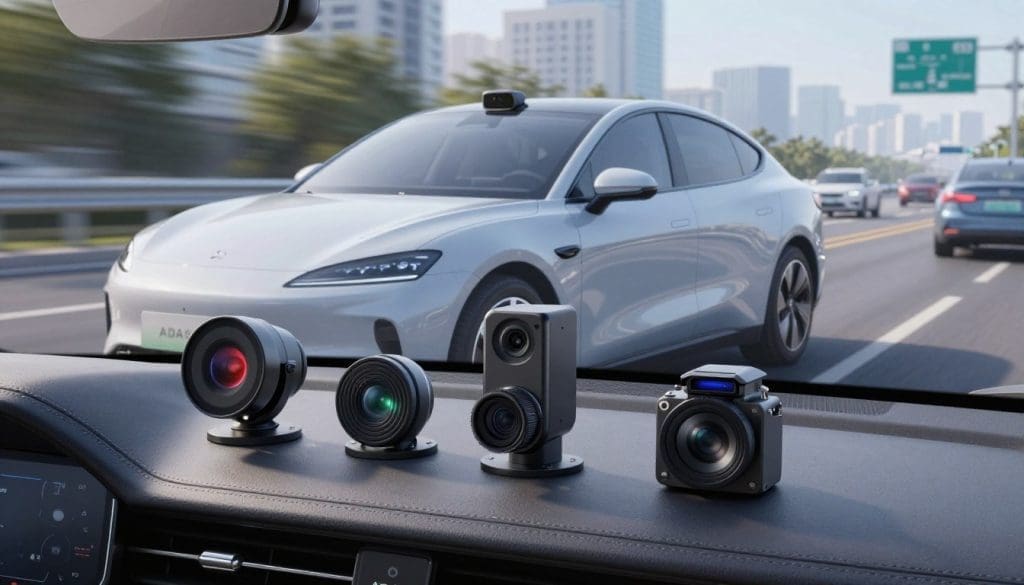
Your car relies on a complex network of electronic eyes and ears. Ultrasonic sensors, radar units, and cameras are strategically placed around the body.
They continuously scan the environment to map the road and your path ahead. Technologies like LiDAR add detailed depth perception.
Integration of Software and Automated Responses
Sophisticated software processes this constant stream of data in real time. Using computer vision and image processing, it identifies objects and lane markings.
A critical feature is preemptive priority scheduling. This logic ensures your vehicle addresses the most urgent threats first to prevent a crash.
The seamless communication between these elements allows for accurate, timely automated responses. This integration is what makes modern driver assistance so effective at protecting you.
Key ADAS Features Enhancing Road Safety
The real magic of today’s cars lies in features that automatically correct mistakes and maintain vigilance. These integrated functions work together to create a protective shield around your vehicle.
Lane Departure Warning and Lane Keeping Assist
Your car uses cameras to watch the lane markings on the road. If you begin to drift without signaling, it provides an audible or haptic warning.
This departure warning helps prevent unintentional lane changes. More advanced versions can gently steer your vehicle back to center.
Adaptive Cruise Control in Action
This smart system does more than maintain a set speed. It automatically adjusts your pace to match the traffic flow ahead.
Your vehicle will slow down if the car in front brakes. It then speeds up when the path clears, reducing your need for constant manual control.
Automatic Emergency Braking and Collision Alerts
This critical feature scans the road for potential forward collisions. If the driver doesn’t react, the system can apply the brakes automatically.
This automatic emergency intervention provides a last line of defense. It significantly reduces the severity of impacts or can avoid them entirely.
Together, these technologies offer a comprehensive safety net for every journey.
Benefits of ADAS in Preventing Collisions
Real-world data from national databases highlights the effectiveness of collision prevention features. These technologies provide a proven statistical advantage for every journey you take.
Reduced Reaction Times and Crash Mitigation
Your vehicle’s electronic aids act faster than human reflexes. They identify hazards and initiate protocols before you perceive the danger.
This swift action is the key to mitigating severe impacts. It protects you and your car from significant damage.
National crash data shows powerful results. Forward collision prevention can lower crash risk by about 29%.
Lane keeping assistance offers a 19% reduction in potential incidents. It helps you maintain a safe distance from other cars.
Blind zone detection further decreases incidents by 9%. Together, they form a robust defensive network.
| Feature | Crash Reduction Potential | Primary Protective Action |
|---|---|---|
| Forward Collision Prevention | ~29% | Automatic braking & forward alerts |
| Lane Keeping Assist | ~19% | Steering correction & lane departure warnings |
| Blind Zone Detection | ~9% | Side mirror alerts for unseen vehicles |
The table summarizes how each system contributes to overall safety. This data confirms the tangible benefits for the driver.
Sensor Technologies and Visual Systems in ADAS
The eyes of your modern car are a sophisticated array of cameras, radar, and laser sensors. These components work in unison to create a detailed, real-time map of your environment.
This network forms the core visual intelligence for your vehicle’s assistance features.
The Role of Cameras, Lidar, and Radar
Each sensor type brings a unique strength. Cameras provide rich visual detail, much like your own eyes, identifying colors and reading signs.
Radar units excel at measuring the speed and distance of objects, even in poor weather. Lidar uses laser pulses to build a precise 3D model of the road ahead.
Together, they give your vehicle a comprehensive view. This multi-source approach ensures high reliability, as one technology can compensate if another’s data is unclear.
Innovations in Data Calibration and Processing
Raw data from these sensors is constantly fused and interpreted by powerful software. Advanced computer vision algorithms enable your car to distinguish a pedestrian from a cyclist.
Your vehicle performs ongoing calibration to keep this information accurate. Since these features are deeply integrated into the car’s electronics, manufacturers can refine this calibration through over-the-air updates.
This ensures the driver receives the most precise alerts and support. Maintaining the integrity of this visual system is crucial for your safety on every drive.
Vehicle Repair and Calibration in the Era of ADAS
Servicing today’s vehicles involves calibrating delicate sensors as much as fixing dents. Your car’s protective features rely on perfect electronic alignment after any work.
Diagnostic Tools and Modern Service Practices
Technicians now use advanced tools to find faults. Diagnostic scanners, multimeters, and oscilloscopes check your vehicle’s electronic network.
These tools help identify issues in the complex wiring. They ensure every component communicates correctly.
The Importance of Precise Calibration After Repairs
Calibration is often needed after common repairs. This includes windshield replacement or wheel alignment work.
Even minor collisions can shift a camera or radar unit. Professional recalibration restores accurate function.
Technicians follow strict procedures from manufacturers. This ensures your brakes and steering components work perfectly.
You should verify your shop has the right equipment. Specialized tools are needed for these complex tasks.
| Repair Type | Sensors Affected | Calibration Necessity |
|---|---|---|
| Windshield Replacement | Forward-facing Camera | Mandatory for lane control |
| Front Collision Repair | Radar & Ultrasonic Units | Essential for automatic braking |
| Wheel Alignment | Steering Angle Sensor | Crucial for steering assist |
| Suspension Work | Multiple Height Sensors | Required for level control |
Implementation Challenges and Future Trends
Achieving a future where most cars assist drivers proactively depends on overcoming calibration and standardization barriers. According to a 2021 Canalys report, about 33% of new vehicles sold in key global markets already had these features.
The firm predicts that 50% of all automobiles on the road by 2030 will be equipped with them.
Overcoming Technological and Calibration Barriers
Widespread use requires every vehicle to maintain precise calibration as the technology grows more complex. Even minor shifts after a repair can affect sensor accuracy.
This demands specialized tools and strict procedures from technicians.
Regulatory and Standardization Influences
Groups like the National Safety Council and SAE International are promoting common standards. They aim to harmonize how features like forward collision warning operate across different brands.
This helps ensure consistent performance and driver understanding everywhere.
Evolving Driver Assistance Levels and Future Innovations
The evolution of this technology will continue to change how you interact with traffic. Regulatory bodies are defining the different levels of automation.
Their goal is to ensure every driver clearly knows their vehicle’s capabilities and limitations.
| Challenge Area | Current Hurdle | Future Trend |
|---|---|---|
| Technical Calibration | Requires expert tools after any repair | More automated self-diagnosis and updates |
| Industry Standards | Varying protocols between manufacturers | Unified regulations for feature performance |
| Driver Interaction | Understanding varying system capabilities | Clear, standardized automation level labels |
| Market Adoption | ~33% of new vehicles equipped (2021) | ~50% of all vehicles equipped by 2030 |
Miracle Body and Paint: Your Hub for ADAS Safety Insights
Understanding your car’s advanced features is just the first step. Maintaining them requires expert knowledge and specialized care.
Miracle Body and Paint serves as your dedicated resource for these complex technologies. We provide the insights and professional service your automobile needs.
Visit us at 6217 Grissom Rd, San Antonio, TX 78238
Our team possesses deep knowledge of modern driver assistance features. We ensure your vehicle‘s protective systems function correctly after any service.

If you have questions about how your car’s technology works, we offer clear guidance. We are committed to keeping your vehicle‘s features in optimal condition.
| Service Focus | Key Benefit for Your Vehicle | Our Expert Approach |
|---|---|---|
| Sensor Diagnostic & Calibration | Ensures accurate alerts and automated responses | Using manufacturer-specific tools and procedures |
| Collision Repair Integration | Restores original equipment performance and protection | Seamlessly blending bodywork with electronic recalibration |
| Technical Guidance & Education | Helps you understand your car’s capabilities | Providing clear explanations and resources for owners |
For those interested in the technical side, Universal Technical Institute offers training. You can contact them at 1-800-834-7308.
We help every driver achieve peace of mind. Your vehicle‘s safety is our top priority at our San Antonio location.
Conclusion
Your vehicle’s ability to perceive and respond to its surroundings represents a monumental leap forward in automotive engineering. These intelligent assistance features have fundamentally changed how you interact with modern vehicles.
From early radar experiments to today’s sophisticated sensor arrays, this technology saves lives daily. Your vehicle serves as a reliable partner, enhancing protection during every trip. Understanding how these systems function helps any driver make the most of their capabilities.
Proper calibration maintains your automobile’s protective functions after service. This driver assistance system ensures today’s vehicles perform as designed by their engineers.
Remember, these innovations assist the driver but don’t replace your necessary attention. Stay informed about automotive developments to maximize your car’s features. Your vigilance combined with your vehicle’s intelligent aids creates a significantly better safety experience for everyone.