Why Your Collision Repair Estimate May Change After Repairs Begin
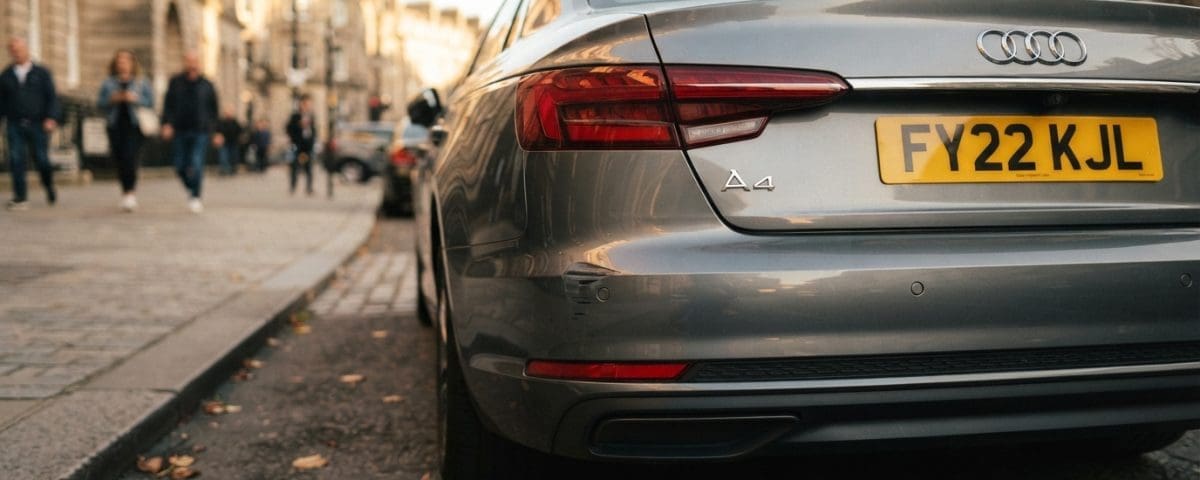
Your car may look fine after a low-speed bump, with only a scuff on the bumper. Yet a vehicle can need a safety-focused inspection even when the visible mark seems small.
The outside does not show every effect of an accident. This guide will help you understand what to look for and when to seek professional help, though a walk-around cannot reveal everything.
Damage can matter even when you can still drive the car. The force of the impact, not just the visible mark, matters, so it helps to know why problems can stay out of sight.
Key Takeaways
- A clean-looking exterior does not confirm that a vehicle is safe.
- The force and direction of an impact help shape the damage.
- New sounds, leaks, or changes in handling can justify an inspection.
- A safe visual check can document concerns, but it is not a diagnosis.
- A technician can assess hidden damage and prepare a fuller repair estimate.
Why Can a Minor Bump Hide Serious Damage?
A bumper cover can spring back into shape after an impact, while the parts behind it stay bent or broken. Appearance alone cannot show how far the force traveled through the car.
A small visible mark does not prove that a collision caused only minor damage. Plastic bumper covers can flex inward, then return to their former shape. The energy may still have reached components behind the cover.
A crumple zone is an area of a vehicle designed to deform during a collision and absorb some impact energy. It helps manage force, but it does not mean every part near the impact remains unharmed.
About 1.7 million rear-end collisions occur on U.S. roadways each year. The National Highway Traffic Safety Administration identifies distracted driving as the cause of 87% of rear-end collisions.
Those figures describe a broad traffic problem, not the force or result of each crash. The vehicles, speeds, angles, and conditions differ from collision to collision.
People searching for hidden collision damage in 2022 were looking for information about damage that can go unnoticed, not a separate type of damage. A vehicle’s model year alone does not establish a special risk.
Visible damage can offer clues, but it cannot reliably measure the full impact. The useful next step is to understand which areas an impact may affect.
Where Hidden Collision Damage Can Hide After a Crash
A bumper cover can look intact while the reinforcement behind it has taken the impact. Behind the surface, mounts and energy-absorbing material may also have damage.
Hidden structural or mechanical damage can affect how a vehicle works, even when its body looks mostly unchanged. The frame is the vehicle’s structural foundation, and damage to it can affect alignment and stability.
Behind the Bumper and Around the Frame
A bumper assembly includes more than its outer cover. The reinforcement, energy-absorbing material, and mounting brackets can bend or break under the cover.
Frame damage may include distortion or kinking in the rear rails. Uneven gaps or visible buckling can raise concern, but a technician must assess the structure.
Cooling and Drivetrain Components
An impact can pinch a transmission cooler hose and restrict fluid flow. Continued operation may worsen the fault and eventually lead to transmission failure.
Some rear-wheel-drive and all-wheel-drive vehicles have transmission components near the rear. A rear impact can affect those parts, depending on the vehicle’s design and the force involved.
Trunk, Rear Rails, and Exhaust
Check whether the trunk gaps look even and the latch works normally. A distorted trunk floor or rear rail may point to damage beyond the outer panel.
Rear-end force can push exhaust parts forward. The catalytic converter, exhaust manifold, muffler, engine mounts, or connecting pipe may be affected.
| Location | Possible hidden issue | Possible clue | Why inspection matters |
|---|---|---|---|
| Bumper assembly | Damaged reinforcement or mounts | Mismatched fit | Hidden structural damage may be missed |
| Frame and rear rails | Distortion or kinking | Uneven gaps or visible buckling | Structure can affect stability |
| Cooler hose and drivetrain | Pinched hose or damaged transmission parts | Fluid leak or shifting trouble | Continued use may worsen a fault |
| Trunk and exhaust area | Latch or exhaust damage | Trunk will not close or new exhaust noise | Function and mechanical condition may suffer |
Structural and mechanical damage can change how a vehicle steers and rides. Those changes may be easier to notice while driving than from outside.
How Can an Impact Affect Steering, Suspension, and Alignment?

A car that starts pulling to one side after a rear impact may have an alignment or suspension problem. A new change in direction or ride calls for attention.
Frame or suspension damage can alter wheel alignment and make a vehicle harder to control. The exterior may still look undamaged, so driving behavior and tire condition matter.
Wheel Alignment and Tire Wear
Alignment describes how the wheels point and track in relation to each other and the road. An impact can shift parts enough to make a car pull or leave its steering wheel crooked.
Misalignment can cause rapid or uneven tire wear. It can also add stress to tires, brakes, suspension parts, and other components.
Suspension Parts and Ride Quality
Shocks, struts, and related suspension parts help keep the wheels steady over bumps. Damage can create a rough ride or reduce control, even without a clear mark on the body.
A new vibration or squealing tire can be a clue, though those signs can have other causes. A technician can check the suspension and alignment rather than guessing from one symptom.
Steering Feel and Vehicle Control
Steering that feels loose, stiff, or different after a collision deserves an inspection. Noisy steering can also point to a problem that affects control.
Do not treat a short test drive as proof that the vehicle is safe. A fault may show up only at certain speeds or on uneven roads.
| Area | Possible impact-related problem | Clue while driving or inspecting | Why it matters |
|---|---|---|---|
| Alignment | Wheels no longer track correctly | Pulling or crooked steering wheel | Handling and tire wear |
| Suspension | Damaged shocks, struts, or related parts | Rough ride or poor control | Stability and component wear |
| Steering | Affected steering components | New noise or changed steering feel | Ability to control the vehicle |
Changes in mechanical behavior are one part of the picture. Electronic safety systems may also need a closer look.
Which Electrical and Safety Systems Need Inspection?
An exterior light that works once does not rule out a loose connection or an intermittent fault. Some electrical problems appear only at certain times.
A collision can affect wiring, sensors, cameras, and other safety systems without leaving an obvious mark. The exact equipment varies by vehicle, so inspection should match the car’s systems.
Lights, Wiring, and Battery Connections
An impact may loosen wiring to taillights or brake lights. A loose battery connection can also cause intermittent electrical issues or prevent a system from working as expected.
Check that the lights work, but do not rely on a quick check alone. A connection may fail later or work only when the car moves over a bump.
ADAS Sensors and Cameras
ADAS means the vehicle’s electronic driver-assistance features. Depending on the model, these systems may use radar units, parking sensors, cameras, and related wiring.
A collision can damage, disconnect, or misalign those components. A sensor may still look intact from outside and give poor readings if its position has shifted.
Diagnostic Codes and Warning Lights
A technician can scan electronic systems for diagnostic codes. A scan may find pending codes even when the check-engine light is not on.
Not every fault causes a dashboard warning, and not every car has the same features. Codes also need context, since a scan alone does not explain every problem.
Notice any new warning or change in how a feature works, but treat it as a clue rather than a diagnosis. Those observations can help a technician focus the inspection.
What Warning Signs Can You Notice After an Accident?
A new fluid spot beneath a car that looked undamaged after a collision can signal a problem. Do not dismiss a leak just because the body has few marks.
New symptoms after an accident can justify a prompt safety inspection. Look for changes from how the car sounded, felt, or worked before the crash.
- New fluid puddles beneath the vehicle.
- The vehicle pulls, vibrates, or steers differently.
- New rattling, scraping, or knocking sounds.
- Dashboard alerts or error messages.
- Doors, trunk, or bumper no longer fit or latch normally.
A symptom can have more than one cause, so one clue does not confirm a specific fault. The absence of symptoms does not rule out hidden damage either.
Note what changed and when you first noticed it. Check the vehicle only from a safe position before deciding whether it can be driven.
What Can You Check Safely at the Scene or at Home?

Once everyone is safe and the vehicle is in a safe location, make a careful walk-around. Stay outside the vehicle’s damaged areas and focus on visible changes.
A visual check can help you document concerns, but it cannot diagnose the vehicle. Do not touch damaged parts or crawl under the car to look for trouble.
- Compare trunk and door gaps for uneven spacing or distortion.
- Compare taillight and bumper fit on both sides.
- After a more severe impact, look for buckling near the quarter panels, sail panel, or roof.
- From a safe standing position, look for distortion at the rear rails or trunk floor.
- Look for visible damage around the rear suspension area without reaching under the car.
Take clear photos of visible changes from several angles. Include the full area and a closer view, while keeping yourself away from traffic and unstable parts.
Do not push on panels to test them or try to open parts that seem stuck. Your checklist can document concerns, but it cannot replace a technician’s inspection.
What Does a Professional Collision Inspection Involve?
A quick exterior estimate offers less detail than an assessment after affected panels come off. Closer inspection can reveal damage that a walk-around cannot show.
A collision repair technician can inspect the affected areas, scan systems, and prepare a fuller estimate. The work depends on the impact, the vehicle, and the concerns you report.
- Document visible damage and the symptoms you noticed.
- Inspect affected areas and, when needed, remove panels to check behind them.
- Scan electronic systems and assess structural, mechanical, and suspension components.
- Prepare a fuller repair estimate and identify added work for insurer review.
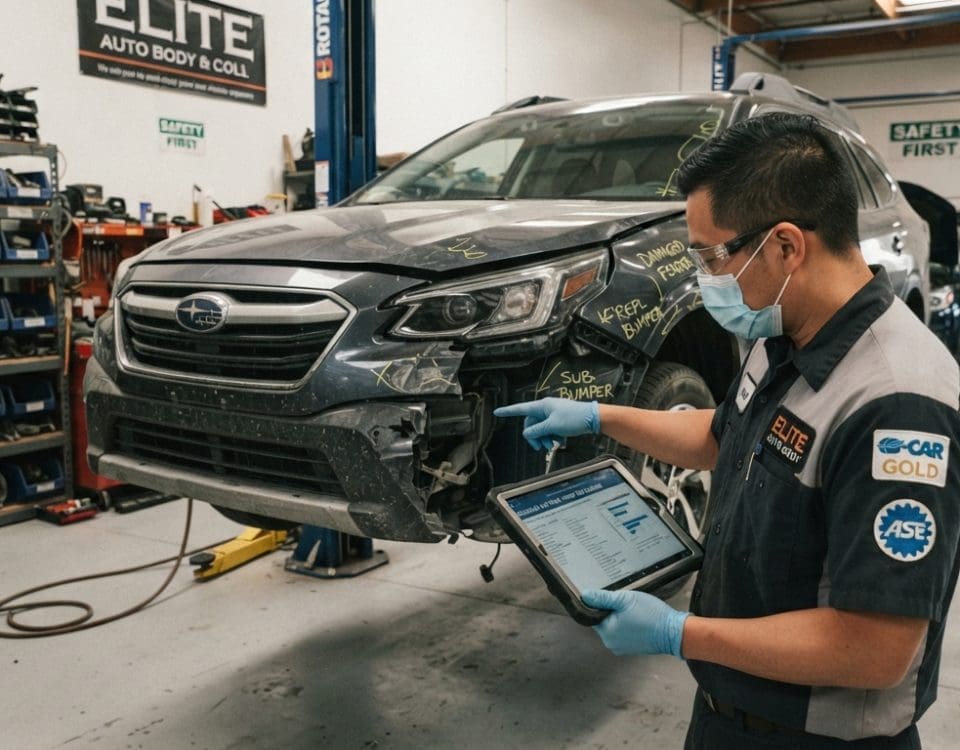
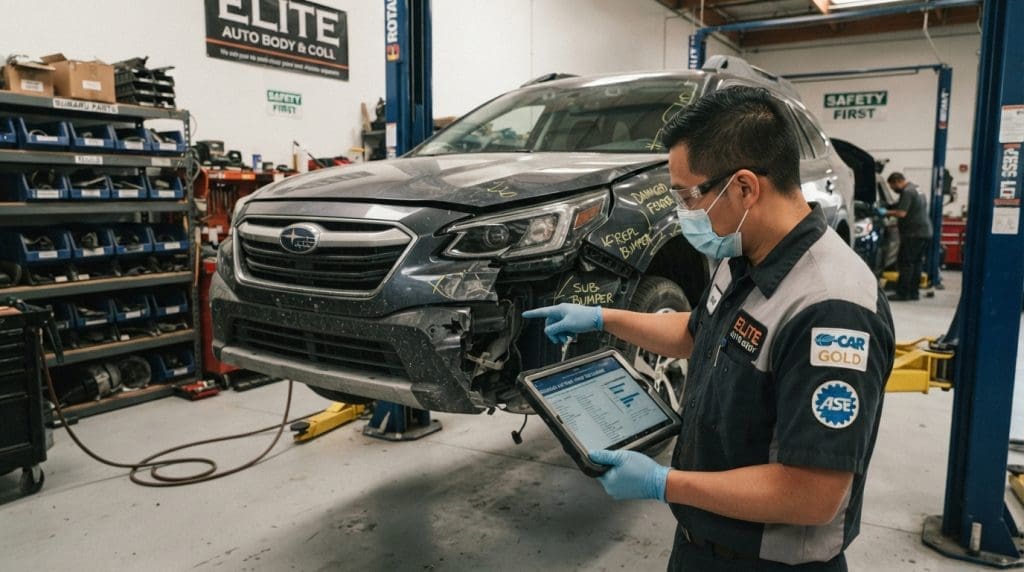
An initial insurance estimate can serve as a starting point, not a final list of every repair. A teardown may reveal more damage once a shop can see behind affected panels.
The shop may submit a supplement, the insurer’s request for approval of additional work found during repairs. Technicians can sometimes tell whether diagnostic codes appeared before or after the collision.
A shop may use frame-straightening equipment to realign a damaged frame. Some damaged frame sections may need removal and replacement instead.
The findings can change the repair estimate and shape the next insurance decision. The actual scope of damage matters more than the first visible mark.
How Do Repair Costs and Insurance Decisions Work?
A repair estimate can grow after a shop removes a bumper and finds more damage. The first number may not include work hidden behind the exterior.
Repair costs depend on the damage found, the work needed, and the vehicle’s condition and value. No single estimate or insurance choice fits every collision.
What Can Change the Repair Estimate?
Costs depend on which structural, mechanical, or electronic parts need repair or replacement. Labor, added work, and the vehicle’s condition and value also shape the estimate.
A shop may find that a part needs more work after disassembly. Ask what the estimate includes and how newly found damage may change the repair plan.
Filing a Claim or Paying Out of Pocket
Compare the repair estimate with your deductible, policy terms, and available budget. Coverage and payment depend on your policy and the facts of the claim.
Paying directly may avoid a claim, but you would be responsible for the repair bill and added work. Filing a claim does not guarantee that every repair will be covered.
In a rear-end collision, the rear driver is most often at fault because drivers generally must leave a safe following distance. Liability still depends on the circumstances of the crash.
When an Insurer May Declare a Total Loss
A total loss is a vehicle the insurer determines is not economical to repair under its applicable threshold. The insurer compares repair costs with the vehicle’s value and applies its rules.
A common reference is repair costs around 70-80% of vehicle value, but the threshold depends on the insurer and circumstances. There is no universal $3,000 repair rule.
| Decision | What to compare | What may change the decision | Important limit |
|---|---|---|---|
| File a claim | Estimate and deductible | Covered collision damage and insurer review | Approval and payment depend on policy and claim facts |
| Pay out of pocket | Repair estimate and available budget | Damage scope and possible added work | No universal rule makes private payment best |
| Total-loss evaluation | Estimated repairs versus vehicle value and threshold | Structural or mechanical discoveries | Thresholds vary; 70-80% is not a universal rule |
Consider the repair scope, deductible, estimate, policy, and possible added work together. Those financial choices lead to a practical question: whether the vehicle is safe to drive.
Can You Keep Driving After a Collision?
A vehicle that moves under its own power is not always safe to drive. Movement alone does not show that the car can steer, stop, or stay secure on the road.
Do not drive if you suspect frame damage, compromised steering or suspension, fluid leaks, or unsafe lights. Avoid driving if a door or trunk will not stay securely closed.
Arrange a tow to a collision repair shop when safe operation is uncertain. A car may still move even when a fault makes it unsafe for you or others.
Do not take a test drive to settle doubts about control or structural condition. Choose an inspection instead, then use its findings to plan your next step.
Conclusion
A small visible mark does not establish the full extent of damage or prove that your vehicle is safe. A professional inspection can help identify needed collision repair.
Miracle Body and Paint Collision Center has two San Antonio locations. The North West San Antonio, Leon Valley location is at 6217 Grissom Rd., San Antonio, TX 78238, and its phone number is (210) 680 -1987.
The North East San Antonio location is at 4650 Walzem Rd, San Antonio, TX 78218, and its phone number is (210) 858-3630. Hire Miracle Body and Paint Collision Center to fix the collision damage on your vehicle.