
How Collision Repair Protects Your Vehicle’s Safety Systems

Common Collision Repair Myths That Cost Drivers Money
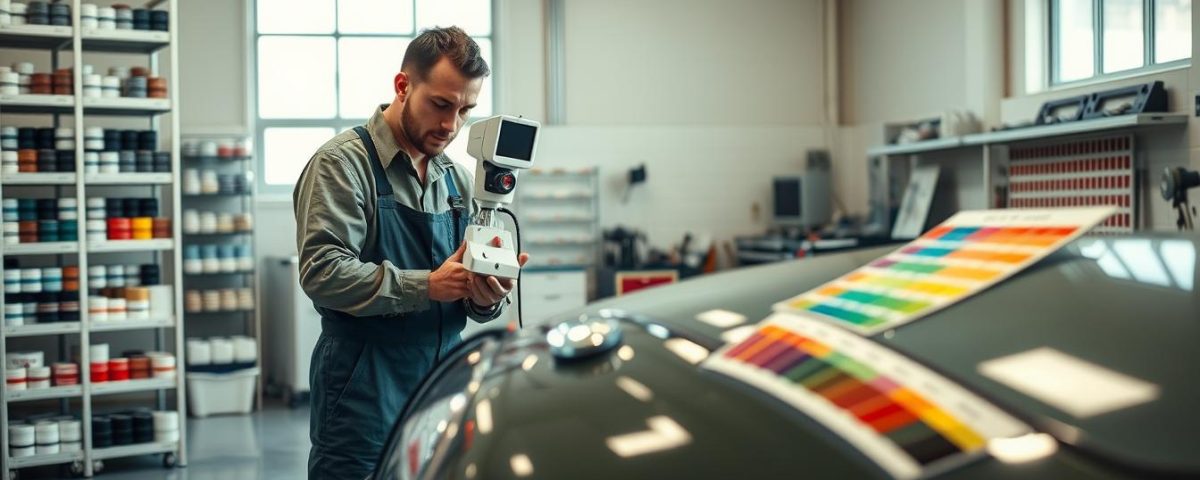
We introduce our buyer’s guide as Miracle Body and Paint Collision Center’s clear, practical explanation of how we restore factory-looking finishes after a collision. We explain what a modern paint color system does and why it matters when we aim to replicate an OEM tone.
A computerized color tool searches formulas and custom matches a sample. That reduces guesswork versus the human eye and improves consistency in color control.
We describe how color matching differs from simply painting a panel. Our goal is visual continuity across the vehicle, not just a close color on one part.
We also set expectations: colors shift with light and angle, so a successful match depends on digital color data plus experienced validation. In San Antonio, we apply disciplined processes to shorten shop time, cut rework, and protect your vehicle’s resale value over its life.
Key Takeaways
- Modern systems use digital color data to reduce guesswork and improve consistency.
- True color matching focuses on visual continuity across panels, not a single patch.
- Experienced validation complements the system to handle lighting and texture shifts.
- The right process saves time, reduces rework, and protects resale value.
- Miracle Body and Paint Collision Center in San Antonio offers these capabilities for your repair project.
How modern paint matching works in today’s collision repair process
We start by taking a precise reading of the damaged area. A handheld spectrophotometer collects a digital color sample from the vehicle’s surface. That data gives us an objective baseline we can compare to formula libraries.
Computerized color matching reduces guesswork. Systems use measured inputs and extensive palettes to find candidate formulas. Human vision varies with light and angle; the device helps us stay consistent.
How the spectrophotometer and formula search work
- We position the spectrophotometer on a clean panel area to capture accurate readings for metallic or pearl finishes.
- Software converts that digital color into mixable paint color formulas and suggests adjustments.
- We then spray a test card and refine the mix until the shade and flop match adjacent panels.
Texture, primer, and substrate change how a finish looks. The real “right color” is the one that blends under real lighting across nearby spaces.
Preview tools and visualizers let us show customers the expected representation before we spray. This reduces rework and speeds the repair timeline for a finish that looks original.
What to look for in paint matching technology when choosing a collision center
We recommend verifying lab-quality measurement and a clear correction workflow. That combination reduces rework and helps ensure the right color on complex finishes like metallics and pearls.

Lab-quality accuracy and correction capabilities
Precision matters. Ask whether the shop uses a device that records spectral data, measures texture, and produces reproducible formulas.
- Check for dispenser compatibility and built-in correction features.
- Confirm the workflow includes spray-out cards and controlled lighting checks.
- Look for vendor-backed calibration and documentation of formula adjustments.
Support, simplicity, and team training
Tools are only as good as the team using them. Ask who reads, mixes, and approves the final color.
- Verify regular calibration schedules and vendor support for software or device issues.
- Prefer shops that train staff and follow repeatable steps across projects and vehicle types.
- Compare this with a retail store match (for example, Home Depot) — vehicle finishes need tighter control.
At Miracle Body and Paint Collision Center, we combine certified tools, vendor support, and ongoing staff training so clients in San Antonio get consistent color matches across a variety of repairs.
What impacts the final finish beyond color matching
A flawless repair needs more than a correct formula. Sheen, reflection, texture, and blending all change how a repair reads to the eye. We focus on each step so the result looks original under different lights and angles.

Sheen and light reflection
Sheen controls reflection. Lower sheens absorb light and can look more matte. Higher sheens reflect more and may appear darker on curves or near body lines.
That means the same color can look lighter or darker depending on gloss and viewing angle. Darker colors show small gloss differences more easily.
Durability and visible marring
Lower-sheen finishes once tended to mar, but modern formulations and clearcoat techniques improve durability. Higher-sheen surfaces clean easily but can highlight tiny defects.
We plan the repair for real-world life: car washes, road debris, and daily use affect how the finish holds up.
Blending strategy and process control
Final matching is a mix of color, gloss, texture, and blend. We blend into adjacent panels so colors flow naturally and edges disappear.
- We use measured devices and hands-on checks for color matching.
- Clearcoat application, gun setup, and curing are tuned to preserve gloss and reduce rework.
- Better tools and disciplined process save time and keep the job on schedule.
Our approach pairs modern devices with careful workmanship so clients get full-finish quality—not just a close color. That saves time, lowers cost from redo, and protects the vehicle over its life.
Conclusion
The best results come when objective readings meet experienced eyes. Modern repair is a system: measurement, formula selection, validation, and careful finish control that recreate an original-looking result after collision work.
Accurate color and proper finish execution cut the chance of redo and keep your vehicle looking its best across adjacent spaces. We use digital data plus hands-on preview checks so the result reads correctly in everyday light.
Ready to restore your vehicle? Hire Miracle Body and Paint Collision Center for reliable care and professional results. 2 Locations to Serve You:
North West San Antonio – Leon Valley: (210) 680-1987, 6217 Grissom Rd., San Antonio, TX 78238
North East San Antonio: (210) 858-3630, 4650 Walzem Rd, San Antonio, TX 78218