


How Quality Control Works in Professional Repairs

Why a Strong Warranty Matters After Repairs

After a car crash, it’s key to take the right photos. These images are important for car accident documentation and accident evidence. They can greatly affect insurance claims and legal cases.
To get the right accident evidence, know what to photograph. This includes the accident scene, vehicle damage, and important road signs or landmarks. For more tips on what to do after a crash, check out what to do after an accident.
Good car accident documentation is key for a smooth insurance claim and legal actions. Knowing what photos to take helps protect your interests. If your car is damaged, contact experts like Miracle Body and Paint Collision Center for top-notch repair services.
Key Takeaways
- Capture the accident scene, including road signs and landmarks.
- Photograph the damage to all vehicles involved.
- Use a smartphone to take clear, well-lit photos.
- Document license plates and vehicle details.
- Consider seeking professional help for vehicle repairs.
Importance of Car Accident Documentation
After a car accident, it’s key to document everything well. This helps with insurance claims and legal issues. The accident scene can be chaotic, making it easy to miss important details.
Knowing how car accidents are handled legally is important. In the U.S., you need good documentation for insurance claims and to figure out who’s at fault. This is why accident evidence is so important.
Understanding the Legal Context
Car accidents involve figuring out who’s to blame, assessing damage, and dealing with insurance. Good documentation helps show what happened clearly. Without it, proving your side of the story can be hard, which might hurt your insurance claims.
Securing Insurance Claims
Good documentation greatly affects insurance claims. Insurance companies need evidence to judge claims fairly. This includes photos of the accident, vehicle damage, and other important details. With solid insurance claims documentation, you can make the claims process smoother and possibly get a better result.
In summary, documenting a car accident is very important. It’s key for both legal issues and insurance claims. By understanding its value and documenting well, you can handle the aftermath of a car accident better.
What to Document Immediately After the Accident
The moments right after a car accident are key for collecting evidence. This is when you can get the most accurate and important information about the accident.
Scene Overview
Getting a full view of the accident scene is essential. Take photos of the scene, showing where the vehicles were, and any other important details. This includes road signs, traffic signals, and skid marks.
Vehicle Damage
It’s also important to document the damage to the vehicles. Take close-up photos of the damage from different angles. This helps insurance companies understand the damage.
Don’t forget to take pictures of any other property damage. This could be damage to fences, buildings, or other structures affected by the accident.
Types of Photos to Capture
After a car accident, it’s key to take the right photos. These photos are vital for accident evidence. They help document the scene, show damage, and support your insurance claim.
Focus on several important areas when documenting the accident. These include damage to your vehicle, other vehicles involved, and road conditions.
Damage to Your Vehicle
It’s important to capture detailed photos of your vehicle’s damage. Take photos from different angles to show all the damage. Include close-ups of dents, scratches, or broken parts. Make sure the license plate is visible in one photo.
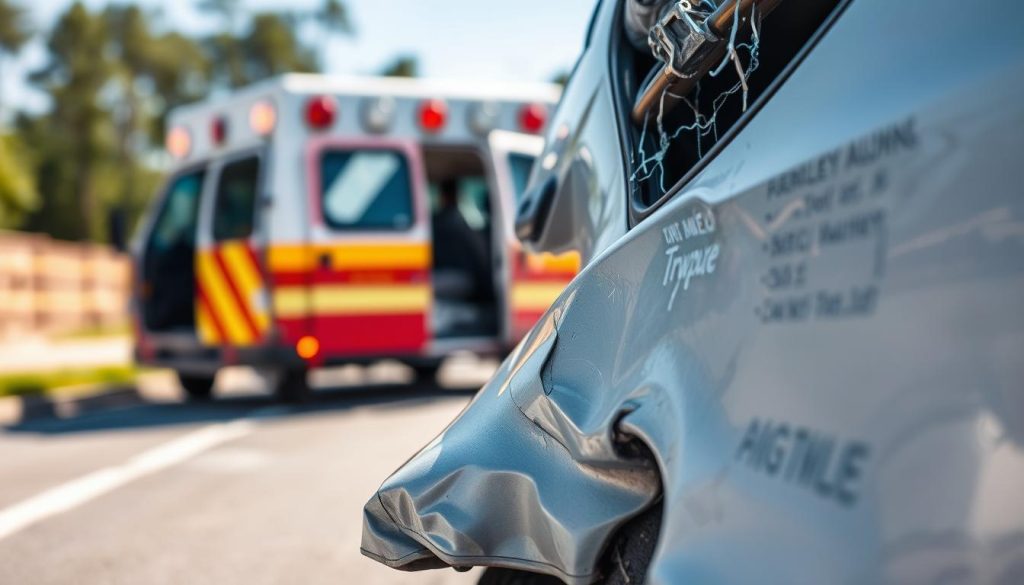
Damage to Other Vehicles
Documenting damage to other vehicles is also critical. Take photos of them from various angles, just like your own vehicle. This helps show the full extent of damage and is important for insurance.
Road Conditions
Documenting the road conditions at the time of the accident is valuable. Take photos of the road surface, skid marks, debris, and the area around. Include images of traffic signals, road signs, and other features that might have caused the accident.
By taking a wide range of photos, you create strong accident evidence. This evidence supports your insurance claim and helps prove what happened.
How to Photograph the Accident Scene
Photographing the accident scene is a key step in documenting a car accident. It gives visual evidence that’s vital for insurance claims and legal cases.
Angles and Perspectives
It’s important to capture the accident scene from different angles and perspectives. This way, you can document all parts of the accident. It gives a full picture of what happened.
- Take photos from directly above the scene to capture the overall layout.
- Photograph the scene from the sides to show the position of vehicles and other elements relative to each other.
- Capture images from a low angle to highlight skid marks, debris, and other details on the road.
Using Wide Shots and Close-Ups
Combining wide shots and close-ups is key for detailed documentation. Wide shots give context, while close-ups focus on specific details.
- Use wide shots to capture the entire accident scene, including all vehicles involved and their positions.
- Take close-up photos of vehicle damage, license plates, and any other relevant details.
- Document road conditions, traffic signals, and signs with a mix of wide and close-up shots.
By using these techniques, you can make sure your car accident documentation is complete and helpful for insurance claims.
Essential Details to Include in Photos
It’s key to document a car accident scene well for strong accident evidence. The photos you take can greatly affect your insurance claim and legal cases.
License Plates
Getting clear photos of all cars’ license plates is very important. It helps identify the vehicles and is a key part of accident evidence. Make sure the photos are sharp and the plate numbers are clear.
Skid Marks and Debris
Take photos of skid marks and debris on the road. These details help piece together what happened, making them a must-have for your accident evidence.
Traffic Signals and Road Signs
Also, capture photos of nearby traffic signals and road signs. They help set the scene of the accident, including any traffic rules or road conditions that might have played a role.
By including these important details in your photos, you create a solid set of accident evidence. This evidence supports your insurance claim and any legal actions that come next.
Importance of Time Stamps
Time stamps on photos after a car accident are very important. They show when the photos were taken. This timeline is key for insurance claims and legal cases.
Accurate time stamps help show what happened in order. This is important for understanding the accident’s details.
Using Smartphone Features
Most phones can automatically add time stamps to photos. To make sure this works, check your phone’s camera settings. Also, enabling geotagging adds the photo’s location. This is great for car accident documentation because it shows where and when the photos were taken.
To turn on these features, go to your camera app’s settings. Look for options for timestamping or geotagging. This makes your photos more credible and useful for insurance claims.
Documenting Weather Conditions
Weather at the time of the accident is important. Time-stamped photos can show if it was raining or sunny. This helps understand how the weather affected the accident.
When taking photos, try to capture the weather. This could be road wetness, fog, or glare. These photos, with accurate time stamps, give a full view of the accident scene.
Best Practices for Taking Photos
High-quality photos after a car accident are very important. They are key evidence for insurance and legal cases. It’s important to take photos the right way.
Be detailed and careful when taking photos. Capture the damage to vehicles and the scene. Also, include any other important details.
Avoiding Distortions
Use a camera or smartphone with a good lens to avoid distortions. Make sure the lens is clean to keep the image clear.
- Use the highest resolution available.
- Avoid using the zoom feature, as it can distort the image.
- Take photos from multiple angles to get a complete view.
Prioritizing Clarity and Quality
Clarity and quality are key for accident evidence. Good lighting makes your photos better.
- Take photos during the day if possible, or use the camera’s flash in low light.
- Make sure the area is well-lit before indoor photos.
- Use the camera’s HDR feature if available to capture more detail.
Here’s how to handle different lighting conditions:
| Lighting Condition | Recommended Practice |
|---|---|
| Daylight | Take photos directly; avoid harsh shadows. |
| Low Light | Use camera flash or additional lighting. |
| Night | Use a tripod to stabilize the camera and avoid blur. |
By following these tips, your photos will be clear, without distortion, and of high quality. This will help strengthen your accident evidence.
Legal Considerations in Accident Documentation
Legal issues are key when documenting a car accident. They affect privacy and how you collect evidence. Knowing the legal side helps you avoid problems later.
Privacy Concerns
Privacy is a big deal when documenting an accident. You might take pictures of people, cars, or property. It’s important to follow privacy laws to respect others’ rights.
Avoid taking photos of people’s faces or license plates if they’re not involved. This helps protect their privacy.
- Be cautious when photographing individuals at the scene.
- Avoid capturing sensitive information that is not relevant to the accident.
- Focus on documenting damage to vehicles and property.
The Role of Witnesses
Witnesses are important for accident evidence. Their stories can help prove what happened and support your insurance claim. Make sure to get their contact info and a brief statement.
- Ask witnesses for their contact information.
- Record a brief statement from each witness.
- Take note of their location relative to the accident scene.
By understanding and respecting these legal points, your documentation will be thorough and legal. This helps you and makes the insurance claims process smoother.
Working with Insurance Adjusters
Learning how to work with insurance adjusters is key to a successful claim. After a car accident, they assess damage and decide on compensation. Being ready and presenting your case well can greatly affect the outcome.

Presenting Your Photos Effectively
When showing photos to adjusters, be organized and detailed. Make sure your photos are clear, well-lit, and dated. This shows the damage and supports your claim. Start by organizing all photos in a folder, including the accident scene, vehicle damage, and other important details.
Use a clear filing system, like organizing by date or category. This makes it easy for the adjuster to go through them. When you send your photos, explain each one briefly, pointing out the main points it shows.
Common Pitfalls to Avoid
When dealing with adjusters, there are traps to avoid. Don’t share too much or guess about the accident; just stick to the facts. Be careful with recorded statements and consider having a lawyer there if you can.
- Be ready to give detailed documentation, like photos and witness statements.
- Avoid making guesses or admitting fault at the scene or during the claims process.
- Keep a record of all talks with the insurance company, including dates, times, and what was said.
By being prepared, showing your photos well, and avoiding common mistakes, you can make the insurance claims process easier. This increases your chances of a good outcome.
Storing and Organizing Your Photos
Keeping your car accident photos safe and organized is vital for a smooth insurance process. After taking photos at the accident scene, it’s important to store them securely. This way, they stay accessible and in good condition.
Digital Storage Solutions
Using digital storage is a smart way to keep your photos. Cloud services like Google Drive, Dropbox, or OneDrive are great options. They provide safe storage and let you access your files from any device.
Benefits of Cloud Storage:
- Automatic syncing across devices
- Enhanced security with encryption
- Easy sharing with insurance companies
| Cloud Storage Service | Free Storage | Paid Plans |
|---|---|---|
| Google Drive | 15 GB | Starting at $1.99/month |
| Dropbox | 2 GB | Starting at $9.99/month |
| OneDrive | 5 GB | Starting at $6.99/month |
Backing Up Your Evidence
Storing your photos in just one place isn’t enough. Backing up your evidence is key. Make multiple copies of your photos and keep them in different spots, like an external hard drive or another cloud service.
Why Multiple Backups Matter:
- Protects against data loss due to technical failures
- Ensures access to your photos even if one storage method fails
By following these steps, you can keep your car accident photos safe and ready when you need them.
Contact Miracle Body and Paint Collision Center
After a car accident, it’s key to collect accident evidence for insurance claims. The right documents help make dealing with insurance smoother.
Looking for a trusted collision repair service in San Antonio? Miracle Body and Paint Collision Center is your go-to. They have two locations ready to fix your vehicle.
San Antonio Locations
Miracle Body and Paint Collision Center has two spots in San Antonio. Their team works hard to make your vehicle like new again. They aim to make your insurance claims process easy.
Want to know more about their services or book an appointment? Check their website or call them. Let the experts at Miracle Body and Paint Collision Center help you get back on the road safely.