


How Technicians Detect Hidden Frame Damage

Your Rights When Choosing an Auto Body Shop in Texas
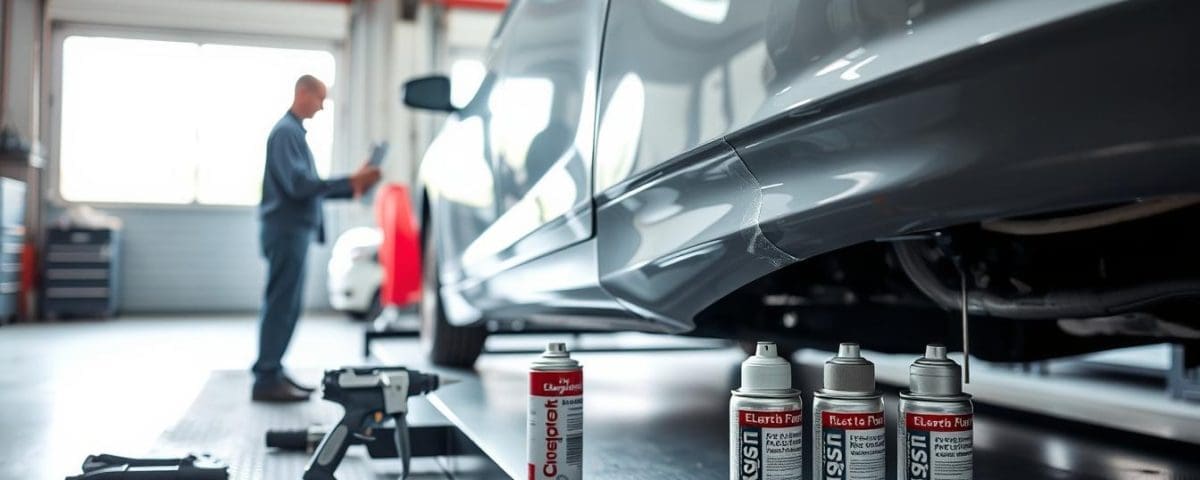
After auto body repairs, it’s key to protect your car from corrosion. Rust can weaken your car’s structure, leading to expensive fixes later.
At Miracle Body and Paint Collision Center, our experts know how vital rust prevention is. They use the right methods and treatments to keep your car in great shape.
To stop corrosion, use the right repair methods, protective coatings, and keep up with maintenance. Taking these steps helps keep your car’s body safe and healthy.
Key Takeaways
- Understand the importance of rust prevention after auto body repairs.
- Learn effective techniques for preventing corrosion.
- Discover the role of protective coatings in maintaining your vehicle’s integrity.
- Find out how regular maintenance can help prevent rust.
- Establish the expertise of Miracle Body and Paint Collision Center in rust prevention.
Understanding the Basics of Rust Formation
Knowing how rust forms on cars is key to stopping it. Rust happens when metal meets oxygen and moisture, causing metal to break down.
What Causes Rust on Vehicles?
Rust on cars comes from moisture, salt, and oxygen. When metal meets these, it starts to rust. Road salt used in winter makes rust worse by speeding up the rusting process.
The Role of Moisture and Oxygen
Moisture and oxygen are the main causes of rust. When a car’s metal is wet or in humid air, rust starts. Preventing rust means keeping these away from the car.
The Types of Rust Commonly Found on Cars
There are different kinds of rust on cars, like surface rust and penetrating rust. Surface rust is the first sign. Scale rust happens when rust gets thicker. Penetrating rust is the worst, as it weakens the metal. Knowing these types helps in preventing and fixing rust.
The Importance of Rust Prevention Post-Repair
Preventing rust after fixing your car is very important. It keeps your car strong and in good shape. Rust can make your car’s structure weak, leading to expensive fixes later. It’s key to keep your car healthy with corrosion prevention.
Why Rust is a Serious Concern
Rust is more than just a cosmetic problem. It can make your car unsafe and unreliable. When rust eats away at metal, it can cause parts to fail. For example, rust on brake lines or suspension parts can be very dangerous.
Knowing the dangers of rust helps you see why rust prevention auto is so important.
How Rust Affects Vehicle Value
Rust can make your car less valuable. It’s less attractive to buyers if you want to sell. Also, fixing rust damage can be very expensive. But, with corrosion prevention, you can keep your car’s value up.
Rust and Safety: What You Need to Know
Rust is a big safety risk. It can weaken your car’s structure, affecting how it drives and stays safe. For instance, rust on the frame or suspension can cause you to lose control.
So, making rust prevention a part of your car care is vital. It keeps your car safe to drive.
In short, preventing rust after repairs is not just upkeep. It’s a big investment in your car’s life, value, and safety. By knowing the risks of rust and using rust prevention auto methods, you can protect your car and your investment.
Inspection: Key to Identifying Vulnerable Areas
Checking your vehicle regularly is key to stopping rust. It helps spot rust areas early, before they get worse.
Signs of Existing Rust Damage
Spotting rust damage early is vital. Look for discoloration, flaking paint, and rust spots. These signs are common in moist areas.
- Rust-colored spots or patches on the vehicle’s surface
- Paint bubbling or flaking off
- Visible signs of corrosion under the vehicle
Where to Look for Hidden Rust
Hidden rust can be as harmful as visible rust. Focus on wheel wells, undercarriage, and door sills. These spots are more likely to get wet and dirty.
How to Conduct a Thorough Inspection
Inspecting your vehicle well means checking both obvious and hidden spots. First, wash your car to clear off dirt. Then, look for rust or damage on the body.
| Inspection Area | What to Look For |
|---|---|
| Wheel Wells | Rust spots, flaking paint, debris accumulation |
| Undercarriage | Signs of corrosion, rust streaks, damaged coatings |
| Door Sills | Discoloration, rust spots, paint damage |
By following these steps and focusing on paint protection and corrosion prevention, you can lower the risk of rust. This keeps your vehicle looking good for longer.
Quality Body Repair: A First Line of Defense
Preventing rust starts with quality body repair. A good repair fixes the look and protects against corrosion.
Selecting a Trustworthy Collision Repair Center
Finding a reliable collision center is key. Look for places with certified techs and great service. Miracle Body and Paint Collision Center is a top choice. They offer excellent repairs and care for their customers.
The Expertise of Technicians Matters
Skilled technicians make repairs that look good and last. They use the latest methods and materials to fight corrosion.
Using the Right Materials for Durable Repairs
The right materials are vital for preventing rust. Use rust-resistant metals and coatings for lasting repairs. A good center will use materials that meet or exceed standards.
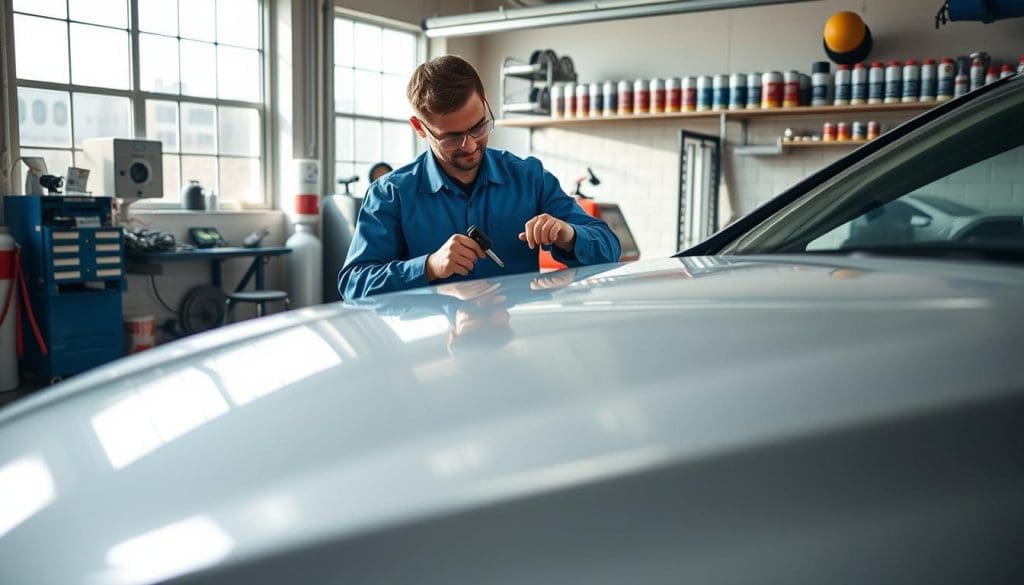
Quality body repair greatly reduces rust risk. This keeps your vehicle in top shape and value over time.
Starting with the right repair is key to rust prevention auto. Choose a trusted center and ensure repairs use the best materials and techniques. This way, your vehicle stays rust-free for years.
Proper Cleaning Techniques to Prevent Rust
Keeping your vehicle clean is key to preventing rust. Regular washing removes dirt, salt, and other harmful substances. This helps protect your car from rust.
Importance of Regular Washing
Washing your car often is vital. It removes substances that can cause rust. Wash your vehicle at least once a week. If you live where it’s humid or where salt is used on roads, wash it more often.
- Use a mild soap made for cars.
- Don’t use household cleaners or strong detergents. They can harm your car’s paint and wax.
- Rinse your car well to get rid of all soap.
Use of Protective Cleaners
Protective cleaners offer extra protection against rust. They help keep your car’s paint and metal in good shape.
Key benefits of protective cleaners include:
- They protect your car’s paint better.
- They make your car more resistant to environmental damage.
- They help keep your car looking good for longer.
Cleaning Underbody and Wheel Wells
Cleaning the underbody and wheel wells is also important. These areas collect dirt, salt, and debris that can cause rust.
Tips for cleaning underbody and wheel wells:
- Use a high-pressure washer to clean these areas.
- Check wheel wells for rust or damage and fix it right away.
- Apply a rust inhibitor to these areas for extra protection.
By following these cleaning tips, you can greatly reduce rust risk. This keeps your car in great shape for many years.
Preventive Coatings: An Essential Step
Preventive coatings are a key way to stop rust on cars. They block moisture and oxygen, which cause rust. This stops rust from forming.
There are many types of preventive coatings. Each one has its own benefits. It’s important to pick the right one for your car.
Types of Rust Preventative Coatings
Coatings to prevent rust include wax, paint sealants, and undercoatings. Wax coatings are easy to use and last a short time. Paint sealants last longer and handle the weather better. Undercoatings protect the underside of the car from rust and dirt.
Benefits of Paint Sealants
Paint sealants are loved for their lasting protection against corrosion prevention. They make water run off, which stops rust. They also keep the paint looking good by blocking UV rays.
Application Techniques for Best Results
How you apply coatings matters a lot. Always follow the instructions and make sure the surface is clean. For paint protection, using a primer first helps the coating stick better.
Don’t forget to keep up with maintenance. Putting on new coatings as needed keeps your car safe from rust.
Understanding the Role of Paint
Paint plays a huge role in preventing rust. It acts as a shield against moisture and oxygen. A well-done paint job is key to keeping your vehicle’s body in top shape.
Why a Good Finish Matters
A good finish is more than just looks. It makes your vehicle’s paint last longer and fight off rust better. A smooth finish stops water from pooling, which helps prevent rust.
- A good finish makes your vehicle look better.
- It creates a strong shield against things that cause rust.
- A well-finished paint job is less likely to chip or crack, keeping metal safe from moisture.
The Benefits of Professional Painting
Professional painting brings many benefits for rust prevention. Experts use top-notch materials and methods for a lasting finish. Some main advantages include:
- They use premium paint and coatings for paint protection.
- They apply paint with advanced techniques for a smooth finish.
- They know how to prep the surface for painting to ensure strong adhesion and durability.
How Paint Jobs Can Prevent Future Rust
A quality paint job greatly lowers the chance of rust by blocking moisture and corrosive elements. Regular care and checks can make the paint even more protective.
To get the most out of your paint job for rust prevention, remember these tips:
- Wash your vehicle often to remove dirt and salts that can lead to rust.
- Apply wax or sealant for extra protection.
- Fix any paint chips or scratches quickly to stop moisture from reaching the metal.
Routine Maintenance: Keeping Rust at Bay
Regular maintenance is key to stopping rust on your vehicle. By keeping up with routine checks and repairs, you can lower the risk of corrosion.
Regular Inspections and Touch-ups
Regular checks are essential to spot rust areas early. Look at your vehicle’s undercarriage, wheel wells, and suspension parts often. Find rust or damage and fix it right away.
Fixing small rust spots early can stop them from getting worse. Use a rust-inhibiting primer and paint to cover the spots.
Importance of Scheduling Maintenance
It’s important to schedule regular maintenance for rust prevention. Make sure to set reminders for these checks to keep your vehicle in top shape. Regular maintenance not only fights rust but also boosts your vehicle’s performance and life.
| Maintenance Task | Frequency | Benefits |
|---|---|---|
| Undercarriage Inspection | Every 6 months | Early detection of rust |
| Waxing | Every 3 months | Protects paint from rust |
| Drainage Check | Annually | Prevents water accumulation |
Seasonal Care for Your Vehicle
Each season poses unique challenges for your vehicle. In winter, watch out for road salt that can speed up rust. Wash your vehicle often in winter to remove salt and corrosive substances.
In summer, look for rust spots that may have appeared in previous seasons. Fix them before they get worse.
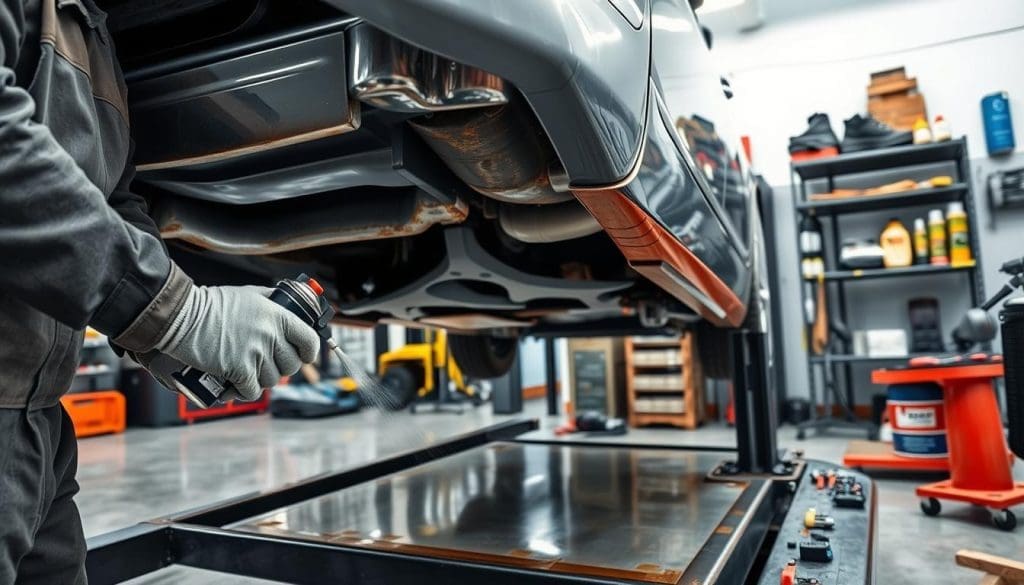
Addressing Scratches and Dents Immediately
Scratches and dents are not just about looks. They can cause serious rust problems if not fixed right away. When your car gets damaged, the protective layers get broken. This lets moisture and oxygen reach the metal, leading to rust.
Why Timely Repairs Matter
Fixing damage quickly stops it from getting worse. A small scratch can turn into a big problem if water gets under the paint. This causes the metal to rust. Fixing these issues fast saves you money and keeps your car looking good.
Immediate action is key. It saves money and keeps your car in top shape.
How to Handle Small Repairs
For small scratches and dents, DIY kits can help. These kits have touch-up paint and instructions. But, make sure to clean the area well before fixing it. This helps the repair stick better.
If the damage is bigger, get a pro to fix it. They can do the job right and add paint protection to stop rust.
Professional Help vs. DIY Solutions
DIY fixes are good for small damages but might not last long. Professional services use better materials and know-how. This makes your car’s body last longer.
- Professional help makes repairs last longer.
- DIY is okay for very small damages.
- Think about the damage and cost when choosing DIY or pro help.
Fixing scratches and dents right away, whether DIY or pro, is key. It helps prevent rust and keeps your car in good shape.
Environment Matters: Protecting Against Elements
Rust prevention is more than just fixing problems. It’s also about protecting your car from the environment. Things like rain, snow, and sunlight can cause rust. Being proactive can save you from expensive repairs later.
Parking Strategies to Minimize Damage
Where you park your car matters a lot. Parking in a garage or a covered area keeps your car safe from rain, snow, and sun. These can all lead to rust. If you can’t park indoors, find a shaded spot or one that’s protected from wind.
Covering Your Vehicle: A Wise Choice
A good car cover is essential when parking outside. Choose one that breathes but also blocks rain and UV rays. This is very important in coastal areas where salt in the air speeds up rust.
Seasonal Considerations for Rust Prevention
Each season brings its own rust prevention challenges. In winter, road salt can stick to your car and cause rust. Washing your car often, after snow or rain, is key. In summer, the heat and humidity can make rust worse on exposed metal. Regular checks and touch-ups during these times can stop rust in its tracks.
Being aware of how the environment affects your car and taking steps to protect it can greatly reduce rust risk. This keeps your car looking good and maintains its value over time.
The Role of Technology in Rust Prevention
Technology is changing how we prevent rust. New technologies are making cars last longer by fighting rust.
Innovative Products on the Market
New products are coming out to fight rust. These include corrosion-resistant coatings and special protectants for the underside of cars. They help keep cars safe from rust for a long time.
- Rust inhibitors that can be applied to metal surfaces
- Advanced coatings that offer superior corrosion resistance
- Underbody protectants that shield vulnerable areas
Advances in Repair Techniques
Repairing cars has gotten better thanks to technology. Modern repair shops use new tools and methods. They fix cars and also stop rust from coming back.
Advanced welding techniques and precision repair methods make repairs last longer. This means cars are less likely to rust.
How Technology is Shaping the Future of Rust Prevention
The future of fighting rust looks bright. New technologies like nanotechnology and advanced materials science will help a lot. They will make cars even safer from rust.
| Technology | Application in Rust Prevention | Benefits |
|---|---|---|
| Nanotechnology | Development of nano-coatings for corrosion resistance | Enhanced durability and protection |
| Advanced Materials | Use of corrosion-resistant materials in vehicle manufacturing | Reduced risk of rust formation |
As technology keeps getting better, cars will last even longer without rust. By using these new tools, car owners can keep their vehicles in top shape.
Final Thoughts: Hiring Professionals for Collision Repair
Preventing rust after auto body repairs is key. It needs quality repair work, regular maintenance, and good corrosion prevention. Knowing the causes of rust helps. Taking steps early on protects your car’s value and keeps it in top shape.
Expertise You Can Trust
Miracle Body and Paint Collision Center is known for its auto body repair skills. They focus on paint protection and stopping corrosion. Their team uses top materials and methods for lasting results. If you need professional collision repair, Miracle Body and Paint is a trusted choice.
Proper Repairs Matter
Getting your car fixed right is important for its look and safety. Choosing a pro like Miracle Body and Paint ensures your car gets the best care. For more on preventing rust in auto body repair, check out their website. It shows how to keep your vehicle safe from corrosion and damage.

