Why Auto Glass and Body Repair Should Be Done Together

Why Detailing Matters After Auto Body Repair

A collision can turn your world upside down in an instant. With over 5.5 million claims filed last year, you’re not alone. Knowing what to do next is your most powerful tool.
Your immediate focus must be on safety. Once secure, contacting the police to file a report is a critical step. This official document becomes the foundation for everything that follows.
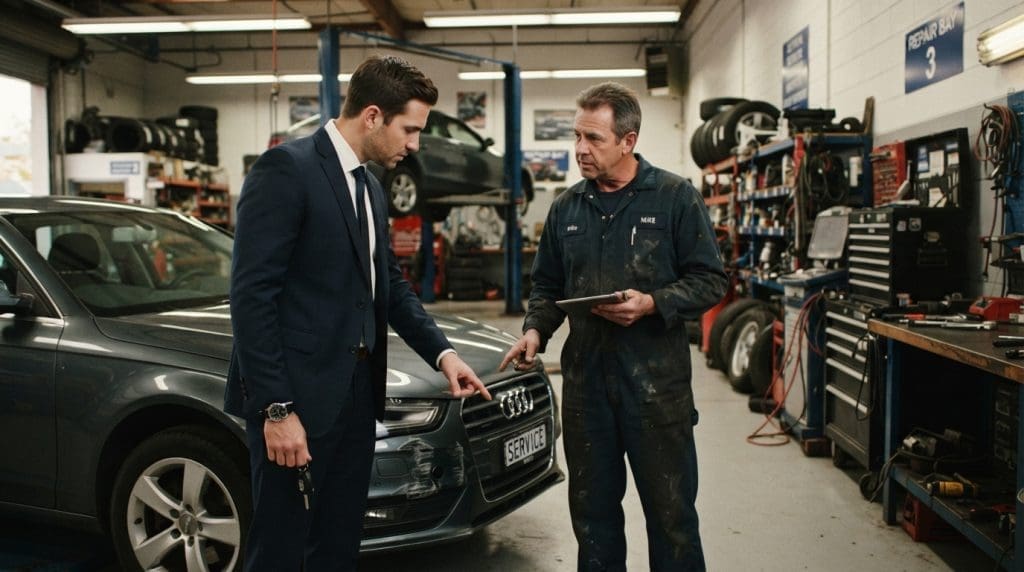
A professional body shop uses advanced equipment to assess your vehicle. They look for hidden problems like frame damage or bumper misalignment. Even aftermarket parts need a thorough inspection.
Choosing the right facility determines the quality of the work. You should review every estimate carefully. Taking the time upfront ensures your car is restored properly.
Key Takeaways
- Immediate safety and an official police report are your first priorities after a crash.
- Document all visible and suspected damage to your vehicle as soon as possible.
- Contact your insurance provider promptly, typically within 24 hours, to initiate your claim.
- A reputable repair shop will have the specialized tools to diagnose frame and alignment issues.
- Scrutinize the repair estimate to ensure it covers all necessary work for a complete restoration.
- The average property damage claim settlement was significant in 2023, highlighting the value of a proper repair.
- A structured approach reduces stress and leads to a more successful outcome for your car.
Immediate Safety and Post-Accident Actions
A sudden impact on the road demands a clear sequence of actions focused on security. Your response in these first moments sets the stage for everything that follows.
Assessing Injuries and Ensuring Safety
Before you even think about your car, check on everyone’s well-being. This is the most critical step. If anyone is hurt, call 911 immediately or ask a bystander for help.
Do not move anyone who is seriously injured. Wait for emergency personnel to arrive. Only when you are sure everyone is secure should you turn your attention to the vehicle.
Moving to a Safe Location
If your car is drivable and it’s safe, move it out of traffic. Pull over to the shoulder or a nearby parking lot. This prevents further danger.
Once stopped, do a quick visual check. Even if the bumper or fender looks okay, hidden problems can make the vehicle unsafe to drive. For more essential road safety tips, reliable resources can guide you.
| Step | Action | Key Details |
|---|---|---|
| 1 | Check for Injuries | Prioritize people over property. Call 911 for any medical concerns. |
| 2 | Move to Safety | If possible, drive your car to the side of the road to avoid secondary collisions. |
| 3 | Contact Authorities | Reporting to the police is often required. This creates an official record for your insurance company. |
| 4 | Document the Scene | Note the police officer’s badge number and the other driver’s contact information. |
You should contact your insurance provider within 24 hours. This timely report starts your claim process. A professional facility will later use frame alignment equipment to find any hidden damage from the collision.
Your Essential accident repair checklist

Having a clear, actionable plan is your best defense against the confusion that follows a vehicle collision. This checklist guides you through two critical phases: a thorough damage assessment and the initial steps with authorities.
Documenting Visible and Hidden Damage
Professional auto body technicians conduct a complete inspection. They examine structural components, mechanical systems, and paint quality.
Modern unibody construction can transfer impact forces. Damage to the frame may not be immediately apparent.
Finding hidden issues during the service is common. Supplemental claims for this additional damage are typically processed within 48 to 72 hours.
Initial Steps with Insurance and Police
Always request a detailed written estimate. It should list all parts, labor, and paint materials. This prevents misunderstandings later.
Ensure the facility uses OEM parts or certified alternatives. This is crucial for your vehicle’s long-term safety and performance.
The average property damage claim settles in about 30 days. A quality shop will provide regular updates during this period.
| Documentation Step | Why It Matters | Pro Tip |
|---|---|---|
| Detailed Estimate Review | Ensures all necessary work is covered and priced. | Ask for clarification on any line item you don’t understand. |
| Parts Specification | Guarantees the quality and fit of replacement components. | Verify the use of OEM or certified aftermarket parts. |
| Supplemental Claim Log | Tracks any additional damage found after work begins. | Keep all related paperwork in one folder. |
| Final Walk-Through | Allows you to verify the completed work matches the estimate. | Inspect paint match and panel alignment in daylight. |
Retain all documentation and photos from the shop for your records. This information is invaluable for future reference.
Comprehensive Vehicle Inspection Process
The true extent of your vehicle’s damage is often hidden beneath the surface. A professional, multi-point examination is the essential first step in any quality restoration service.
Trained technicians look far beyond obvious dents. They search for clues that indicate deeper structural or mechanical issues.
Inspecting Exterior, Glass, and Lights
Technicians carefully check every body panel for fit and alignment. Gaps that are too wide or uneven can be a sign of underlying frame trouble.
All glass is examined for stress cracks or chips. Every light assembly, from headlights to brake lights, is tested for proper function. This is vital for your safety and the car’s value.
Checking Under the Hood and Interior Systems
Under the hood, they look for shifted components or fluid leaks. These can point to cooling system or engine mount damage.
Modern vehicles have complex electronics. After a collision, sensors and cameras often need professional recalibration. Inside the cabin, they test the horn, power windows, and door locks.
| Inspection Area | Key Focus Points | Why It Matters |
|---|---|---|
| Exterior & Body | Panel alignment, glass integrity, light function | Ensures safety, proper aerodynamics, and preserves resale value |
| Mechanical & Frame | Frame measurement, suspension, under-hood components | Guarantees the vehicle’s structural integrity and driving safety |
| Electronics & Interior | Sensor calibration, ADAS systems, cabin controls | Restores critical driver-assist features and passenger comfort |
This detailed process explains repair timelines. A simple bumper replacement might take 2-3 days. Moderate damage requiring this full inspection often needs 1-2 weeks for a proper, safe restoration.
Navigating the Collision Repair Process with Confidence

The journey to getting your car back on the road safely hinges on the expertise of the facility you select. This phase is about making informed choices that ensure a high-quality restoration.
You have the legal right to choose any licensed auto body shop. Trusting a reputable collision center makes all the difference for your vehicle’s future performance and value.
Selecting a Qualified Repair Shop
Look for a facility with a proven track record. Miracle Body and Paint Collision Center offers expert service and dedicated attention at two convenient San Antonio locations.
Our North West location in Leon Valley is at 6217 Grissom Rd. The North East collision center is at 4650 Walzem Rd. Both are ready to assist you.
Understanding Repair Timelines and Methods
Every repair process has its own timeline. Minor work may take a few days. Extensive structural repairs can require 3-4 weeks.
This depends on parts availability and shop workload. Reputable shops back their work with strong warranties for your peace of mind.
Utilizing Modern Equipment for Precision
Advanced technology is non-negotiable for a proper restoration. Precision frame alignment machines ensure your vehicle’s structure is perfect.
Computer-matched paint systems guarantee a flawless finish. This quality approach returns your car to its pre-accident condition.
Contact our Leon Valley office at (210) 680-1987 or our North East location at (210) 858-3630. Schedule your professional inspection today.
Coordinating Documentation and Insurance Communication
Managing paperwork and insurer dialogue can feel overwhelming. A systematic approach simplifies everything.
Your provider will send an adjuster to inspect your vehicle. They create their own damage estimate. Clear records ensure this assessment is accurate.
Gathering Photographic Evidence and Written Records
Take photos of all damage from multiple angles. Include close-ups and wide shots. This visual information is crucial.
Keep a detailed log of all conversations. Note dates, names, and key points. This record keeps you in control.
Tips for Accurate Estimates and Claim Coordination
If your shop’s estimate differs, they will negotiate directly with the adjuster. This is a standard part of the process.
Discovering additional issues during work is common. Your facility will coordinate a supplemental claim for these extra repairs.
| Document Type | Primary Purpose | Proactive Tip |
|---|---|---|
| Photo Archive | Provides visual proof of all collision damage. | Take pictures in good light before any work begins. |
| Communication Log | Tracks all calls and emails with your insurance company. | Record the claim number and adjuster’s contact details. |
| Professional Estimate | Details all necessary work for a complete restoration. | Compare it line-by-line with the insurer’s assessment. |
| Supplemental Authorization | Approves fixes for hidden damage found later. | Review and approve these additions promptly. |
Verifying your insurer has all data prevents delays. A professional inspection ensures the quality and safety of the final work. Following this checklist guides you through the complex landscape.
Conclusion
With the right guidance, you can navigate the aftermath of a collision with assurance. Following a structured plan ensures your vehicle is restored to a safe, reliable condition.
Choosing a qualified shop protects your investment. Every step of the process must meet high quality standards for long-term performance and safety on the road.
For ongoing care, consider a seasonal auto maintenance checklist. This proactive approach complements professional repair work.
We invite you to trust Miracle Body and Paint Collision Center. Our expert team provides a thorough inspection and service at two San Antonio locations.
Visit us at 6217 Grissom Rd in Leon Valley (210-680-1987) or 4650 Walzem Rd in North East San Antonio (210-858-3630). Let us help you return to your normal life with confidence.