
How to Avoid Delays With Your Insurance Claim

How Modern Safety Sensors Affect Collision Repair

When it comes to fixing cars after a crash, owners face a big choice. They can use Original Equipment Manufacturer (OEM) parts or go for aftermarket alternatives. OEM parts fit the car’s exact needs, but aftermarket parts can save money.
Using aftermarket parts for car repairs has its ups and downs. They are often cheaper than OEM parts, which is good for your wallet. But, the quality of these parts can be hit-or-miss, which might impact your car’s safety and how well it runs.
Key Takeaways
- Aftermarket auto body parts can offer a cost-effective solution for collision repair.
- The quality of aftermarket parts can vary, potentially affecting vehicle safety and performance.
- OEM parts are designed to meet the manufacturer’s specifications.
- Aftermarket parts can be a viable alternative to OEM parts, but careful consideration is necessary.
- Vehicle owners should weigh the pros and cons before making a decision.
Understanding Aftermarket vs. OEM Auto Body Parts
It’s important to know the difference between OEM and aftermarket auto body parts. This knowledge helps when deciding on vehicle repairs. The auto industry has many parts, and knowing the difference can affect repair quality and cost.
What Are OEM Parts?
OEM parts are made to match the vehicle’s original parts exactly. They follow the maker’s exact standards.
Original Manufacturer Specifications
OEM parts meet the vehicle’s maker’s high quality and compatibility standards.
Dealership Distribution Channels
OEM parts are sold through authorized dealerships. This ensures a reliable source for genuine parts.
What Are Aftermarket Parts?
Aftermarket parts are made by third-party companies. They are alternatives to OEM parts.
Third-Party Manufacturing Process
Aftermarket parts are made by companies other than the original maker. They might use different materials and methods.
Market Variety and Options
The aftermarket industry offers many parts. This gives consumers more choices and often lower prices.
Market Overview and Current Trends
The aftermarket parts industry has grown a lot in recent years. This growth is due to people wanting affordable options. It’s key for consumers to know the pros and cons of aftermarket and OEM parts as the market changes.
Key differences between OEM and aftermarket parts include manufacturing specifications, distribution channels, and price points. Understanding these differences helps vehicle owners make better decisions about repairs.
Cost Considerations: Aftermarket vs. OEM Parts
It’s important to know the cost difference between aftermarket and OEM parts for car repairs. Choosing between these parts can greatly affect the repair cost.
Price Comparison Analysis
Aftermarket parts are usually cheaper than OEM parts. This price gap comes from different manufacturing costs and brand value.
Average Savings Percentages
Aftermarket parts can save you 20% to 50% compared to OEM parts. This savings varies based on the part and car model. For example, aftermarket body panels can save a lot without losing quality.
Cost Variation by Vehicle Make and Model
The price difference also depends on the car’s make and model. Luxury cars often have pricier OEM parts. This makes aftermarket parts a better choice for those watching their budget.
Long-term Financial Implications
While aftermarket parts save money upfront, think about the long run. Durability, performance, and future repair costs are key to their value.
Insurance Coverage Factors
Dealing with insurance for aftermarket parts can be tricky. Knowing your policy well is key to getting repairs covered.
Policy Limitations and Requirements
Insurance policies have rules about aftermarket parts. It’s important to check these rules to see what’s covered and what’s not.
Negotiating with Insurance Companies
Knowing the cost and quality of aftermarket parts helps when talking to insurance. Having quotes and details ready can help your case for using aftermarket parts.
Quality and Fit Differences
It’s key to know the difference between OEM and aftermarket auto body parts. This knowledge helps ensure the quality and fit of repairs. The type of part used can greatly affect the repair’s success.
Manufacturing Standards Comparison
OEM parts are made to the same standards as the original parts. They fit perfectly and meet the manufacturer’s quality control. Aftermarket parts might not always match these standards.
CAPA and NSF Certifications
Some aftermarket parts have certifications from CAPA or NSF. CAPA certification means the part meets quality and fit standards.
Quality Control Processes
Quality control for aftermarket parts varies. While some makers test parts well, others might not.
Material Quality Variations
OEM and aftermarket parts use different materials. This affects their durability and performance. OEM parts use materials that match the original, while aftermarket parts might use alternatives.
Installation Challenges and Solutions
Installing aftermarket parts can be tricky. Professional installers need to know how to handle these issues.
Common Fitment Issues
Fitment problems with aftermarket parts include wrong alignment and size issues. Choosing parts from trusted makers can help avoid these.
Professional Adjustment Techniques
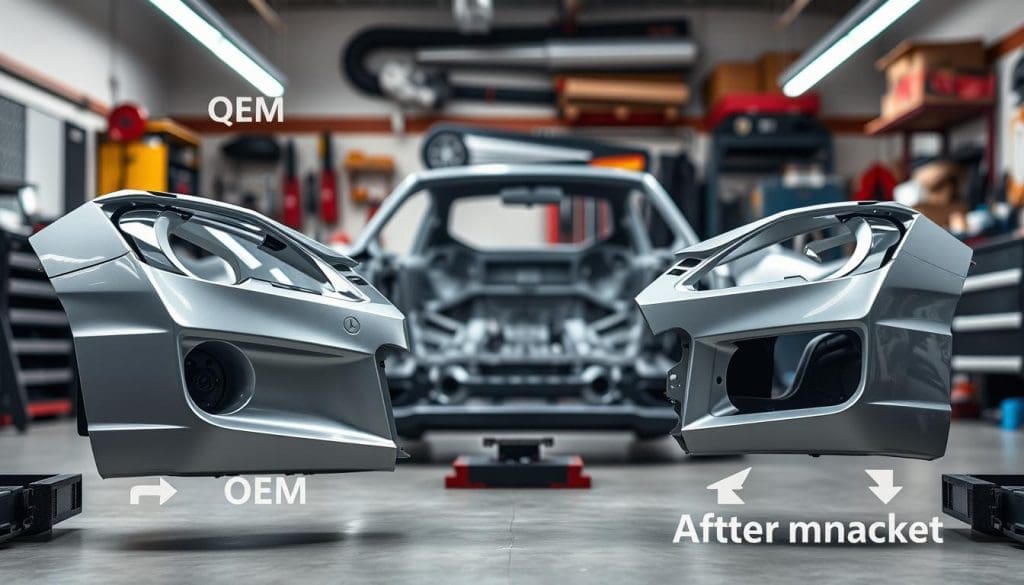
Knowing the quality and fit differences helps car owners make better repair choices.
The Aftermarket Parts Repair Process Explained
The process of repairing aftermarket parts involves several steps. These include finding, installing, and checking the quality of the parts. This ensures that repairs are up to standard, safe, and reliable.
Sourcing Quality Aftermarket Components
Finding the right aftermarket parts is the first step. It’s important to choose parts from reputable manufacturers that follow industry standards. You need to research and check the quality of the parts to make sure they fit your vehicle.
- Researching reputable manufacturers
- Verifying part compatibility
- Checking for industry certifications
Professional Installation Requirements
Installing aftermarket parts needs a professional touch. This requires specialized tools and equipment and skilled technicians.
Specialized Tools and Equipment
Using the right tools is key for a precise installation. You’ll need diagnostic tools and repair equipment made for your vehicle model.
Technician Expertise Needed
Technicians must be trained and experienced. Their skills ensure the parts are installed right, keeping your vehicle running well and safely.
Quality Control Measures
Quality checks are done to ensure a good repair. These include inspections before and after installation to meet industry standards.
Pre-Installation Inspection
A detailed inspection is done before installing parts. It checks for damage or defects to avoid problems during the repair.
Post-Installation Testing
After installation, parts are tested thoroughly. This checks if the vehicle works as it should and if there are any performance issues.
By following this detailed process, repair shops can guarantee high-quality repairs. This gives vehicle owners safe and reliable fixes.
Safety Considerations for Aftermarket Body Parts
It’s very important to make sure aftermarket body parts are safe. When people choose replacement components, they need to think about safety.
Crash Test Performance Data
How well aftermarket parts do in crash tests is key. Independent testing results give us important info on their safety.
Independent Testing Results
Some aftermarket parts might not do as well as OEM parts in crash tests. This could make the vehicle less safe.
Manufacturer Safety Claims
Looking closely at manufacturer safety claims is also important. We should find parts that have been tested and certified to meet safety standards.
Structural Integrity Concerns
The structural integrity of aftermarket body parts is another big concern. Parts not made to OEM standards can make the vehicle less safe.
Safety Certification Standards
Knowing about safety certification standards is vital. These standards help make sure aftermarket parts are safe.
Industry Regulations
Industry regulations are key in keeping aftermarket parts safe. Following these rules is important for safety.
Consumer Protection Guidelines
Lastly, consumer protection guidelines help keep vehicle owners safe. Knowing these guidelines can help people make better choices.
Warranty and Resale Value Implications
Using aftermarket auto body parts raises questions about warranty and resale value. Vehicle owners need to know the impact of these choices. When fixing a car, the decision between OEM parts and aftermarket parts matters a lot.
Manufacturer Warranty Policies
Warranty policies for aftermarket parts differ a lot. Using these parts usually doesn’t void a car’s warranty. But, there are specific rules to follow.
How Aftermarket Parts Affect Vehicle Warranties
Aftermarket parts can harm a vehicle’s warranty if they cause problems. It’s key to document the installation and keep records of the parts.
Documentation Requirements
Good documentation is vital when using aftermarket parts. It helps avoid denied warranty claims. Keep receipts, installation records, and part details.
Aftermarket Part Warranty Options
Many aftermarket parts come with their own warranties. These warranties offer extra protection. They vary in length and what they cover.
Impact on Vehicle Resale Value
The resale value of a car with aftermarket parts is a big worry. The impact depends on several things.
Dealer Assessment Factors
Dealers look at cars with aftermarket parts in different ways. Some see them as upgrades, others as a minus.
Private Sale Considerations
When selling privately, being open about aftermarket parts is key. Telling buyers about these parts can build trust.

In summary, knowing how aftermarket parts affect warranty and resale value is important. Being informed about warranties and resale can help owners make smart choices for their car’s repair and care.
Benefits and Risks of Aftermarket Parts Repair
Using aftermarket parts for repairs can save money but also comes with risks. It’s important to know what these risks are before making a choice.
Advantages for Budget-Conscious Consumers
Aftermarket parts can be cheaper, which is good for those watching their budget. There are several benefits to consider:
Immediate Cost Savings
One big plus of aftermarket parts is the cost savings. They are often cheaper than OEM parts. This is great for those looking to cut down on repair costs.
Availability Benefits
These parts are also easier to find. They come from many suppliers. This is helpful for owners of older cars or those needing hard-to-find parts.
Potential Drawbacks to Consider
While aftermarket parts have many benefits, there are also downsides. Knowing these risks is key to making a good choice.
Quality Inconsistencies
One major concern is the quality. Because these parts come from different makers, quality can vary a lot.
Compatibility Issues
Another issue is making sure the part fits your car right. This is important to avoid damage or safety problems.
How Miracle Body and Paint Ensures Quality Aftermarket Repairs
At Miracle Body and Paint Collision Center, we aim for quality repairs that save money. Here’s how we do it:
Certified Technician Expertise
Our techs are certified and very experienced with aftermarket parts. They get special training to handle these parts well.
Rigorous Quality Control Process
We have a strict quality check to make sure every part meets our standards. We inspect each part and ensure it’s installed correctly.
| Aspect | OEM Parts | Aftermarket Parts |
|---|---|---|
| Cost | Generally more expensive | Often less expensive |
| Quality | Consistent quality | Variable quality |
| Warranty | Typically backed by manufacturer warranty | Warranty varies by supplier |
How to Choose the Right Parts for Your Vehicle
Choosing between aftermarket or OEM parts for your vehicle depends on several factors. It’s important to understand these factors to make a decision that fits your needs and budget.
Assessing Your Specific Needs
Before deciding, you need to know what your vehicle needs. Consider a few key points:
Age and Value of Vehicle
The age and value of your vehicle matter a lot. For older or less valuable cars, aftermarket parts might save you money.
Long-term Ownership Plans
Think about how long you plan to own your vehicle. If you’re keeping it for a long time, OEM parts could be better for keeping it running well.
Researching Reputable Manufacturers
When choosing aftermarket parts, pick from well-known makers. This ensures the parts are good quality and fit your car right.
Working with a Trusted Collision Center
Finding a reliable collision center is key for the right repair. Here’s what to look for:
Questions to Ask Your Repair Shop
- What type of parts do you use for repairs?
- Can you provide warranties for the parts used?
- How do you ensure the quality of aftermarket parts?
Red Flags to Watch For
Watch out for these warning signs:
- They use parts from unknown sources.
- They can’t offer clear warranties.
- They have bad reviews or ratings.
By understanding your needs, researching parts, and choosing a trusted repair shop, you can get your car fixed right. This keeps it safe, running well, and worth its value.
Conclusion: Making the Best Decision for Your Vehicle
Deciding between OEM and aftermarket parts for your car’s repair can be tough. It’s important to know the good and bad of each to make a smart choice. This choice should fit your needs and budget.
OEM parts are guaranteed to fit perfectly and are of high quality. But, they cost more. Aftermarket parts are cheaper but their quality can differ. When picking parts, think about cost, quality, and warranty.
For a top-notch repair, choose a trusted collision center. Miracle Body and Paint Collision Center has two locations in San Antonio, Texas. Call their North West San Antonio – Leon Valley at (210) 680-1987, or their North East San Antonio at (210) 858-3630.
By picking the right parts and a reliable center, your car will be fixed right. Contact Miracle Body and Paint Collision Center to talk about your repair needs.