Totaled or Repairable? How Insurance Makes That Call

Rust on Your Car: When to Repair vs Walk Away
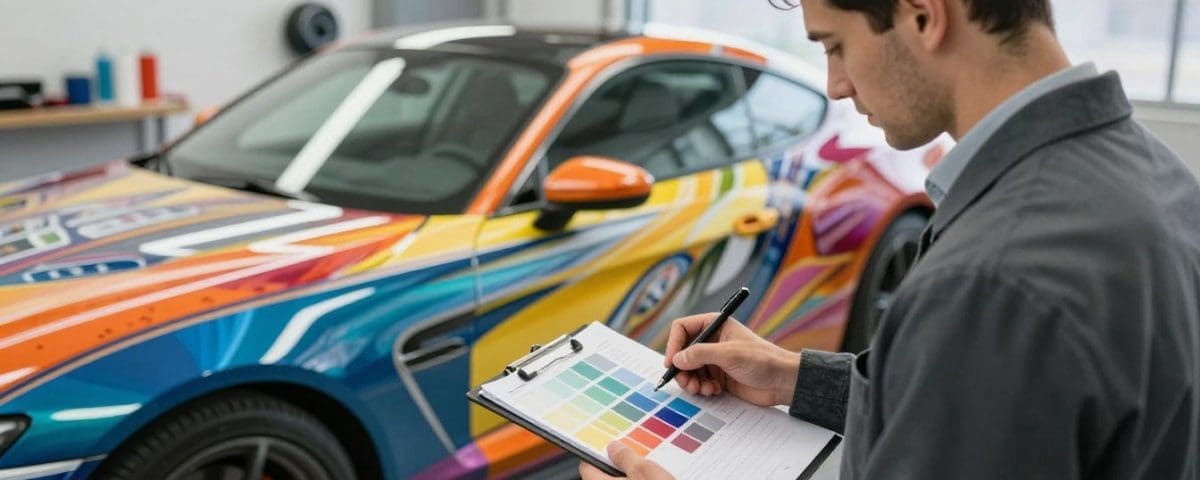
Understanding the custom paint job cost helps you plan before you invest in your car. You want to know what a fresh finish will do for value and pride of ownership.
Automotive journalist Nick Kurczewski notes a new finish can give a big psychic payoff and sometimes raise resale value. That makes weighing options worth your time.
When you decide to update the surface, consider the level of detail and the amount of work required. High-quality results often need extensive prep and skilled labor, so prices can range widely.
Before you pick a shop, check your vehicle’s current condition. A full repaint may not be necessary if rust and dents are limited.
Knowing average cost ranges lets you budget wisely and choose the best outcome for your car.
Key Takeaways
- Know the typical ranges before you shop.
- Detail level and prep affect final price.
- A fresh finish can boost resale and enjoyment.
- Assess your vehicle to avoid unnecessary work.
- Plan a budget that matches your quality goals.
Understanding the Custom Paint Job Cost
Your choice of tier—simple refresh or show-ready finish—dictates how much time and money you’ll invest.
Basic services deliver a single coat and limited prep. These typically range from about $300 to $1,000. They work well if you want a clean look without heavy repairs.
Mid-grade options sit between roughly $1,000 and $4,500. Shops here do better prep, use higher-quality materials, and give a more durable finish.
Basic vs. Show-Quality Tiers
- Cheap averages reported near $566; good-quality jobs fall around $1,000–$3,500.
- Showroom-level work usually starts at about $2,500 and climbs based on detail.
- Top-tier restorations can reach $5,000–$20,000 with bare-metal prep and multiple coats.
The Role of Vehicle Size
Size matters. A two-seater needs less material and labor than a large SUV, so prices differ by surface area.
Also, quality of the body shop and technician experience affect the final price. Proper prep—like removing hood and door trim—is time-consuming but ensures longer-lasting results and better warranties.
Factors That Influence Your Final Price
Multiple elements—from paint type to disassembly hours—shape the final price for your car’s finish.
Material choice matters. Synthetic enamels cost less than high-end basecoat/clearcoat systems. Matte finishes add roughly $2,000–$6,000 because of special application and extra coats.
The color you pick affects the bill. Standard colors like white, gray, and black are the most budget-friendly. Changing your vehicle’s original color takes more prep, sanding, and coats, so expect more time and labor.
Design complexity also raises the total. Stripes, metallic flakes, or candy tones can add $500–$2,000 or more depending on detail and materials.
Shops charge for hours spent disassembling the hood, doors, and trim to ensure a flawless finish. Ask for itemized estimates from multiple shops and compare how they list labor, materials, prep, and warranties.
Consider add-ons like ceramic coatings ($500–$2,000) to protect your new finish and keep value high. For deeper guidance on choosing the right finish for repairs, see this helpful resource: why a tailored finish might suit your car after.
The Importance of Proper Surface Preparation
Good prep makes the difference between a long-lasting finish and early failure. Before any work begins, a shop will inspect the surface for rust, dents, and structural damage. You want repairs done first so the final coat looks right and lasts.
Addressing Rust and Structural Damage
Rust is not cosmetic—it’s a threat to the integrity of your vehicle. Small areas of corrosion often cost between $150 and $500 to repair depending on severity. Treating rust early prevents spread and protects value.
Deep scratches that need filling and sanding typically run $150–$300 to fix properly. Technicians sand existing layers, sometimes down to bare metal, to ensure the new finish adheres.
- Prep matters: painting over rust or dents makes flaws reappear quickly.
- Steps shops follow: sanding, solvent wipe, and taping off windows and trim to avoid overspray.
- Structural repair first: pay to fix frame or body damage before any coating is applied.
Skipping these steps saves money now but will cost you more later through peeling, flaking, or rust recurrence. A professional shop’s careful prep and warranty help protect your investment and the long-term quality of the finish.
Comparing Professional Services and DIY Methods
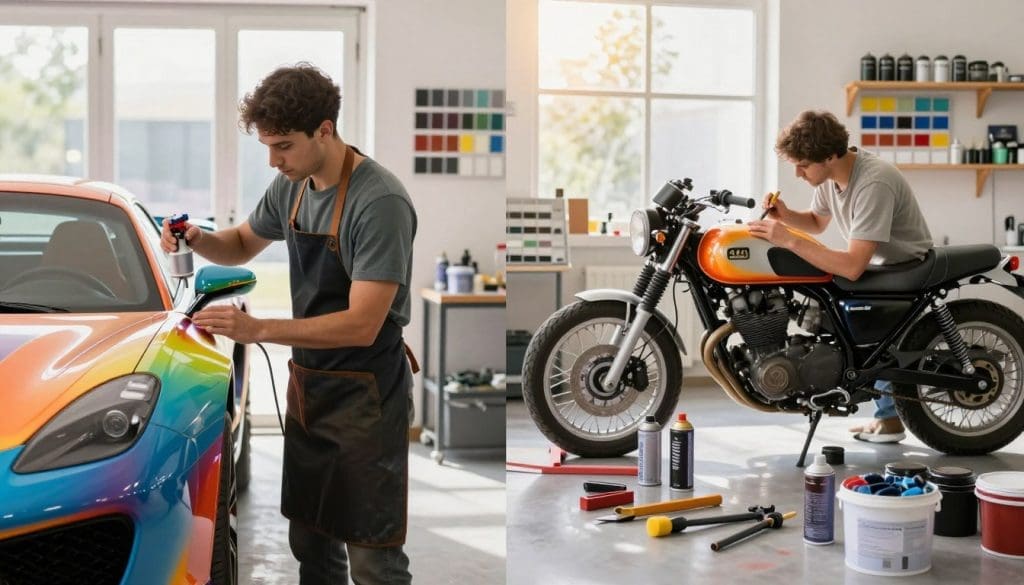
Deciding between doing the work yourself or hiring a pro changes the risks and rewards for your vehicle. Your choice affects the final finish, the time you spend, and the long-term value of the car.
Risks of Home Painting
DIY projects can save money up front, but they often require dozens of hours and steep learning curves. Without a spray booth, dust and debris cause runs, orange peel, or trapped particles that ruin the surface.
Starter kits run $100–$1,000 while professional paint job ranges start near $3,000. A poor DIY attempt can lead to rust or damage that raises repair bills later.
Benefits of Controlled Environments
Professional shops use controlled spray booths to keep contaminants out and to cure coatings correctly. Trained technicians follow strict prep and use higher-grade materials for consistent coats and color match.
Professional Warranty Advantages
One big advantage of a certified shop is a written warranty on labor and materials. That protection gives you peace of mind if the finish fails due to defects or improper adhesion.
- Pros: higher quality, less time spent, warranty coverage.
- Cons: higher price, more upfront labor costs.
How to Save Money Without Sacrificing Quality
Small decisions—like keeping the original color or limiting repairs—can lower your outlay without hurting quality.
Start by getting at least three written quotes from reputable shops in your area. Compare line items for prep, labor, materials, and hours so you know what you pay for.
Keep the original color when possible. That reduces sanding, extra coats, and matching time. A basic color and finish refresh often gives a strong visual lift at a lower price.
Only order repairs you truly need. Focus on damaged panels and surface rust instead of a full repaint when the rest of the vehicle looks good.
- Check for an existing warranty before you pay—some work may still be covered.
- If you have AAA, ask about a 10% labor discount at AAA Approved Auto Repair Facilities.
- Pick shops with at least five years in business to protect your value and ensure quality work.
Practical tip: a basic, well-prepped coat often lasts longer than rushed, high-end finishes done poorly. Spend time on prep; it saves money later.
When to Invest in a Professional Vehicle Makeover

Consider a pro makeover when damage or age makes the exterior look tired or threatens the body beneath the finish.
If your car was in an accident and the original paint or panels are compromised, you should hire a shop. Professionals can repair structure, match color, and restore the surface so the vehicle is safe and attractive again.
Restoring a classic often needs era-appropriate color and skilled labor to protect market value. A high-quality paint job preserves authenticity and resale appeal.
If the finish is peeling or faded, a professional repaint will boost curb appeal and resale price. Pros handle complex body work that is hard to replicate at home.
- Keep it long-term: invest if you plan to keep the vehicle and want protection against weather, chips, and rust.
- Choose quality: a certified shop has the tools, prep routines, and materials to deliver lasting results.
- Sell with confidence: well-maintained paint jobs make cars much more attractive to buyers.
Conclusion
A quality finish starts with a clear plan and the right team at your side.
Plan your work carefully: know the repair steps, the labor hours, and the expected timeline before you commit. This helps you avoid surprises and ensures a lasting result for your vehicle.
Whether you need a simple touch-up or a full restoration, choosing the right shop is the most important step for your car. We invite you to hire Miracle Body and Paint Collision Center to fix collision repair damage and restore your vehicle to perfection.
We have 2 locations in San Antonio to serve you. North West (Leon Valley): 6217 Grissom Rd., San Antonio, TX 78238 — (210) 680-1987. North East: 4650 Walzem Rd., San Antonio, TX 78218 — (210) 858-3630.
Our team is dedicated to delivering high quality work so your car looks as good as the day it left the factory.