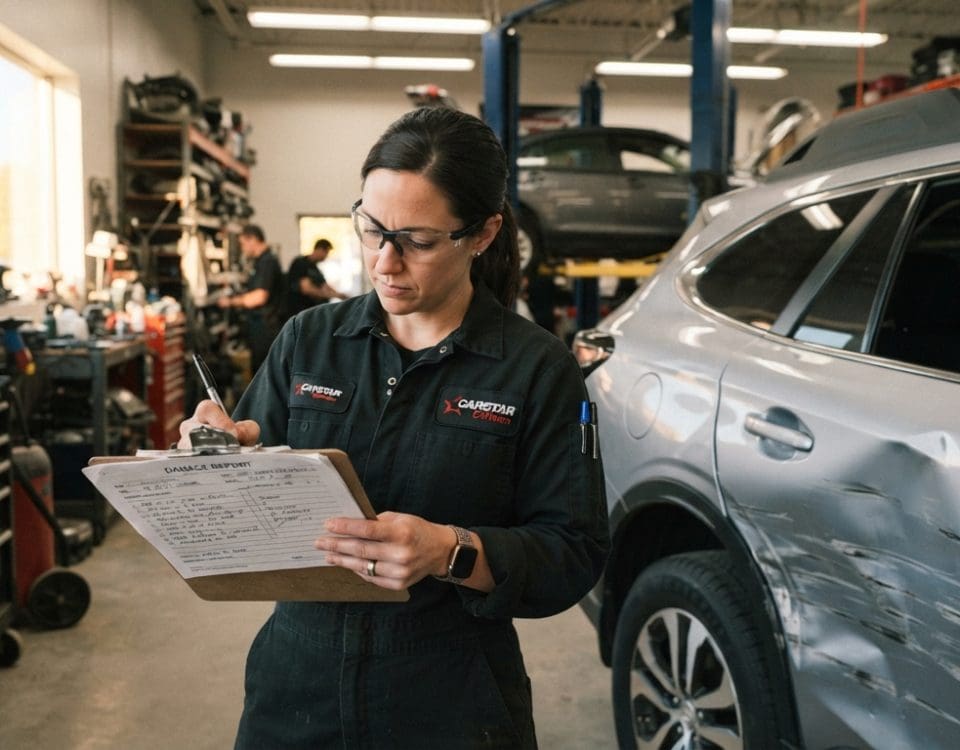
What Happens During a Collision Repair Quality Control Inspection?
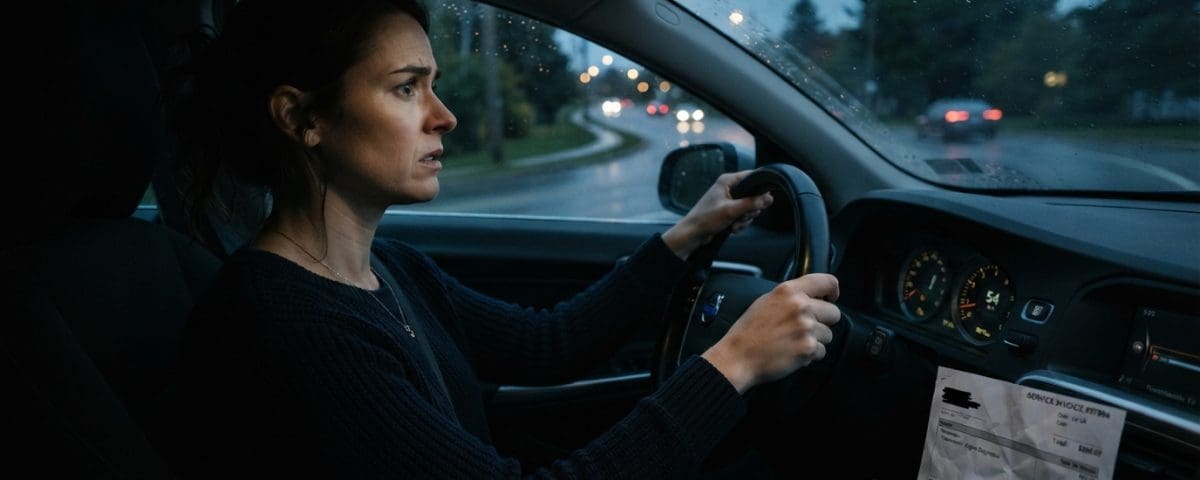
At pickup, your vehicle looks fixed, but bad collision repair signs may show up on the drive home. A new shake, odd sound, or change in how the car responds can make you question the work.
Some problems stand out at a glance, while others affect how your vehicle drives. Water can also enter through a poor seal and damage the interior over time. A post-repair inspection (PRI) is an independent assessment of completed collision work to identify problems that may need correction.
A PRI can help you understand what needs attention, but this information cannot replace an inspection by a qualified professional. A new concern deserves a careful look, especially if it affects safety. Here are seven specific signs to watch for after a collision repair.
Key Takeaways
- A difference in fit, finish, or function can call for a closer look.
- One symptom alone does not prove the repair was done poorly.
- Check the vehicle while parked before taking a test drive.
- Record concerns and contact the shop that completed the work.
- An independent inspection can provide written findings.
- Choose a shop that explains its repair plan and final checks.
Bad Collision Repair Signs to Check After Pickup
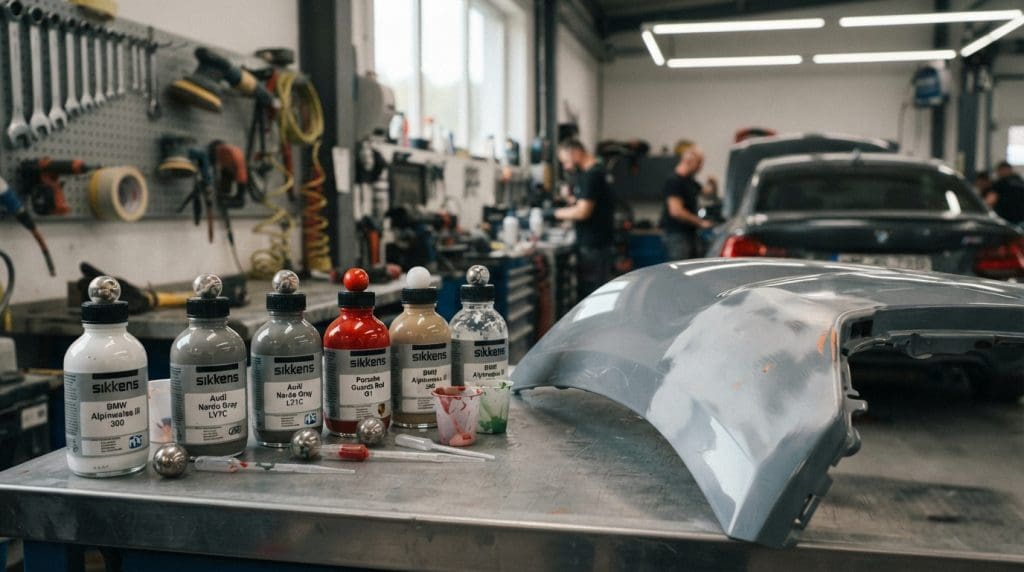
The first clue may be a difference between a repaired area and the part beside it. Look closely, since light and viewing angle can change what you see. One symptom does not prove poor workmanship, but a new change deserves investigation.
Bad collision repair signs can affect appearance, comfort, or safe driving. Check the repaired area alongside nearby parts, rather than judging one spot by itself.
Paint and panel fit look wrong
First, paint on the repaired panel may look different from nearby paint. Color can shift under daylight, garage lights, or shade, so do not judge it in only one lighting condition. Walk around the vehicle and look from more than one angle.
Second, uneven gaps between body panels or a bumper that sits out of line can signal a fit problem. Compare the left and right sides, and check where the bumper meets the fenders. A small difference may have another cause, but a clear change merits a closer review of the auto body work.
Doors, seals, or glass let in air or water
Third, a door, hood, or liftgate that sticks, drops, or needs extra force may not sit or latch as it should. Each should open and close smoothly. A change in how it shuts can also affect how well the seal meets the body.
Fourth, water inside the vehicle or new wind noise near a window can point to a seal or fit issue. Water leaks can lead to corrosion and interior damage if they continue. A whistle at highway speed may also suggest air is passing through a gap.
Driving, sounds, or electronics feel different
Fifth, new whistling, roaring, whining, or grating sounds deserve attention. Note when each sound starts, such as during a turn or while braking. Do not assume a new noise will go away on its own.
Sixth, warning lights should not remain on after collision repair, and headlights, brake lights, and turn signals should work. Seventh, changed steering, braking, or handling can point to a safety concern. Tire-to-fender distance should also look consistent on both sides.
These seven clues do not identify the cause by themselves. Note what changed and when, then investigate before a small concern worsens. A careful check can help you decide what to do next.
How Can You Check the Vehicle Before Driving Away?
Before you start a test drive, check the vehicle while it is parked. Take your time and ask the shop to leave the vehicle clean enough to examine. Do not drive if a check raises a safety concern.
A slow look and a few simple control checks can catch issues before you leave. Use this five-point pickup check, and ask a technician to explain anything that seems unclear.
Inspect the exterior and test the controls while parked
Start with these checks before turning onto a public road:
- Walk slowly around the vehicle in changing light, checking repaired surfaces from several angles.
- Compare panel alignment, then open and close doors, the hood, and the liftgate.
- Turn on the dashboard and confirm the headlights, brake lights, and turn signals work.
- Test electronic accessories affected by the repair, such as windows, locks, cameras, or sensors.
- Listen for new sounds while the vehicle is parked, including clicks, grinding, or a fan that stays on.
Take a cautious drive only if the vehicle feels safe
If the parked checks pass and the vehicle feels safe, take a brief drive on a familiar, low-traffic route. Check steering response, straight-line travel, and braking without pulling. If road and traffic conditions allow, note how the vehicle handles through turns.
Steering should not feel gravelly or choppy. Keep both hands on the wheel, and never test straight-line travel by letting go on a public road. A test drive is not worth taking if the brakes or steering seem unsafe.
Write down any failed check and tell the shop what you noticed. Avoid a road test if steering or braking feels unsafe; ask for help with the next step instead.
What Should You Do If You Suspect a Repair Problem?
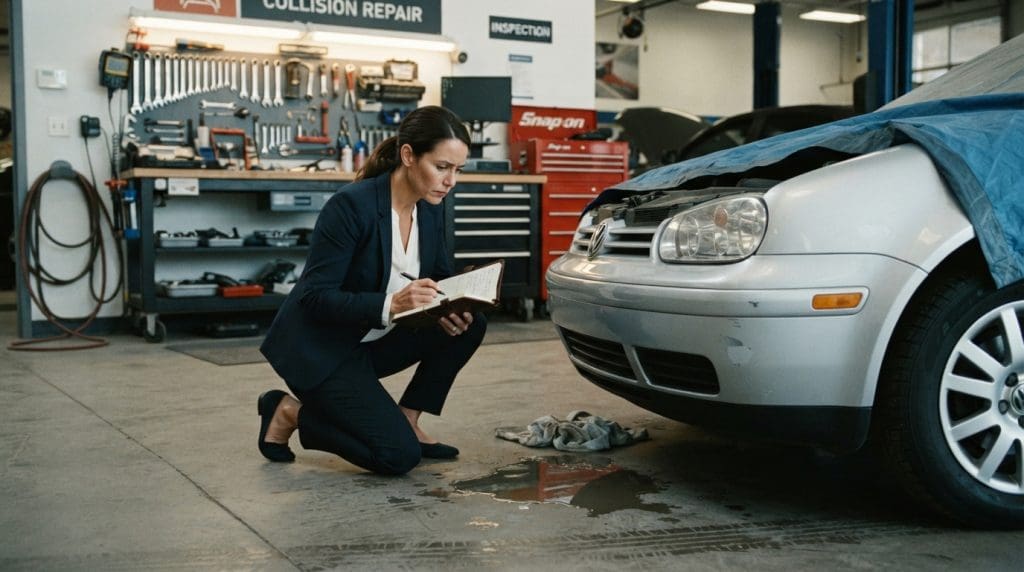
If you find a water leak or warning light after leaving the shop, record it before the signs change. Act promptly, especially if the concern affects safe driving. Keep a written record of the issue and each repair-related conversation.
Clear records can help you explain what happened and when. Use these four steps to ask for a documented review without assuming what the shop or insurer will decide.
- Photograph or record the issue, including when you first noticed it. Note the conditions, such as rain or braking.
- Save the estimate, repair paperwork, and messages or emails about the work. Keep copies in one place.
- Contact the shop that completed the repairs. Describe the concern and request an explanation or reinspection.
- If concerns remain, ask a qualified independent auto body shop or appraiser about a PRI. Discuss any written findings with your insurer.
Record the concern and contact the repair shop
A clear photo, date, and short description can help show how the problem developed. Keep your wording factual: say what you noticed, when it began, and whether it changes. Ask the original shop to explain its findings in writing.
Save any revised estimate or repair plan, too. A qualified auto body shop or appraiser may provide documentation that helps you speak with your insurance company. That information can support a discussion, but it does not ensure coverage or a specific outcome.
Consider an independent post-repair inspection
A PRI gives you an independent assessment of completed collision work. It may cost you money upfront, and the price varies by inspector and work needed. A broad typical figure is a couple hundred dollars, but that is not a local San Antonio quote.
Ask what the inspection covers and whether you will receive written findings. Contact your insurer before scheduling if you want to ask about coverage. Insurance payment is not guaranteed, and a dispute may take time to resolve.
Documented follow-up can take several calls and a second review. Neither insurer involvement nor a specific remedy is certain. When you need future repairs, ask shops how they plan work and check the finished vehicle.
How Can You Choose a Repair Shop That Follows Proper Procedures?
Before approving a repair, ask how the shop will check for hidden damage behind a bent bumper. Ask for specifics, not just a promise that the work will be done right. A sound repair plan should follow vehicle-manufacturer information and include checks suited to your vehicle.
Vehicle manufacturers publish repair procedures for their vehicles. Modern electronics and driver-assistance systems may also call for diagnostic scans and checks. The shop should be able to explain which steps fit your vehicle and why.
Ask how the shop determines the repair plan
A first estimate may change if technicians find damage that was hidden at first. Ask how the shop inspects beyond visible damage and how new findings affect the plan. A useful answer explains what the team will check before choosing parts or repair methods.
Ask how the shop uses current, vehicle-specific manufacturer procedures. The answer should name how technicians consult those instructions, not simply say they follow industry standards. Find out what parts and methods the shop proposes, and ask why they suit your vehicle.
Technician training matters, especially for repairs involving newer vehicle systems. Ask who will perform the planned work and who will oversee it. Licensing rules for collision technicians vary by state, so ask about relevant training rather than assuming one rule applies everywhere.
Confirm how technicians check the finished work
Modern vehicles may need diagnostic scans before and after repair, plus checks of driver-assistance systems. Ask which scans, system checks, or calibrations apply to your vehicle. The shop should explain how it will confirm that each needed step is complete.
Use these questions to compare the repair process, communication, and quality checks:
| Question to ask | A useful answer covers | Follow-up to request |
|---|---|---|
| Hidden damage inspection | How the shop checks beyond visible damage | How new findings affect the repair plan |
| Manufacturer procedures | How current vehicle-specific instructions are consulted | What methods or parts are proposed, and why |
| Technician preparation | Relevant training for the planned work | Who will perform or oversee the work |
| Diagnostics | Which scans or system checks are appropriate | Whether results and needed calibrations will be confirmed |
| Final quality control | Fit, function, warning lights, and roadworthiness checks | What is reviewed before vehicle return |
Ask what the shop checks before it returns the vehicle and how it records those checks. A low estimate alone does not show that the repair will be poor, and a confident verbal promise does not prove quality. Compare the work plan, parts, and final review.
Prioritize understandable answers and documented checks over price alone. That gives you a clearer basis for choosing a shop and discussing the work before repairs begin.
Conclusion
Do not ignore a change in how your vehicle looks or drives after collision repair. A new safety or function concern deserves prompt attention, and clear notes or photos can help you explain what changed. Ask a qualified professional to review anything that could affect safe driving.
If your vehicle needs collision damage repaired, contact Miracle Body and Paint Collision Center. Its North West San Antonio location serves Leon Valley at 6217 Grissom Rd., San Antonio, TX 78238. Call (210) 680-1987.
For North East San Antonio, visit 4650 Walzem Rd, San Antonio, TX 78218, or call (210) 858-3630. Contact Miracle Body and Paint Collision Center to discuss repairs for your vehicle.