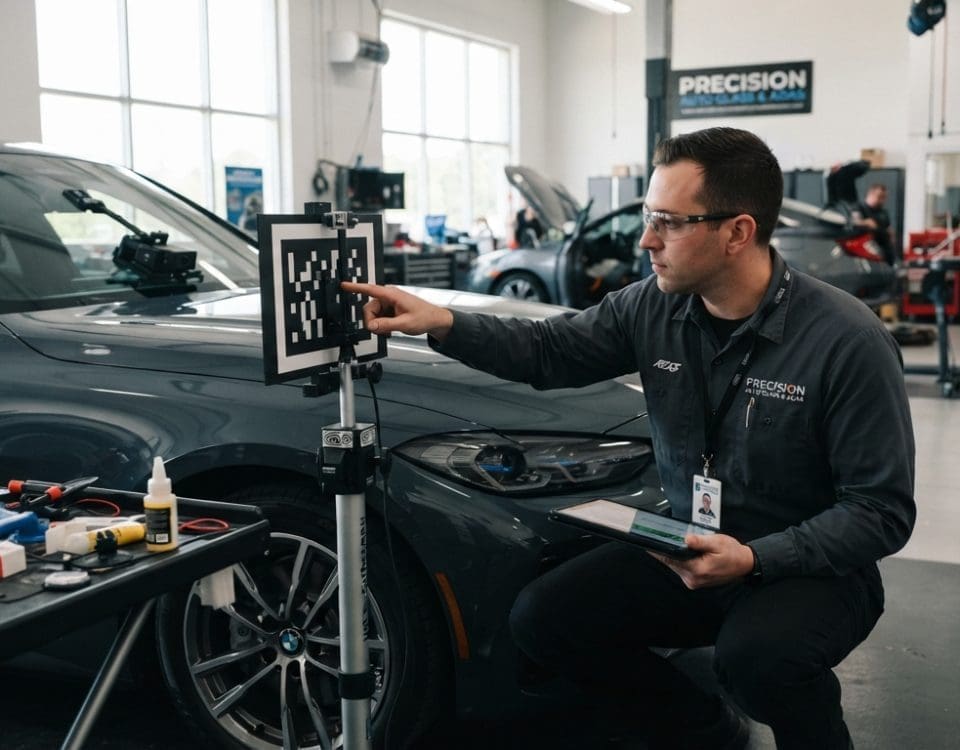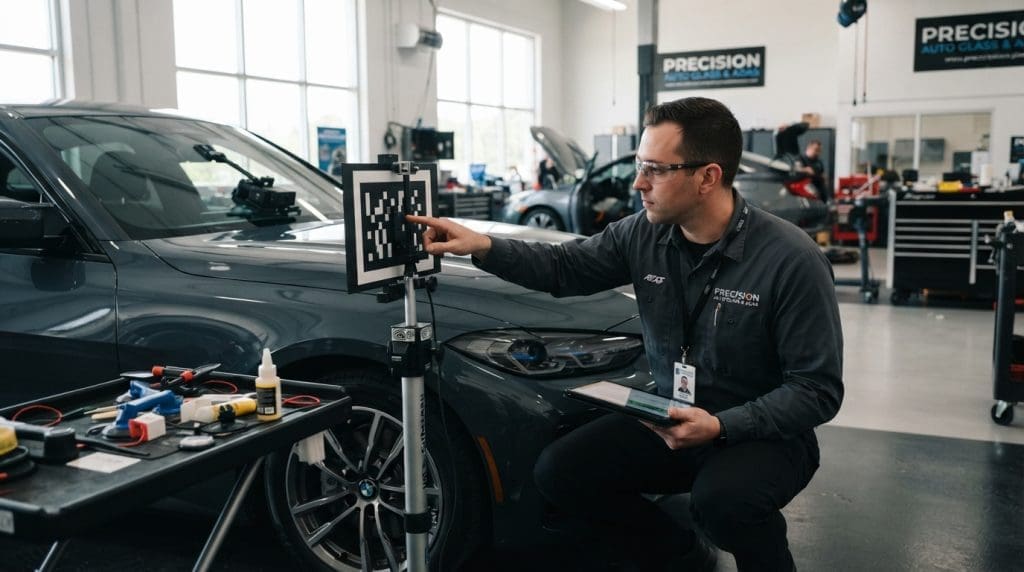
Does Your Car Need Camera Calibration After Windshield or Collision Repairs?
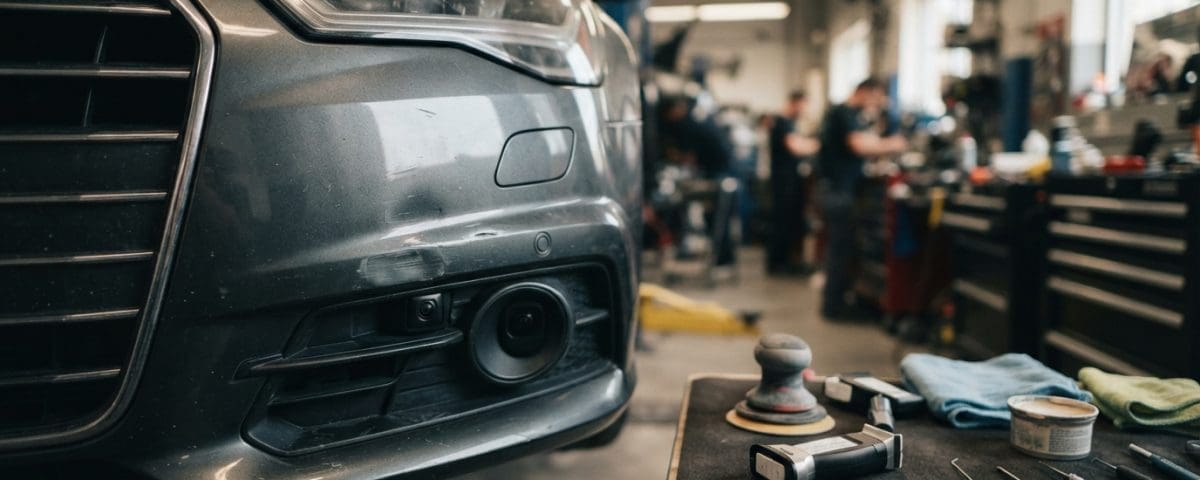
A lightly marked bumper can leave you unsure whether collision repair safety systems still work. A collision may affect sensors, structural parts, or electronic features even when the vehicle looks mostly unchanged.
ADAS calibration means adjusting and checking cameras, radar, or other sensors so driver assistance features can detect hazards accurately. Visible damage alone cannot show whether those features still work as intended.
You will learn what to check after an impact and how to choose a repair path that fits your vehicle. Understanding how your vehicle’s safety features work together is the first step.
Key Takeaways
- A bumper can look lightly damaged while parts behind it have shifted.
- Active safety features and crash protection work as a connected design.
- Repairs may need scans, measurements, or ADAS calibration.
- Ask the collision repair shop to explain checks and document completed work.
- Insurance coverage for repair work depends on your policy and claim.
How Do Vehicle Safety Features Work Together?
A modern vehicle protects you through technology that helps prevent a crash and parts designed to protect you during one. Both sides matter, so a repair may involve more than visible bodywork.
Active and passive safety systems work together with the vehicle’s structure. A collision can affect one part of that design while leaving another part looking normal.
Active systems detect and respond to hazards
Active systems use information from the road and the vehicle to help you respond to risk. Some warn you, while others may help the vehicle respond.
These systems depend on accurate signals and properly placed parts. A change to the body or a related component can affect how the system reads conditions around your vehicle.
Passive systems help protect occupants in a crash
Passive safety parts help protect people when a collision happens. Airbags, seatbelts, and structural reinforcements work with the vehicle’s body.
Vehicle makers design structures with crumple zones, high-strength steel, aluminum parts, and structural reinforcements. These parts help manage crash energy in specific ways.
That is why body repair can involve careful work on materials and structure, not just panel shape. Airbags and driver assistance technologies work alongside that structure to help protect occupants.
Thinking of the vehicle as one safety design helps explain why a repair plan can extend beyond the damaged panel. The specific features that a collision can affect depend on the vehicle and impact.
Which Advanced Safety Features Can a Collision Affect?
A bumper impact can affect the bumper and a nearby sensor used by adaptive cruise control. One impact can reach both, so your vehicle’s safety systems deserve attention beyond the visible panel.
ADAS features rely on sensors that must be in the right place and able to read their surroundings. Cameras, radar units, and ultrasonic sensors may sit in bumpers, windshields, or side mirrors.
Sensor-based driver assistance features
Adaptive cruise control uses radar to help track distance from vehicles ahead. Blind spot monitoring may rely on radar or other sensors near the rear or side areas.
A lane departure warning system can use a camera near the windshield. Parking assistance may use ultrasonic sensors or cameras to detect nearby objects.
Backup cameras also depend on a clear view and proper function. A collision or related repair can make it important to check the system, even if the screen still turns on.
| Feature | Typical technology | Potential collision-related concern |
|---|---|---|
| Adaptive cruise control | Radar | Changed position or damage may affect distance detection |
| Blind spot monitoring | Radar or sensors | Bumper or side-area damage may affect detection |
| Lane departure warning | Camera | Windshield or camera-area work may need verification |
| Parking assistance | Ultrasonic sensors or cameras | Bumper damage may affect obstacle detection |
Occupant protection and mechanical safety components
Safety concerns also include parts that protect you or help you control the vehicle. Airbags and seatbelt pretensioners may need checks after an impact.
Steering, suspension, and alignment can also affect how the vehicle handles. Their condition may matter even if body panels appear close to their original shape.
Knowing which features your vehicle has is a useful start, but not a full assessment. Damage can remain hidden beneath the surface, where a visual check cannot settle the question.
What Hidden Damage Can a Collision Leave Behind?

A bumper can look intact while a sensor or its mounting point behind it has shifted. Appearance is not proof that the part sits in the right position.
A visual check alone cannot establish that a vehicle is safe after a collision. Even a relatively minor impact can leave damage that you cannot see from outside.
A collision repair shop may need to inspect, measure, and scan the vehicle. Those checks can help uncover body repair issues that a quick look might miss.
- Damage behind a bumper or body panel
- Bent sensor mounting points
- Suspension, steering, or alignment changes
- Electrical faults or diagnostic codes
A bumper that looks clean does not mean its sensors or mounting points are correctly positioned. Components behind a panel may be affected without leaving a clear mark on its outside.
Structural misalignment can affect how parts fit together. Suspension or steering problems may also change how the vehicle moves on the road.
Electrical damage can affect a safety system without creating an obvious body defect. Diagnostic scans can reveal codes that point to electronic issues needing further review.
Measurements can help compare the vehicle’s structure with its specified dimensions. A repair shop may also inspect areas that need access during disassembly.
Once the shop identifies affected parts and areas, it can determine whether sensor adjustment and verification are required. That decision depends on the damage and the vehicle’s repair needs.
When Does a Vehicle Need ADAS Calibration?
ADAS calibration is needed when the vehicle’s repair requirements or affected parts call for it, not simply because any collision occurred. The vehicle decides the need through its specific repair requirements.
Whether calibration is required depends on the vehicle manufacturer’s procedures and the parts affected. Damage, removal, replacement, or adjustment of sensors and related areas can affect that decision.
Static calibration uses a controlled setup
Static calibration takes place while the vehicle is stationary. The procedure uses a controlled setup, which may include tools and targets placed in specified positions.
The exact setup depends on the vehicle and the manufacturer’s instructions. The shop must use the process that applies to that vehicle and its repair.
Dynamic calibration checks systems while driving
Dynamic calibration takes place while the vehicle is driven under specified conditions. The vehicle may need a certain road setting or driving pattern for the procedure.
Some repair requirements may call for one approach, while others may call for another. A vehicle’s repair instructions determine the needed steps.
A warning light that stays off does not prove that a sensor reads accurately. The system may need checks even when you see no message on the dashboard.
For example, work near a camera or radar unit may prompt the shop to consult the manufacturer’s instructions. That does not mean every collision requires the same calibration.
Ask the repair shop which components were affected and what procedures apply. A clear answer should connect the repair work with the checks the vehicle requires.
Calibration is one part of a broader repair process. It cannot replace structural repair or a full inspection of affected vehicle parts.
What Do Collision Repair Safety Systems Need to Include?
A complete collision repair process starts with diagnosis and repair planning, not paint or panel replacement alone. Planning comes first because repair needs depend on the vehicle and its damage.
A thorough process can include scans, structural measurements, vehicle-specific repairs, required calibration, and final scans. The exact steps vary by vehicle and damage.
Diagnose damage and plan repairs before work begins
The repair shop can inspect the vehicle and plan work before repairs begin. A pre-repair scan can help identify electronic faults that need attention.
Computerized measuring systems can compare vehicle dimensions with factory specifications. The results help guide decisions about structural work and repair methods.
Follow vehicle-specific procedures through repair and calibration
OEM procedures are the vehicle manufacturer’s repair instructions. They can cover repair methods, weld locations, replacement needs, material handling, safety steps, and calibration.
High-strength steel and aluminum may need different repair methods. The shop should follow the instructions that apply to the vehicle’s materials and damaged areas.
The process may follow this order:
- Inspect the vehicle and plan the repair.
- Run a pre-repair diagnostic scan.
- Measure the structure and complete needed repairs.
- Follow required procedures and complete calibrations.
- Run post-repair diagnostic scans.
These steps can vary with the vehicle and the damage. A collision repair shop should explain why the planned work fits your vehicle.
Post-repair electronic checks, called diagnostic scans, can help identify unresolved faults. They do not replace repairs or other required checks.
Once work is complete, the shop still needs to check whether the vehicle is ready to return. The work performed matters, and so does the evidence that it was checked.
How Can You Verify the Repair Before Driving Away?
Look beyond appearance and ask how the shop completed structural, mechanical, and electronic checks. A smooth finish is only one part of a complete repair.
Ask the collision repair shop what it checked and request records for those checks. The details should match the repairs and the vehicle’s needs.
Check the repaired structure and related mechanical systems
A post-repair inspection can cover structural alignment, body-panel fit, airbags, seatbelts, electronic safety systems, suspension, brakes, and steering. Ask which of these areas relate to your vehicle’s repair.
The measurements and inspection findings can help show what the shop checked. Body-panel fit matters, but it cannot confirm that each system functions correctly.
| Area | What to check | What to ask the shop to document |
|---|---|---|
| Structure | Alignment against vehicle specifications | Measurement results |
| Restraints | Airbag and seatbelt system checks | Completed checks and related repairs |
| Electronic safety systems | Scans and required calibrations | Scan and calibration results |
| Mechanical systems | Steering, suspension, brakes, and alignment | Inspection findings |
Confirm electronic checks and repair records
Post-repair scans and calibration verification can help confirm that electronic systems work as expected. Ask whether the shop completed all checks required for your vehicle.
Inspection and calibration records can document what the shop checked and repaired. These records give you a clearer account than a visual review alone.
If an item on the repair plan remains unfinished, ask why and what comes next. You should understand what the shop completed before taking the vehicle back.
A vehicle can look repaired without having completed functional and electronic verification. Incomplete checks can leave safety and handling problems unresolved.
That is why the question is not only whether the paint and panels look right. You also need to know whether the repairs and related systems passed their checks.
What Can Happen If Safety Checks Are Skipped?
A driver may rely on an assistance feature that was not checked after collision repairs. That uncertainty matters because the system may not respond as expected.
Incomplete inspection, repair, or calibration can leave safety and handling problems unresolved. A warning light or obvious failure is not the only sign of trouble.
- Airbags may not deploy as designed, and seatbelts may not lock properly.
- Frame or alignment problems may affect handling and tire wear.
- Driver assistance systems may give false alerts or respond inaccurately.
- Steering, suspension, or electrical problems may remain unresolved.
A vehicle may still start and drive while a problem remains. A quiet dashboard does not confirm that every safety system works correctly.
Alignment issues can change how the vehicle handles and how its tires wear. A driver may notice a pull or unusual steering feel, but some problems need inspection to identify.
An assistance feature may provide a false alert or fail to respond accurately. You should not rely on an unchecked system as proof that the vehicle can detect every hazard.
These risks do not mean that every missed check causes a crash or a specific result. They show why a complete repair matters before you depend on the vehicle again.
If you notice a warning or a change in how the vehicle drives, share it with the repair shop. Choosing a shop able to address the vehicle’s needs is the next practical step.
How Do You Choose a Collision Repair Shop?
Choose a shop that can explain how it will diagnose, repair, and verify your specific vehicle. Clear answers matter before you approve work.
Ask whether the shop follows vehicle-specific OEM procedures and documents the work it completes. You can also ask about scans, structural measurements, and required calibration.
Look for repair knowledge and equipment suited to your vehicle
Ask whether the shop has access to structural measuring equipment and can compare dimensions with factory specifications. Find out how it handles materials and repair needs specific to your vehicle.
Ask whether the shop performs pre-repair and post-repair scans. It should be able to explain how it arranges any required calibration and records completed work.
Ask how the shop documents scans, procedures, and calibration
These questions can help you compare repair shops without assuming every vehicle needs the same work:
- Which OEM procedures apply?
- Which scans and calibrations does my vehicle need?
- How will structural measurements be checked?
- What records will I receive?
Listen for answers tied to your vehicle, not broad promises about every repair. A shop should explain what it knows and what it will check before settling the repair plan.
Miracle Body and Paint Collision Center has 2 Locations to Serve You in San Antonio. Contact either location to discuss your vehicle and repair needs.
North West San Antonio, Leon Valley: 6217 Grissom Rd., San Antonio, TX 78238. Call (210) 680 -1987.
North East San Antonio: 4650 Walzem Rd., San Antonio, TX 78218. Call (210) 858-3630.
After a collision, having a place to ask questions can help you make a more informed choice. Your first actions can also help the shop understand what happened.
What Should You Do After a Collision?

If a warning message appears after a collision, record it before arranging an inspection. Small details help the repair shop understand what you noticed.
Write down what happened and ask for an inspection before treating visible damage as the full repair need. A vehicle’s exterior cannot show every affected part.
- Document visible damage and any warning messages.
- Share relevant collision details with the repair shop.
- Ask for a full inspection of hidden structural, mechanical, and electronic damage.
- Check with your insurer about claim requirements and coverage.
Note when a warning appeared and what it said, if you can do so safely. Photos of visible damage may also help you keep track of the vehicle’s condition.
Tell the shop about the impact and any changes you noticed afterward. Details about a warning, unusual sound, or change in handling can help guide its inspection.
Ask the shop to assess more than the visible body damage. The full repair need depends on what the inspection finds and the vehicle’s requirements.
Insurance coverage depends on your policy and claim details. Contact your insurer to ask about its requirements, and do not assume that a specific repair will be covered.
Once inspection begins, clear updates can help you understand the schedule and the decisions ahead. Repair timing may change as the shop learns more about the vehicle.
What Affects Repair Time and Communication?
Repair timing depends on the damage found, parts availability, and the work required for your vehicle. No single timeline fits every collision.
Hidden damage, parts delays, and repair complexity can all affect how long your vehicle stays in the shop. No universal time estimate applies to every vehicle or collision.
| Factor | Why it can affect timing | Question to ask |
|---|---|---|
| Hidden damage | Additional damage may appear during inspection or disassembly | Has the inspection changed the repair plan? |
| Parts availability | Needed parts may be delayed | Are any parts still outstanding? |
| Repair or calibration complexity | Required procedures vary by vehicle and damage | Which steps remain before final checks? |
A new finding can change the planned work, and parts may not arrive when expected. Ask the shop to explain any change to the plan and share updates when timing shifts.
The repair work and calibration needs also vary by vehicle and damage. Ask which steps remain before the shop completes its final checks.
No specific number of days applies to every repair. Safety depends on verified repairs, so ask the shop for an update tied to your vehicle’s current needs.
Conclusion
Proper collision repair restores function and protection, not appearance alone. A vehicle that looks repaired is not necessarily verified.
Ask what the shop inspected, whether your vehicle needed calibration, and what records show the work was completed. Those answers can help you understand the repair.
If your vehicle has collision damage, contact Miracle Body and Paint Collision Center to discuss your needs and repair options.