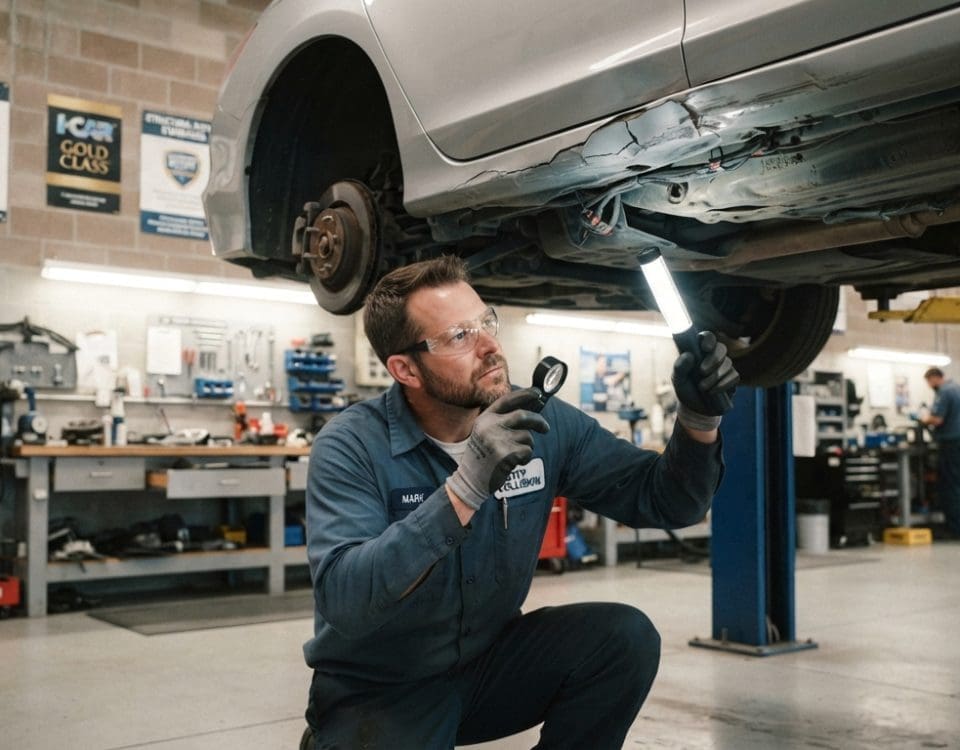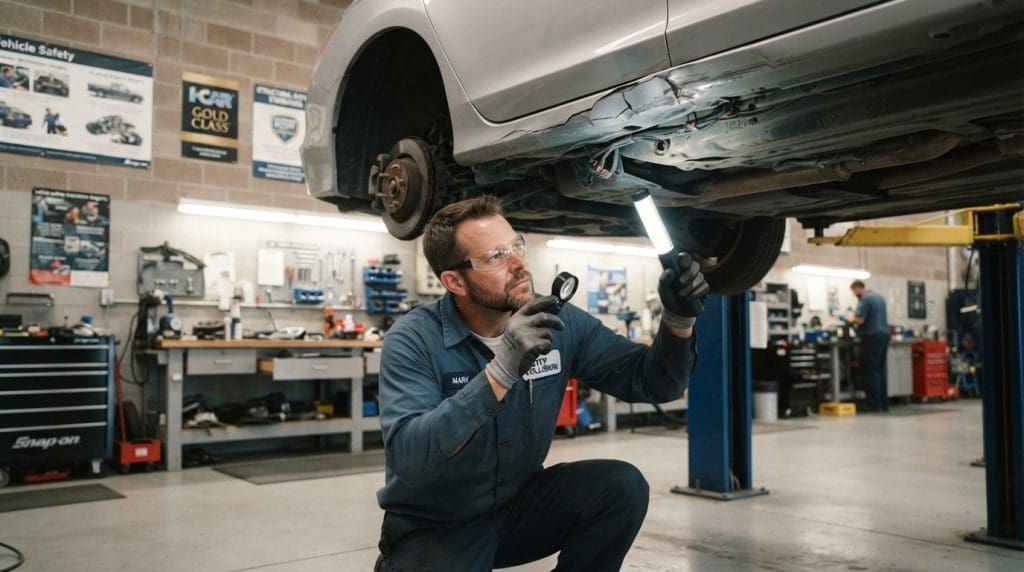
How Structural Collision Repairs Protect You in a Future Accident
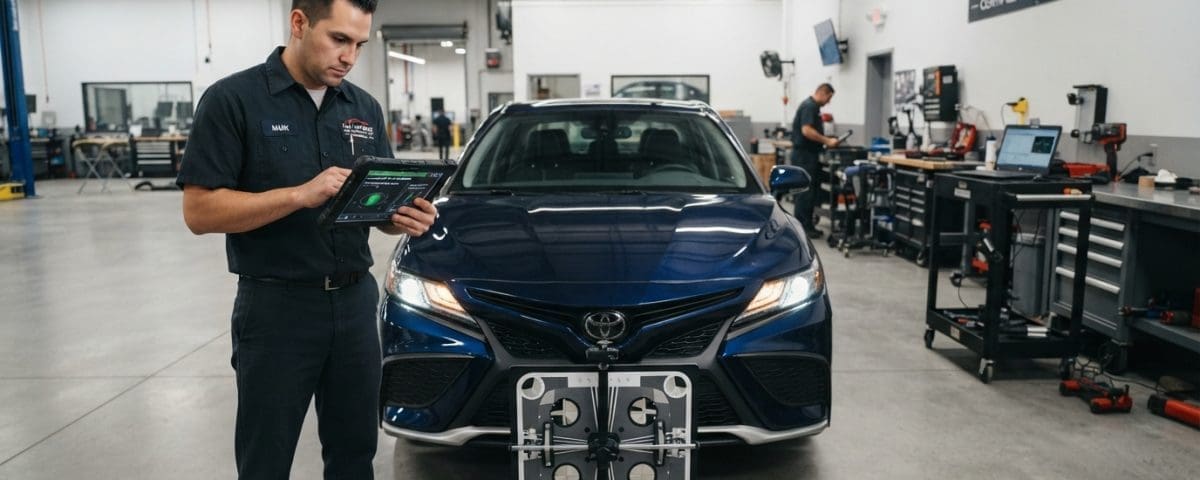
Your vehicle may look repaired after a collision, yet its driver-assistance features may still need attention. In San Antonio, a repaired bumper or windshield can leave a safety system needing a closer check.
A driver-assistance system is vehicle technology that uses cameras, radar, sensors, or other components to support driving tasks and provide information or assistance to the driver. These systems can help with tasks, but they do not replace your judgment behind the wheel.
Visible body damage does not show whether every safety component still sits in the right position. Knowing what to ask about can help you discuss collision repair and any needed checks with confidence.
Key Takeaways
- A collision repair may affect a camera, sensor, bracket, or reference point.
- A warning light is not the only reason to ask about a system check.
- The vehicle’s make, model, and repair details help determine the required procedure.
- Calibration may need a stationary setup, a road drive, or both.
- Ask how any required calibration will be handled when arranging collision repair.
The next step is understanding what these systems do and what calibration checks.
What Does ADAS Calibration Mean for Your Vehicle?
Calibration is a precise setup and verification process for relevant vehicle components. Correct positioning helps your vehicle interpret its surroundings as its manufacturer intended.
ADAS stands for Advanced Driver Assistance Systems. Calibration aims, positions, or initializes relevant components according to the vehicle’s manufacturer-specific procedure. That procedure depends on the vehicle and its installed equipment.
Components that may need attention include:
- Windshield-mounted cameras
- Radar units
- Ultrasonic sensors
- Sensor mounting points
A camera or sensor set to the correct position and reference points is a calibrated component. Small changes in angle or location can affect the information the system reads.
A warning light can signal a problem, but its absence does not prove every component is correctly set. A collision, replacement, or other repair may affect a component without creating an obvious dashboard alert.
Do not use a warning light as the only reason to check a system. Ask about the manufacturer-specific procedure when repair work involves a camera, sensor, or mounting point.
Knowing which components may need calibration makes it easier to see how common collision repairs can affect them.
Which Collision Repairs Can Affect ADAS?
A bumper repair may involve a sensor mounted behind the bumper, even when the sensor itself looks undamaged. Position matters because a small shift can change what the component detects.
Collision repairs can affect component positions and the reference points used by driver-assistance systems. The kind of work and the area repaired help determine whether a vehicle-specific check is needed.
| Repair area | Example work | Component or reference that may be affected | Why it matters |
|---|---|---|---|
| Front bumper or grille | Bumper, grille, or emblem replacement | Radar unit or sensor mounting point | Mounting position guides sensor readings |
| Windshield | Windshield replacement | Camera position or viewing area | The camera needs a clear, correct view |
| Structure or frame | Structural measurement or frame repair | Vehicle reference points | Reference points guide system setup |
| Suspension or steering | Collision-related part repair | Wheel angle or steering position | Vehicle direction can affect system readings |
Work near a bumper, grille, or emblem can involve sensor mounting, even if the repair seems limited to exterior parts. Windshield work may affect a camera attached near the glass.
A component does not need visible damage for its position or reference point to change. Brackets can bend, mounting areas can shift, and structural work can affect vehicle measurements.
Repair type and location matter more than the repair label alone. A vehicle-specific calibration check depends on the work and affected components.
Which Safety Features Depend on Accurate Calibration?

A forward camera or radar unit must read another vehicle or a lane marking correctly for driver-assistance features to respond as intended. Accurate information helps the system support, rather than confuse, your decisions.
Many ADAS features rely on cameras, radar, or sensors positioned for that vehicle. Their availability and operation vary by vehicle, trim, and installed equipment.
How Forward Collision Warning and Automatic Emergency Braking Use Sensors
Forward collision warning uses detected objects to alert you to a possible hazard ahead. It may give you time to react, but it does not take over all driving decisions.
Automatic emergency braking may apply the brakes if the system detects a risk and you do not respond. The feature’s response depends on the vehicle and conditions, so you should not treat it as a substitute for watching the road.
Pedestrian detection can also use camera or sensor information to identify people in the vehicle’s path. These features depend on the system’s ability to read what is ahead.
What Lane Departure Warning and Lane-Keeping Assistance Monitor
Lane departure warning alerts you when the vehicle appears to drift from a lane without a signal. Lane-keeping assistance may apply steering input to help guide the vehicle back.
Those functions are related, but they do different things. One warns you, while the other may provide steering support.
How Adaptive Cruise Control and Blind-Spot Monitoring Support the Driver
Adaptive cruise control adjusts your speed based on traffic detected ahead. It may slow the vehicle to keep a chosen gap, then change speed as traffic moves.
Blind-spot monitoring checks areas beside the vehicle and can alert you to nearby traffic. Rear cross-traffic alerts and parking assistance also use sensors to help you notice objects around the vehicle.
Each feature has limits, and systems may respond differently across vehicles. Forward collision warning, automatic emergency braking, lane departure warning, and adaptive cruise control all depend on information from correctly positioned components.
That link between component position and system response helps explain why some repairs call for a calibration check.
When Is Calibration Required After Repairs?
Calibration may be needed after certain repairs, but the vehicle and affected components determine the requirement. Repair details matter because manufacturers set different procedures for different models.
A manufacturer-specific procedure, not the repair label alone, determines what calibration is required. Not every collision requires the same work, even when two vehicles have similar damage.
Collision Damage and Body Repairs
Collision damage may affect a camera, radar unit, bracket, or sensor mounting area. Bumper or grille work can involve sensors behind those parts, while damage to the vehicle’s structure may affect reference measurements.
Replacing an emblem or other part near a sensor may also involve its mounting point. A repair professional can check which components the work touched and what the manufacturer calls for.
Windshield, Camera, and Sensor Replacement
Windshield replacement may affect a camera mounted near the rearview mirror. Camera or sensor replacement can also call for a procedure that sets the new component for the vehicle.
The required steps can vary with the vehicle’s equipment. Ask whether glass work or a replacement part affects a camera, radar unit, or related system.
Alignment, Suspension, and Steering Work
Suspension repairs, wheel alignment, steering repairs, and changes to vehicle ride height may affect system references. A changed wheel angle or steering position can matter to systems that use those inputs.
Share these details with a repair professional:
- The vehicle’s year, make, and model
- The work completed
- Any dashboard warnings
- The affected part or repair area
These details help a professional identify the right requirements instead of assuming every vehicle needs the same check. They also help explain what an appointment may involve.
What Happens During ADAS Calibration?
A professional may identify your vehicle by its year, make, model, and installed equipment before choosing a procedure. The exact setup depends on the systems fitted to that vehicle.
A calibration visit may include a repair review, diagnostic checks, vehicle preparation, the required procedure, and a result check. Not every visit needs the same steps.
Identify the Vehicle and Review the Repair
The repair professional identifies the vehicle and the systems it has. They can then review what work occurred and decide which manufacturer-specific procedure applies.
A diagnostic scan may check for trouble codes before work begins. Those codes can point to system faults that need attention, though a scan alone does not complete calibration.
Check the Vehicle Before Calibration
Preparation helps make sure the vehicle meets conditions set by the manufacturer. Checks may include:
- Tire pressure and condition
- Wheel alignment and steering position
- Sensor and camera mounting
- Battery voltage
- Unresolved diagnostic faults
Other checks may cover the vehicle’s structure or mechanical condition. For example, a loose sensor bracket or an alignment issue can affect the results.
Perform the Procedure and Verify the Result
The professional performs the required calibration, then checks whether it completed. A scan or other final check may reveal related faults that remain after the procedure.
A calibration may not complete if mechanical, alignment, structural, or electronic problems remain. Calibration cannot fix a damaged sensor or bracket. Those parts may need repair or replacement before the procedure can succeed.
When the vehicle is ready, the selected procedure may use a stationary setup, a road drive, or both.
How Do Static and Dynamic Calibration Differ?

Static calibration takes place while the vehicle is still in a controlled repair area. Dynamic calibration happens during a prescribed drive on the road.
Some vehicles need one method, while others require both. The manufacturer’s procedure sets the equipment and conditions for each vehicle.
| Method | Vehicle state | Reference or conditions | When it may be used |
|---|---|---|---|
| Static | Stationary | Positioned targets, patterns, or radar reflectors | When the procedure calls for a fixed setup |
| Dynamic | Driven on the road | Manufacturer-set driving conditions | When the system needs road data |
| Combined | Stationary and driven | Targets or reflectors, plus a prescribed drive | When both methods are required |
Static calibration uses targets, patterns, or radar reflectors placed around the vehicle. The space, vehicle position, and equipment must match the instructions for that procedure.
Dynamic calibration uses a road drive under conditions set by the manufacturer. Those conditions may include speed, distance, traffic, weather, and road requirements.
A technician may need a road with suitable lane markings and traffic conditions for a dynamic procedure. If conditions do not fit, the drive may need to wait or be repeated.
A combined procedure uses both methods when the vehicle requires them. The method depends on the system and the manufacturer-specific procedure, not a one-size-fits-all choice.
These differences help explain why an estimate may depend on the vehicle’s required method and setup. Those details shape the work involved.
What Signs Suggest Your System Needs Inspection?
A lane warning or steering assist that behaves differently after a repair deserves attention. Changed behavior can point to a system issue, but calibration is not always the cause.
Ask for an inspection when a safety feature acts unexpectedly or becomes unavailable. A warning light can help, but some problems appear through changes in how a feature works.
| What you notice | Possible system involved | Sensible next step |
|---|---|---|
| Camera or ADAS warning after glass work | Windshield camera | Ask for a system and mounting check |
| Unexpected lane warning or steering help | Lane departure warning or lane-keeping assistance | Have the system and alignment checked |
| Adaptive cruise control becomes unavailable | Forward radar or cruise control system | Ask for a diagnostic inspection |
| Blind-spot alerts act inconsistently after body work | Blind-spot monitoring sensor | Check the sensor area and related faults |
These signs do not prove that a component needs calibration. A blocked sensor, damaged part, wiring fault, or mounting problem can also affect system operation.
Alignment issues and diagnostic faults may cause similar behavior. A professional can inspect the vehicle and identify whether the problem involves calibration or another repair.
A feature may also stop working after collision repair or windshield replacement without a clear warning. Tell the repair professional what changed and when you first noticed it.
Have the cause checked rather than relying on a warning light alone. The right inspection can separate calibration needs from other faults.
What Affects ADAS Calibration Cost in San Antonio?
An estimate depends on the vehicle and required work, not one universal rate. Vehicle-specific details shape the time and tasks involved.
No specific price or price range is available here. For an ADAS calibration cost in San Antonio, request an estimate based on your vehicle and repair details.
Vehicle Equipment and Required Procedure
The vehicle’s installed systems affect which components need work. A vehicle that requires static calibration may need positioned targets, while another procedure may call for a road drive.
Some vehicles require both methods. The procedure type and equipment needed can change the work and time involved.
Repair Condition and Additional Work
Diagnostic faults may point to issues that need attention before calibration. Wheel alignment, sensor mounting, or other vehicle conditions can also affect whether the procedure can go ahead.
Extra repairs can add work beyond the calibration itself. A damaged bracket, faulty wiring, or alignment concern may need to be addressed first.
When asking about calibration, share the vehicle’s year, make, and model, along with the repair area and any warnings. This gives the professional useful details for a vehicle-specific estimate.
Do not assume that every vehicle has the same rate or that insurance will cover the work. Ask how the required procedure will be handled, then discuss the collision repair and calibration needs together.
Those questions give you a practical starting point when arranging local collision repair.
How Do You Arrange Collision Repair and Calibration in San Antonio?
Contact a collision center to discuss the damage and your repair needs. Bring the vehicle details and ask whether a manufacturer-specific procedure requires calibration after the repair.
Ask how any required calibration will be handled for your vehicle. Miracle Body and Paint Collision Center has two San Antonio locations for collision repair.
Have the vehicle’s year, make, and model ready, along with information about the collision and any completed repairs. Mention dashboard warnings or features that have changed since the damage occurred.
When asking about ADAS calibration services in San Antonio, confirm whether your repair calls for a system check and how that work will be arranged. The collision center’s ability to perform calibration is not stated here, so ask directly.
You can also ask about an ADAS calibration appointment in San Antonio and what details the team needs to discuss your vehicle. A vehicle-specific answer is more useful than assuming every repair has the same requirements.
North West San Antonio, Leon Valley: (210) 680 -1987, 6217 Grissom Rd., San Antonio, TX 78238.
North East San Antonio: (210) 858-3630, 4650 Walzem Rd, San Antonio, TX 78218.
Discuss the collision damage, then ask how any required calibration will be handled as part of the repair plan.
Conclusion
Treat a post-collision safety check as part of completing the repair when the work may affect driver-assistance components. A careful check can help identify whether the vehicle needs calibration or another repair.
Ask the repair professional which manufacturer-specific procedure applies to your vehicle. Share the repair details and any warning or feature changes you have noticed.
Contact Miracle Body and Paint Collision Center to discuss the collision damage and ask how any required calibration will be handled. Hire Miracle Body and Paint Collision Center to fix the collision damage on your vehicle.