ADAS Calibration After Collision Repair: Why Your Vehicle’s Safety Systems Need Attention

Some vehicles need windshield camera calibration after glass replacement or collision repairs, but the requirement depends on their equipment and the work. ADAS means electronic features that use cameras and other sensors to warn you about hazards or help you control the vehicle.
Your vehicle may need this service if it has a windshield-mounted camera and a repair could affect its alignment. Check the requirement for your specific make, model, and repair instead of assuming every vehicle needs the same work.
Miracle Body and Paint Collision Center is a collision repair option in San Antonio. This guidance can help you protect your vehicle’s safety features and make informed repair choices.
Key Takeaways
- Calibration needs depend on your vehicle’s camera equipment and repair.
- Windshield replacement can shift a camera from its set position.
- Collision or suspension work may affect alignment, too.
- Ask which procedure your vehicle maker requires.
- Request records showing whether required work was completed.
The camera may support familiar driver-assistance features that warn you or help guide the vehicle. Knowing which ones can help you understand why its position matters.
Which Driver Assistance Features Depend on a Windshield Camera?
A camera-based lane departure warning can sound or vibrate when your vehicle crosses a lane line without signaling. A windshield camera may support warnings, steering help, braking support, or distance control, depending on the vehicle.
These features can make a drive safer, but they do not replace your attention or control. The equipment and feature names vary across vehicles, so check your owner’s manual for your system.
Warnings and steering support
Lane Departure Warning alerts you when your vehicle drifts from its lane without a turn signal. The alert may use a sound or vibration to catch your attention.
Lane Keep Assist works differently. It can steer the vehicle back toward its lane, while a departure warning only alerts you. Both systems may use a camera to read lane markings.
Braking and cruise control
Forward Collision Alert warns when you approach the vehicle ahead too closely. If you do not respond to a warning, Collision Mitigation Braking can apply the brakes.
Adaptive Cruise Control adjusts your speed to keep a set distance from the vehicle ahead. The camera can help these systems read the road, while other sensors may also play a part.
Each system assists the driver, rather than taking full control. A lane departure feature may not respond as expected if road markings are hard to see.
Because a camera helps these systems read lane lines and nearby traffic, its position matters. Some repairs can shift that position or affect its alignment.
When Is Windshield Camera Calibration Necessary?
A windshield replacement is a clear reason to check the vehicle maker’s calibration requirement if your vehicle has a camera mounted to the glass. Is windshield calibration necessary? It is often necessary after replacement when a vehicle has a camera-based system.
The glass work can move the camera from its original position, even when the camera still looks normal. The correct requirement depends on your vehicle’s equipment and OEM procedures.
Front-end collision repair can affect the camera’s alignment or related parts. Suspension repair may change how the vehicle sits, so check the procedures for that make and model.
Neither type of repair proves by itself that calibration is required. The table shows why each event calls for a check, not an automatic conclusion.
| Repair event | What may be affected | Why to check calibration | What to verify |
|---|---|---|---|
| Windshield replacement | Camera position on the glass | Glass work may shift its alignment | Camera equipment and OEM procedure |
| Front-end collision repair | Front structure or sensor alignment | Damage may change camera aim | Vehicle-specific repair instructions |
| Suspension repair | Vehicle ride height or alignment | Changes may affect camera readings | OEM procedures for the repair |
Use the vehicle maker’s instructions for the exact model and repair. Once you know whether a check is needed, the next question is how technicians carry it out.
How Does the Calibration Process Work?
One method aligns the camera against targets while the vehicle is stationary; the other uses a controlled drive. The required method depends on the vehicle. Some vehicles need both static and dynamic calibration.
For ADAS calibration for a windshield replacement, technicians follow OEM procedures for that vehicle. The setup and equipment differ by make and model.
Static calibration in a controlled shop setting
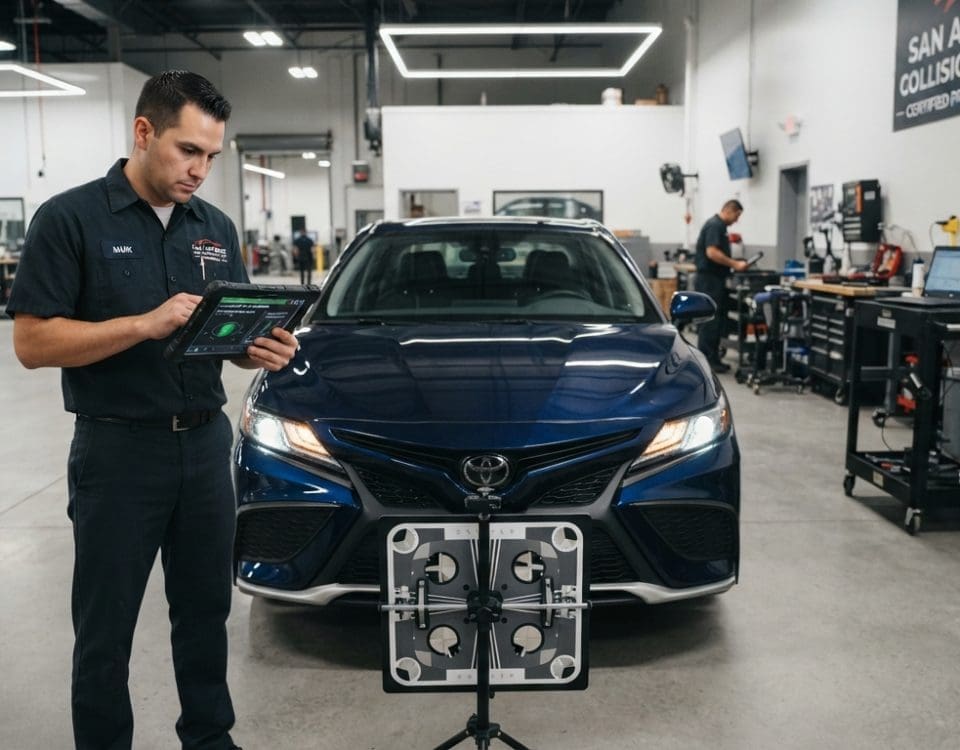
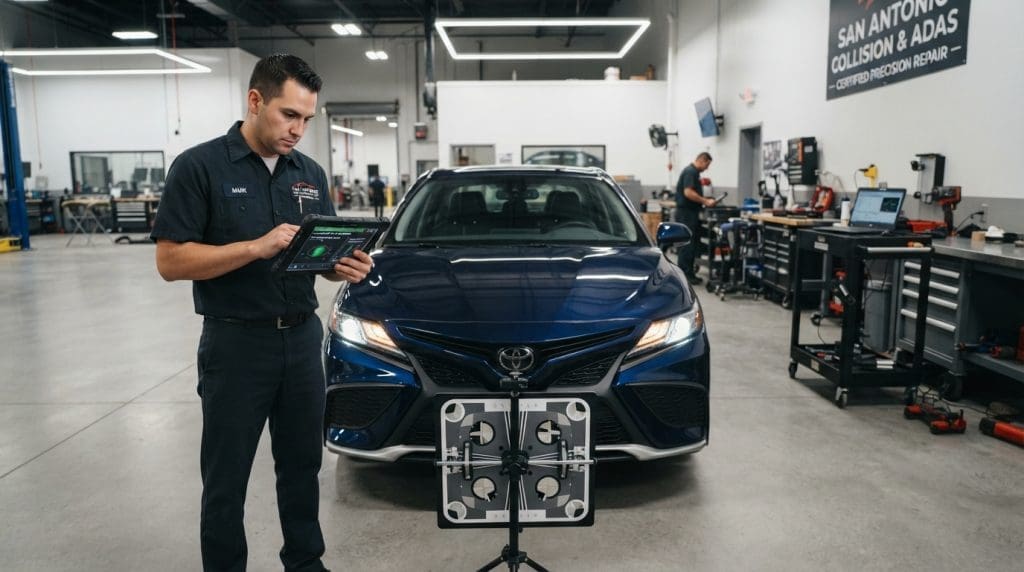
For static calibration, a technician positions the vehicle in a level, controlled work area. The technician places model-specific targets and fixtures at set points around it.
Electronic equipment measures the setup against the vehicle maker’s specifications. Some systems use lasers to help align the targets. A windshield camera calibration tool must suit the vehicle and its procedure.
Dynamic calibration on the road
For dynamic calibration, a technician connects a diagnostic device through the vehicle’s OBD-II port. The technician then drives at specified speeds and distances.
Clear road markings help the camera read the road during the drive. Favorable weather may also matter, and poor conditions can delay the procedure.
The answer to how long windshield calibration takes depends on your vehicle and required method. Each method may take an hour or more. Vehicles that need both methods can take longer.
| Method | Setting | Equipment or input | What happens |
|---|---|---|---|
| Static | Controlled shop environment | Model-specific targets, fixtures, electronic equipment, sometimes a laser | Technician aligns setup to maker specifications |
| Dynamic | Road route | Diagnostic device connected to OBD-II | Vehicle is driven under specified conditions |
| Both | Shop and road as required | Equipment for each required method | Both procedures follow OEM procedures |
Technicians must finish the procedure that the vehicle maker calls for. An unfinished or skipped step can leave camera-based safety features unreliable.
What Can Go Wrong If Calibration Is Skipped?

A camera can look undamaged while its alignment sits outside the vehicle maker’s required settings. If a repair requires calibration, skipping it can leave related safety systems unable to work as intended.
A misaligned camera may send incorrect information to driver assistance systems. As a result, lane departure alerts, forward collision warnings, or braking support may not respond as designed.
Vehicles may not show the same signs when calibration is missing or incomplete. Do not treat an intact-looking camera, or the absence of a dashboard warning, as proof that calibration passed.
Before you rely on the repaired vehicle, ask these questions during the repair handoff:
- Did this vehicle require calibration after the repair?
- Was the required procedure completed?
- Did it need static, dynamic, or both methods?
- Can you provide the calibration or diagnostic records?
- Does any warning or operating limit remain unresolved?
Keep the answers and records with your repair paperwork. They can help you understand what work the vehicle received and whether any issue remains.
Once you know what the repair needs, you can ask about the estimate and possible insurance help before arranging service.
What Does Calibration Cost, and Will Insurance Cover It?
The price depends on your vehicle and the required procedure, so a useful quote needs those details. There is no reliable universal price for windshield camera calibration cost.
Make, model, and year affect the work, as do the number and type of systems. The required method and your location also affect the estimate.
What affects the estimate?
A vehicle that needs both static and dynamic calibration may involve more work. Ask for an estimate based on your vehicle and the repair, not a general figure.
The type of service matters, too. A windshield replacement may call for a different procedure than collision or suspension repair.
What to check with your insurer
Does insurance cover windshield calibration? Coverage varies by policy. Comprehensive coverage may pay for recalibration, subject to your deductible and policy terms.
Ask your insurer or claims representative whether your claim includes the required work. Ask how your deductible applies, and do not assume payment or a premium outcome.
Have your vehicle details and repair estimate ready when you call. That gives a San Antonio collision repair center the facts it needs to discuss the next step.
How Do You Arrange Service in San Antonio?

Call with your vehicle details and ask how the collision repair plan will address any required calibration. When searching for windshield camera calibration near me in San Antonio, confirm whether calibration is needed and whether the repair center provides, coordinates, or refers that work elsewhere.
Miracle Body and Paint Collision Center has two San Antonio locations for collision repair. Ask what services apply to your repair, and whether calibration is handled separately.
Have these details ready when you call:
- Vehicle year, make, and model
- Repair type and known damage
- Insurer and claim details, if applicable
- Any dashboard warning or existing estimate
These details can help the team discuss your vehicle’s repair needs. Contact the location that works best for you.
North West San Antonio, Leon Valley: (210) 680-1987, 6217 Grissom Rd., San Antonio, TX 78238.
North East San Antonio: (210) 858-3630, 4650 Walzem Rd., San Antonio, TX 78218.
Conclusion
Camera alignment is part of completing a repair correctly when your vehicle maker requires it. Your vehicle’s equipment and OEM procedures determine whether calibration is needed.
Before relying on the related safety features, confirm that the required procedure is complete. Keep the repair and diagnostic records for your files.
If collision damage needs attention, contact Miracle Body and Paint Collision Center and hire the team to fix the collision damage on your vehicle.