
7 Warning Signs Your Vehicle Wasn’t Repaired Correctly After an Accident
Careful, complete collision repair can prevent avoidable repair-related loss, even though it cannot remove a crash from your vehicle history. After an accident, you may worry that poor work will make the car harder to sell. Good repairs can restore its appearance and operation, but buyers may still react to its accident history.
Diminished value is the reduction in a vehicle’s market value because of its accident history or because repairs did not fully restore it. The at-fault driver’s insurance company may pay for repairs, but payment does not promise that your car will regain its pre-crash market value. Repair quality affects the vehicle’s condition, while a recorded accident can affect buyer confidence. The key difference is between a loss tied to the accident record and one caused by faulty work. Start by checking the signs of a quality repair.
Key Takeaways
- Complete collision repairs can help prevent added loss from poor work.
- An accident may still affect buyer confidence and market value.
- Repairing damage does not erase a vehicle history report.
- Keep repair records and check the finished work before leaving.
- A diminished value claim is separate from a repair payment.
How Can Proper Collision Repair Protect Your Car’s Value?
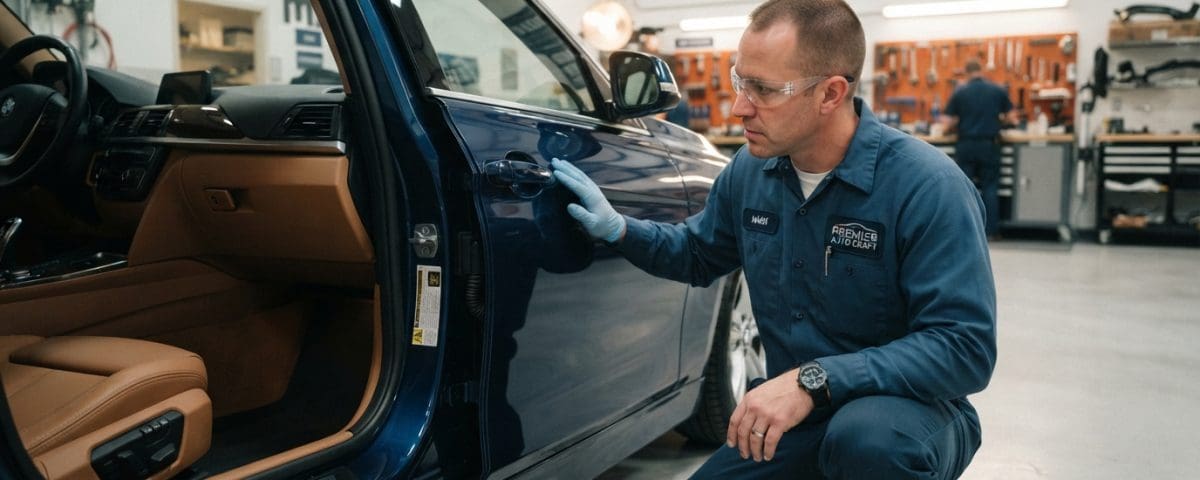
A door that looks repaired but will not close properly shows why appearance alone is not enough. Complete work should restore how the car looks and operates, not just cover visible damage. A poor collision repair can create extra diminished value if it leaves an appearance or operating problem.
For example, a door that does not close after side-impact repairs can make daily use harder. A buyer may see the problem as a sign of incomplete repairs. Ask the shop which parts it plans to use and which repair procedures it will follow. Request a clear record of the damage and work done.
Before you accept the vehicle, check the basic functions yourself. A quick look at the repaired panel may miss a latch, light, or window problem. Use this checklist:
- Check that repaired panels fit evenly and have a consistent finish.
- Open and close doors, windows, and the trunk.
- Ask for the repair records and a list of completed work.
- Review parts documentation and ask what parts were used.
These checks help you spot concerns while the repair details are fresh. If something does not work as expected, tell the shop and ask it to document the issue. A complete repair can protect the car’s condition, but a separate accident-history loss may remain after repairs are done well.
How Do You Estimate Vehicle Resale Value After Accident?
A repaired car may still draw a lower offer because its vehicle history shows an accident. Diminished value is separate from ordinary depreciation, which happens as a car ages and gains mileage. Estimates can help you discuss a loss, but they do not set a guaranteed market price.
Some insurers use the 17c method to estimate diminished value. It starts with 10% of the car’s pre-accident market value, then applies damage and mileage multipliers. For a $30,000 car, a 0.50 damage multiplier, and a 0.6 mileage multiplier for 42,000 miles, the calculation is $30,000 x 10% x 0.50 x 0.6 = $900.
That figure is an estimate, not a universal rule or promise from an insurance company. Insurers may assess a claim differently, and a tool cannot know every buyer’s response. The three common types describe when the loss applies:
| Type | When the loss applies | Why value falls | Example |
|---|---|---|---|
| Inherent | After repairs | An accident remains on the record | Buyer sees damage in vehicle history |
| Repair-related | After repairs | Work leaves an appearance or operating problem | A repaired door will not close |
| Immediate | Before repairs | The damaged car sells or trades for less | Buyer considers unrepaired damage |
How Does a Car Value After Accident Calculator Work?
A car value after accident calculator uses details such as pre-crash value, damage, and mileage to produce an estimate. Some tools apply a set formula, while others use different inputs. Treat the result as a rough guide, not a confirmed offer.
Can a Free Car Value After Accident Calculator Give an Exact Figure?
No. A free car value after accident calculator cannot promise a definitive market loss because formulas are estimates. A buyer, appraiser, or insurer may judge the same vehicle differently.
Searches for a vehicle resale value after accident calculator can help you learn the terms. Still, a car value after accident calculator cannot replace a vehicle-specific review. An estimate is a starting point; the car’s details can change the result.
What Are the Three Types of Diminished Value?
The three types are inherent, repair-related, and immediate diminished value. The table shows how each one ties to the car’s condition or accident record.
Which Factors Change a Repaired Car’s Market Value?
A lower-mileage vehicle with a serious repair history may raise more buyer concerns than an older, higher-mileage car with limited damage. The same crash does not affect every car equally. Age, mileage, damage, history, and current condition all shape the vehicle’s value.
Newer cars often have more value at stake, while older cars have already lost more value through depreciation. Mileage matters, too. A vehicle with fewer miles may attract buyers who expect a cleaner history, but the result depends on that specific car and its market.
How Do Age and Mileage Affect Value?
Age and mileage give buyers clues about wear and future use. A newer, low-mileage vehicle may face greater value concerns after an accident than an older car with more miles. That is not a fixed rule. The model, condition, and buyer demand can change how much the history matters.
Ordinary depreciation also continues after the crash. Do not confuse that gradual drop with accident-related loss. A value estimate should compare the vehicle with similar cars while accounting for its condition and history.
Why Does Damage Severity Matter?
Damage severity can change how buyers view the repair. Cosmetic damage may seem less serious than damage to a frame or other structural parts. Structural damage can raise questions about safety, alignment, or long-term performance, even when repairs appear complete.
The repair record helps explain what happened, but it does not ensure every buyer will respond the same way. A serious crash can matter more than a small panel repair. The extent of damage and the quality of the finished work both count.
How Do Vehicle History and Condition Affect Buyers?
A vehicle history can keep an accident visible after the repair shop has finished. Some buyers may accept a well-repaired car at a fair price, while others may prefer one with no reported damage. Current condition also matters: worn parts or new problems can add concerns unrelated to the crash.
Some estimates place additional accident-related value loss at roughly 10%-25%. That range is an estimate, not a rule or promised payout for your vehicle. Use its details to support a vehicle-specific review, then gather records that can help substantiate the loss.
How Can You Prove a Diminished Value Claim?

Keep damage photos and repair paperwork together so you can show an insurer what happened and what the repairs addressed. Good records tell a clearer story than a number alone. You must support that the repaired vehicle is worth less than it was before the accident.
Gather the car’s pre-accident market value and mileage at the time of the crash. Add photos of the damage, the repair estimate, and the final repair records. Include the vehicle history, which can show how the accident appears to future buyers.
What Should You Gather to Support the Loss?
Organize evidence so each item connects to the loss you are claiming. Photos can show the original damage, while final records can show what the shop repaired. Keep copies of all paperwork and note the mileage from the time of the accident.
An independent certified vehicle appraiser may help assess a sufficiently large claim. An appraisal can give you a vehicle-specific view, especially when the loss may justify the cost and effort. It should support your case, not stand in for the rest of your records.
Can a Kelley Blue Book Diminished Value Calculator Prove Your Claim?
A Kelley Blue Book diminished value calculator can offer a starting estimate, but a tool alone does not prove your post-repair market loss. A car diminished value calculator may not account for every detail of your damage, repair quality, or vehicle history.
Use calculator results as one part of your review. Compare them with the car’s condition, records, and other evidence. Do not present a computer estimate as a confirmed sale price or proof that an insurer must pay a certain amount.
Are Free Car Diminished Value Calculators Reliable?
A diminished value calculator free estimate is a guide, not a promise of insurer payment. Different tools may use different inputs, so results can vary. Your evidence should show the loss in a way that fits your specific vehicle.
Proof of a repair-related problem differs from proof of inherent diminished value. A door that still sticks supports a concern about the repair. To support inherent loss, show how the accident history affects the car’s market value after the work is complete. Whether that evidence supports a diminished value claim is a separate question.
Does Insurance Pay for Diminished Value After an Accident?
Diminished value payment depends first on who caused the crash, then on state law and policy terms. Your route depends on the facts of the accident. A diminished value claim is separate from the claim that pays for damage repairs.
When another driver caused the crash, you commonly seek payment from the at-fault driver’s insurance company. If you caused it, your own collision coverage generally pays for repairs, not diminished value. State rules and policy wording can change your options.
| Situation | Possible route | Important limit |
|---|---|---|
| Another driver at fault | Third-party liability claim | State and proof requirements apply |
| You were at fault | Own collision coverage for repairs | Diminished value is generally excluded |
| Uninsured or hit-and-run driver | Possible uninsured motorist claim | Coverage and state rules vary |
Can You Get Depreciation Value From Insurance After an Accident?
Sometimes. If another driver caused the accident, you may seek compensation for diminished value from that driver’s insurance company. A value claim still depends on your evidence, the policy, and state law. Michigan prohibits diminished value claims.
A good settlement offer for a car accident has no universal dollar amount. Compare an offer with the specific loss and the evidence you have gathered. Your repair-damage claim and diminished value claim address different losses.
What Changes If You Were at Fault or the Other Driver Was Uninsured?
If you were the at-fault driver, your own collision coverage generally does not pay diminished value. Some states may allow a claim through uninsured motorist coverage when the other driver is uninsured or unidentified. Rules vary by state and policy, so coverage cannot be assumed.
Before deciding whether to pursue a value claim, consider fault, local law, and your policy terms. Those insurance questions do not change the need for sound repairs. Next, focus on choosing a repair provider who can document and address the collision damage.
How Do You Choose a Collision Repair Shop?
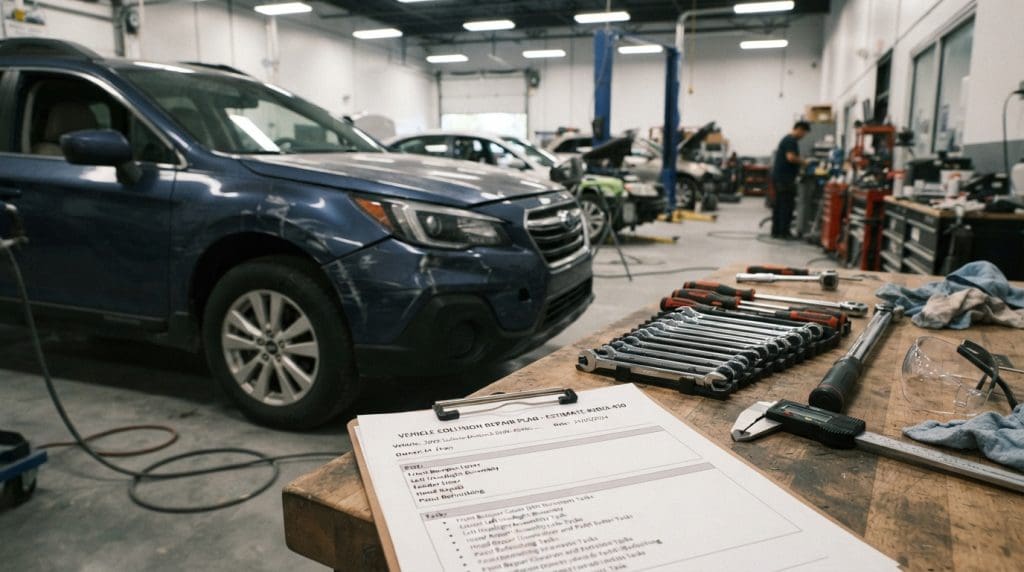
Compare each shop’s written repair plan, not just its first estimate. Clear details matter when you want to understand the work and parts. Ask how the shop will document repairs and any concerns that remain.
Use these checks when you compare repair options:
- Ask for a written repair scope.
- Ask what parts the shop will use.
- Confirm it will record the work and remaining concerns.
- Inspect the finished repair for appearance and normal operation.
Use these checks to guide your choice, then contact Miracle Body and Paint Collision Center about your vehicle.
Conclusion
Proper repairs can protect your vehicle’s condition, but they cannot erase its accident history. That difference matters when you plan to sell or trade it. Keep repair records and check that the finished work looks right and functions as it should.
If collision damage needs attention, contact Miracle Body and Paint Collision Center to discuss your vehicle. The shop has two San Antonio locations:
North West San Antonio, Leon Valley: (210) 680-1987, 6217 Grissom Rd., San Antonio, TX 78238.
North East San Antonio: (210) 858-3630, 4650 Walzem Rd, San Antonio, TX 78218.
Contact Miracle Body and Paint Collision Center to hire the team to fix the collision damage on your vehicle.